Plein Air Watercolor Painting: Traveling with My Paints
Summer is one of my favorite seasons to paint. The longer days, changing light, and abundance of wildflowers and landscapes make it the perfect time to step outside the studio and create. While I enjoy working indoors throughout the year, there is something refreshing about taking my paints into nature and letting the environment become part of the creative process.
One of the easiest ways I do this is through plein air painting.
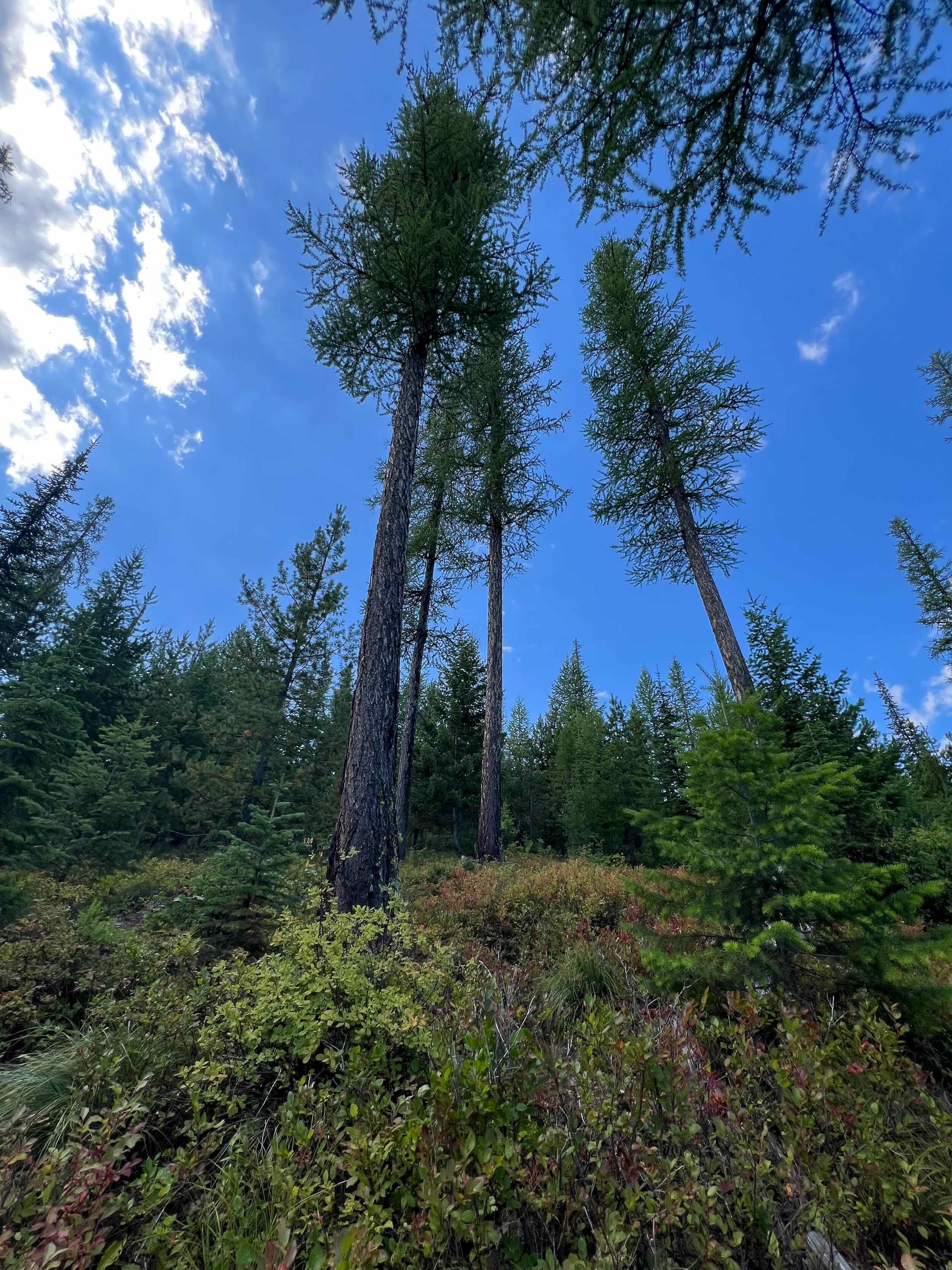
The trees outside my campsite.
What Is Plein Air Painting?
The phrase plein air comes from the French expression en plein air, meaning “in the open air.” Rather than painting from photographs or memory in a studio, artists work directly from life, observing the landscape as it changes around them.
Painting outdoors offers a completely different experience than working inside. The light shifts from minute to minute, clouds drift overhead, shadows lengthen, and colors change as the day progresses. Instead of trying to create a perfectly polished painting, plein air painting encourages observation, quick decision-making, and embracing the unexpected.
Even a short painting session outside can sharpen your ability to see color, value, and atmosphere in ways that photographs simply can’t replicate.
Why I Choose Watercolor for Traveling
Although I primarily create my larger finished oil paintings in the studio, watercolor has become my favorite companion when I’m away from home.
Many artists travel successfully with oil paints, and perhaps someday I’ll venture into plein air oils myself. For now, though, watercolor offers exactly what I need: simplicity.
A small palette, a few brushes, paper, and a container for water can fit easily into a backpack. Whether I’m hiking a trail, sitting beside a lake, or enjoying an afternoon in the park with my family, watercolor allows me to paint almost anywhere without carrying heavy equipment.
Sometimes I even bring along a small set of oil pastels. They offer another portable option that encourages loose sketching and quick studies, making them perfect for capturing an idea before it disappears.
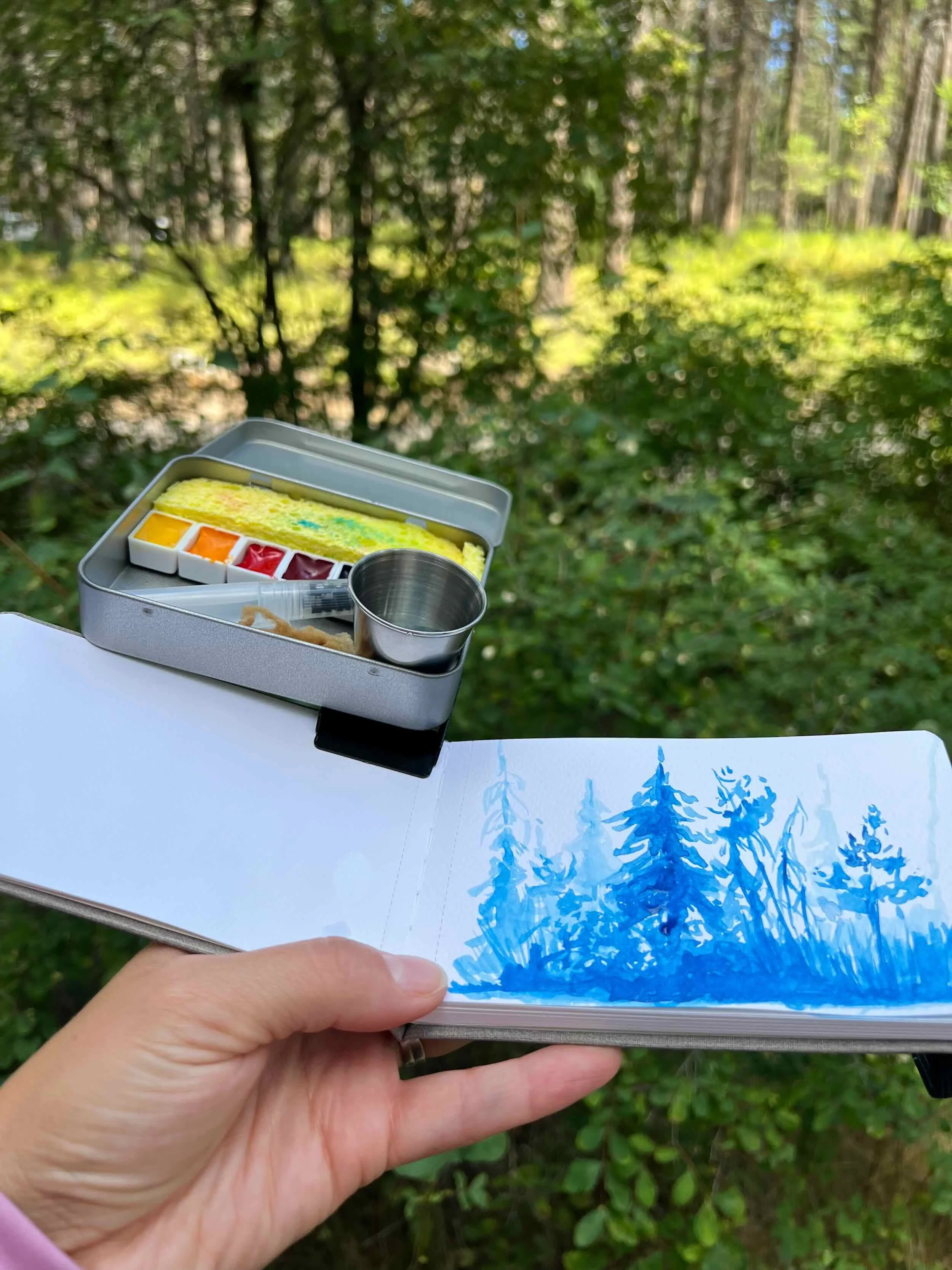
Painting with my Plein Air Kit while camping.
Painting as a Way to Observe
One of the things I appreciate most about plein air painting isn’t necessarily creating finished artwork—it’s learning to see.
When I slow down enough to paint outdoors, I notice details I might otherwise overlook. The subtle temperature changes in a mountain shadow. The way sunlight filters through the leaves of a tree. Tiny wildflowers growing between rocks. Reflections dancing across the surface of the water.
Painting encourages me to spend time truly observing a place instead of simply passing through it.
Those observations often find their way into my larger studio paintings later. Even if a plein air sketch never becomes a finished piece, it serves as a visual journal filled with color notes, lighting ideas, and memories that photographs alone rarely capture.
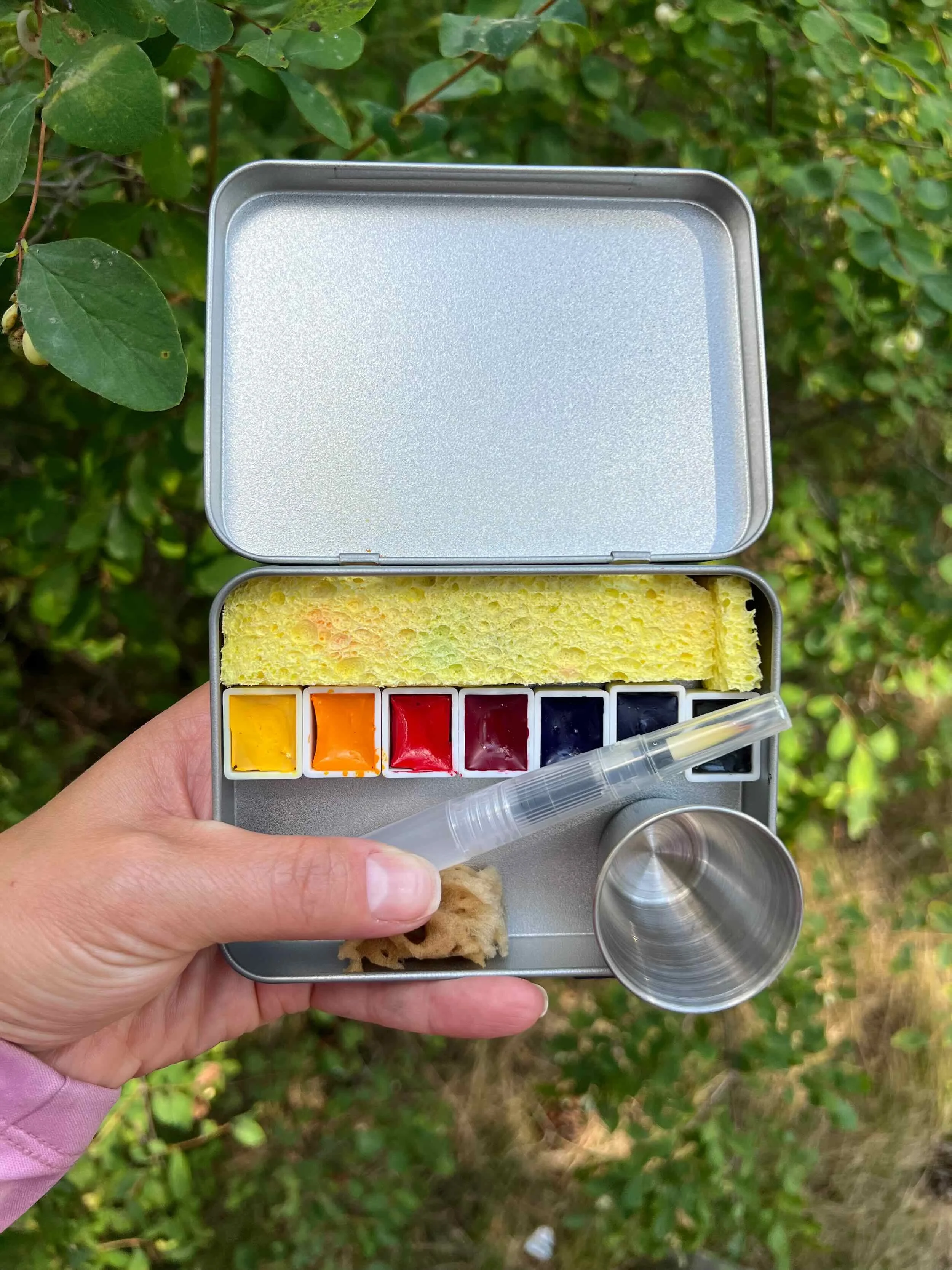
My Plein Air Watercolor kit.
Keeping My Supplies Simple
Over the years I’ve realized that I paint more often when my supplies are easy to carry.
Rather than packing every color I own, I prefer working with a limited palette. A smaller selection of paints encourages creativity and helps me focus on mixing colors instead of searching for the perfect tube.
As I’ve spent more time painting outdoors, I’ve gradually refined the supplies I bring with me. Everything has a purpose, and everything fits neatly into a compact kit. Having a lightweight setup means I can easily tuck it into a backpack, keep it in the car for an impromptu painting session, or bring it along on family adventures without much planning.
I’ve also found that a thoughtfully curated kit doesn’t have to be expensive. A few quality paints, a reliable brush, good paper, and a simple palette are often all that’s needed to capture a moment. Keeping my supplies organized and ready to go removes one more barrier to creating, making it much easier to say “yes” when inspiration strikes.
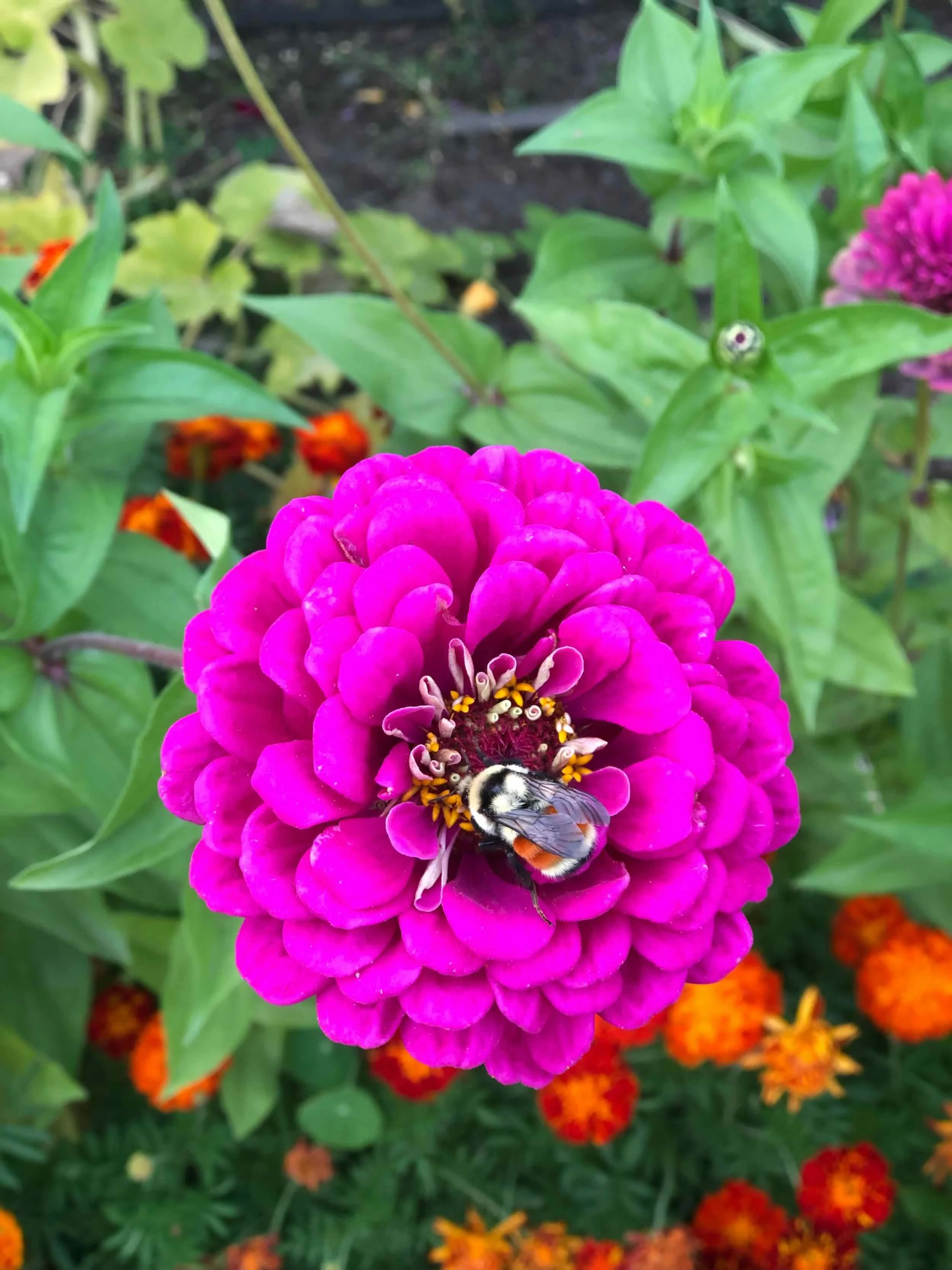
A bee atop a zinnia in my garden.
You Don’t Have to Travel Far
When people think about plein air painting, they often imagine dramatic mountain vistas or distant national parks. While those places are certainly inspiring, you don’t have to travel far to enjoy painting outdoors.
Your backyard, a local park, a neighborhood garden, or a quiet spot along a walking trail can provide more than enough inspiration.
Some of my favorite painting sessions have happened close to home. The goal isn’t to find the most spectacular view—it’s to spend time observing and responding to the world around you.
Whether you spend twenty minutes making a quick sketch or an afternoon developing a painting, the experience of slowing down and looking closely is rewarding in itself.
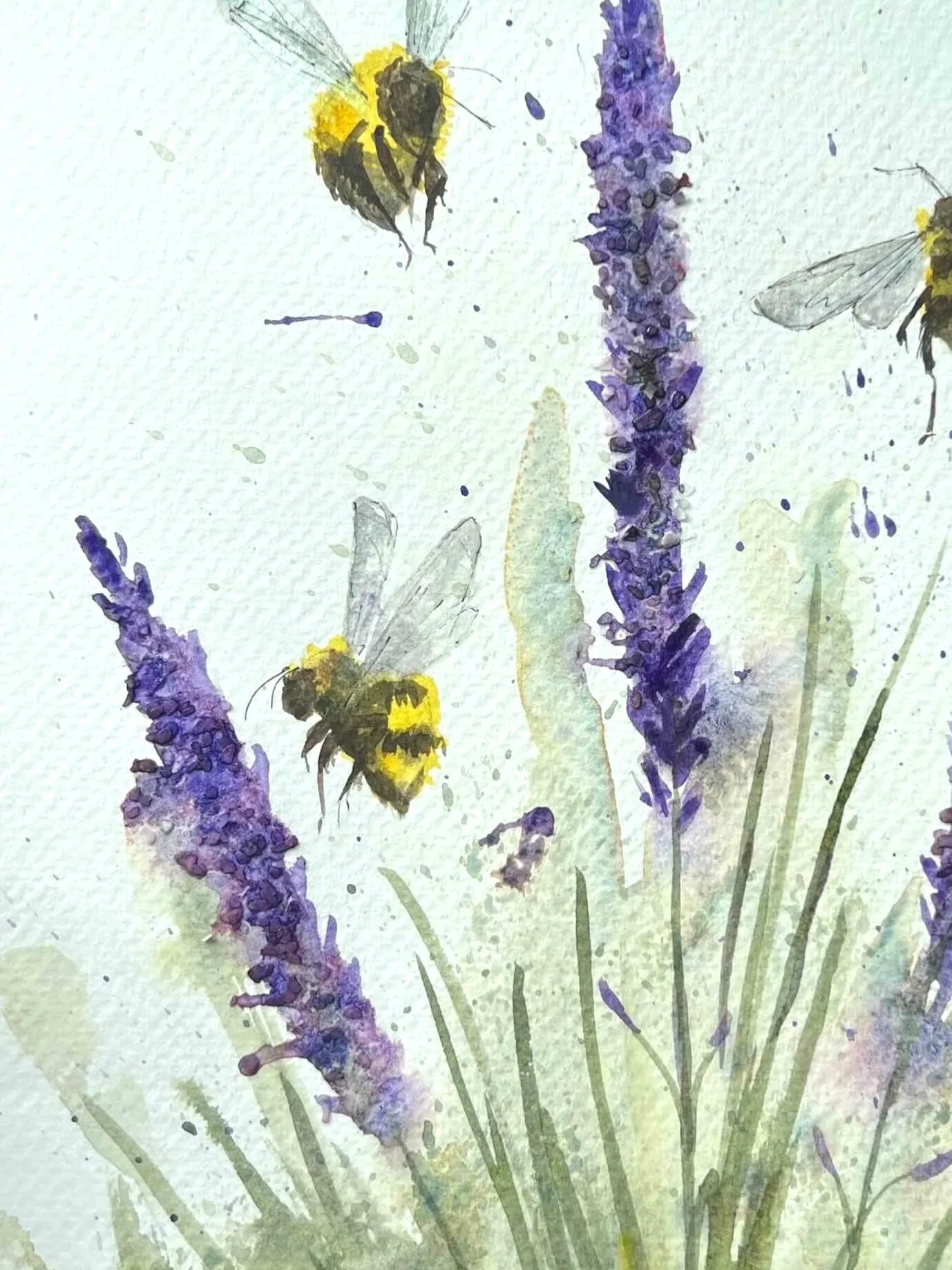
Watercolor painting of bees floating above the lavender in my yard.
Let the Experience Be the Goal
One of the biggest lessons plein air painting has taught me is to let go of perfection.
Outdoor conditions are constantly changing. Wind flips your paper, insects become curious about your palette, clouds alter the light, and sometimes you have less time than you expected. Rather than fighting those challenges, I’ve learned to embrace them as part of the experience.
Not every outdoor painting becomes a masterpiece, and that’s perfectly okay.
Each sketch teaches me something about color, composition, or the landscape itself. Every painting becomes another opportunity to slow down, observe, and enjoy the creative process.
This summer, I encourage you to take your paints outside—even if it’s only for twenty minutes. Pack a few favorite supplies, find a comfortable place to sit, and see what captures your attention.
You may come home with a finished painting, a handful of color studies, or simply a renewed appreciation for the beauty around you. Any one of those is time well spent, and sometimes the best inspiration begins with stepping outside.