The Confidence Gap: Why Creative Skill Often Grows First
If you've ever looked at your artwork and thought, “How am I still not very good at this," you're not alone.
In fact, one of the most surprising things I've learned as an artist is that creative skill often develops much faster than confidence. While our abilities quietly improve through practice, observation, and repetition, our confidence tends to lag behind, taking much longer to catch up.
For a long time, I assumed the two would grow together. I believed that as my paintings improved, I'd naturally feel more confident in my work. Instead, I've found that each new skill often reveals another area I want to improve. Rather than feeling like I've "arrived," I simply become more aware of how much there is still to learn.
At first, that realization can feel discouraging. But over time, I've come to see it as a sign of growth rather than inadequacy.
The More We Learn, the More We See
When we first begin painting, we often don't recognize everything that goes into creating a successful piece. We notice whether we like a painting or not, but we may not understand why.
As our skills improve, we begin to see subtleties that once escaped us. We notice values that are slightly off, edges that could be softened, colors that compete instead of harmonize, or compositions that could be stronger.
Ironically, becoming a better artist often makes us more critical of our own work.
That's not because we're getting worse.
It's because our eyes are becoming more trained.
The same growth that allows us to paint better also allows us to see our mistakes more clearly.
The Vulnerability of Creating
Making art requires a certain amount of vulnerability. Every painting reflects a series of decisions, risks, successes, and failures. Whether we share our work publicly or simply set it on the easel in our own studio, there is always the possibility that it won't become what we hoped.
That vulnerability doesn't disappear with experience. If anything, it grows alongside our skills because we begin setting higher expectations for ourselves. We become more invested in the outcome, and with that comes the possibility of disappointment.
Yet I believe this vulnerability is also what makes art meaningful. We aren't simply learning techniques—we're learning to trust our own observations, make personal creative choices, and continue painting even when the outcome is uncertain.
Every artist, regardless of experience, understands what it feels like to question a painting. The difference isn't that experienced artists stop feeling vulnerable; it's that they learn to keep creating anyway.
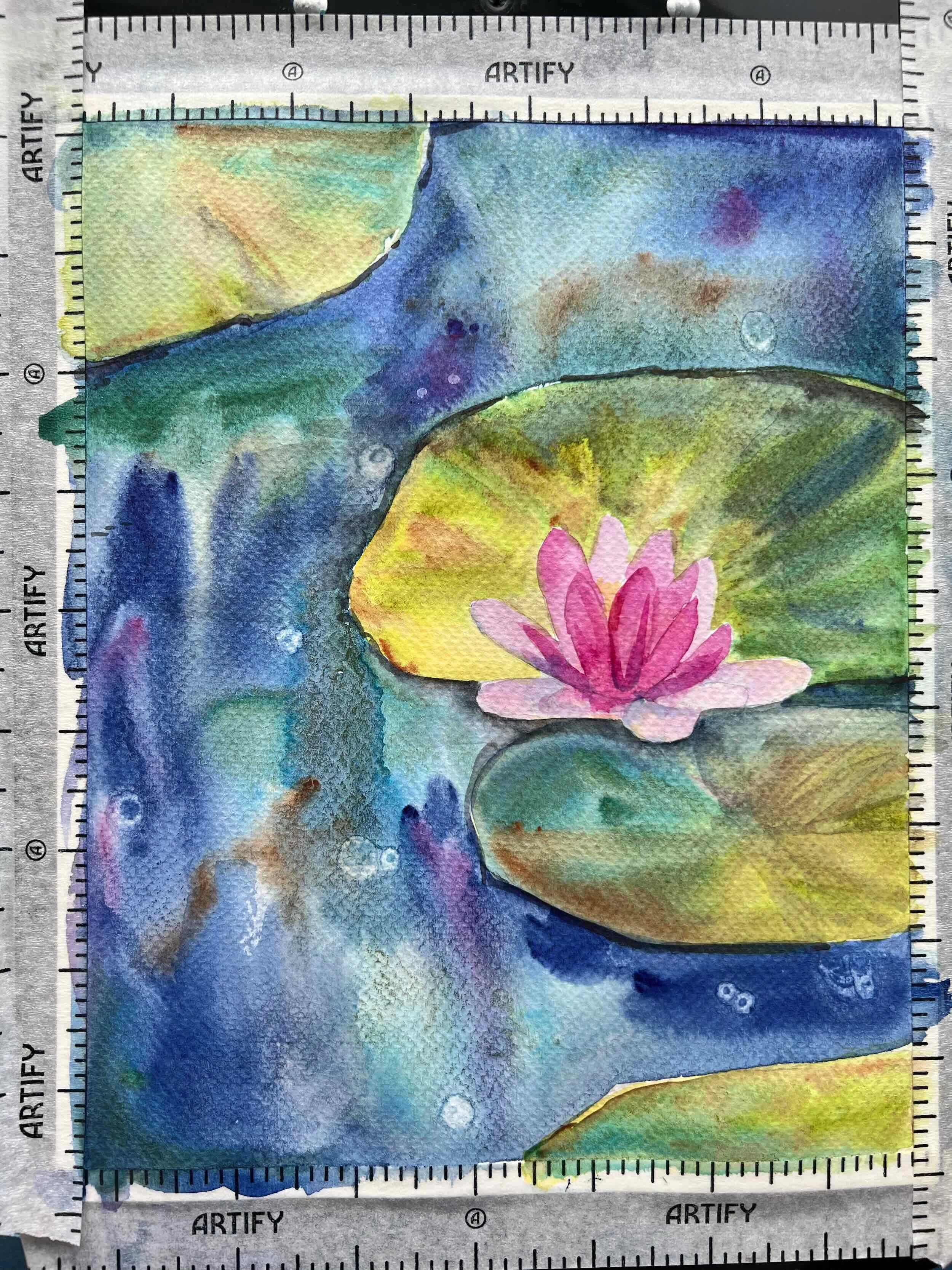
Testing workshop ideas, the color palette is good but the perspective is a mess!
Confidence Doesn't Arrive All at Once
Many people imagine confidence as a destination—something you earn after reaching a certain level of ability.
I've found it works differently.
Confidence isn't built by creating one successful painting. It's built by showing up again after an unsuccessful one.
It's built by trusting that another blank sheet of paper or empty canvas is simply another opportunity to learn.
Some of the paintings I'm most proud of today came after days—or even weeks—of work that felt frustrating. At the time, it certainly didn't feel like confidence was growing. Looking back, though, those challenging moments were often where the greatest progress occurred.
Progress Is Usually Quieter Than We Expect
One of the reasons confidence develops slowly is because improvement happens gradually.
We rarely notice our own growth from one painting to the next.
Instead, it becomes visible only after months or years have passed.
Sometimes I'll look back at an older painting and realize how much my understanding of light, color, or composition has changed. Those improvements weren't the result of one breakthrough moment. They came from consistently returning to the studio, solving one small problem at a time.
Skill grows quietly.
Confidence tends to notice later.
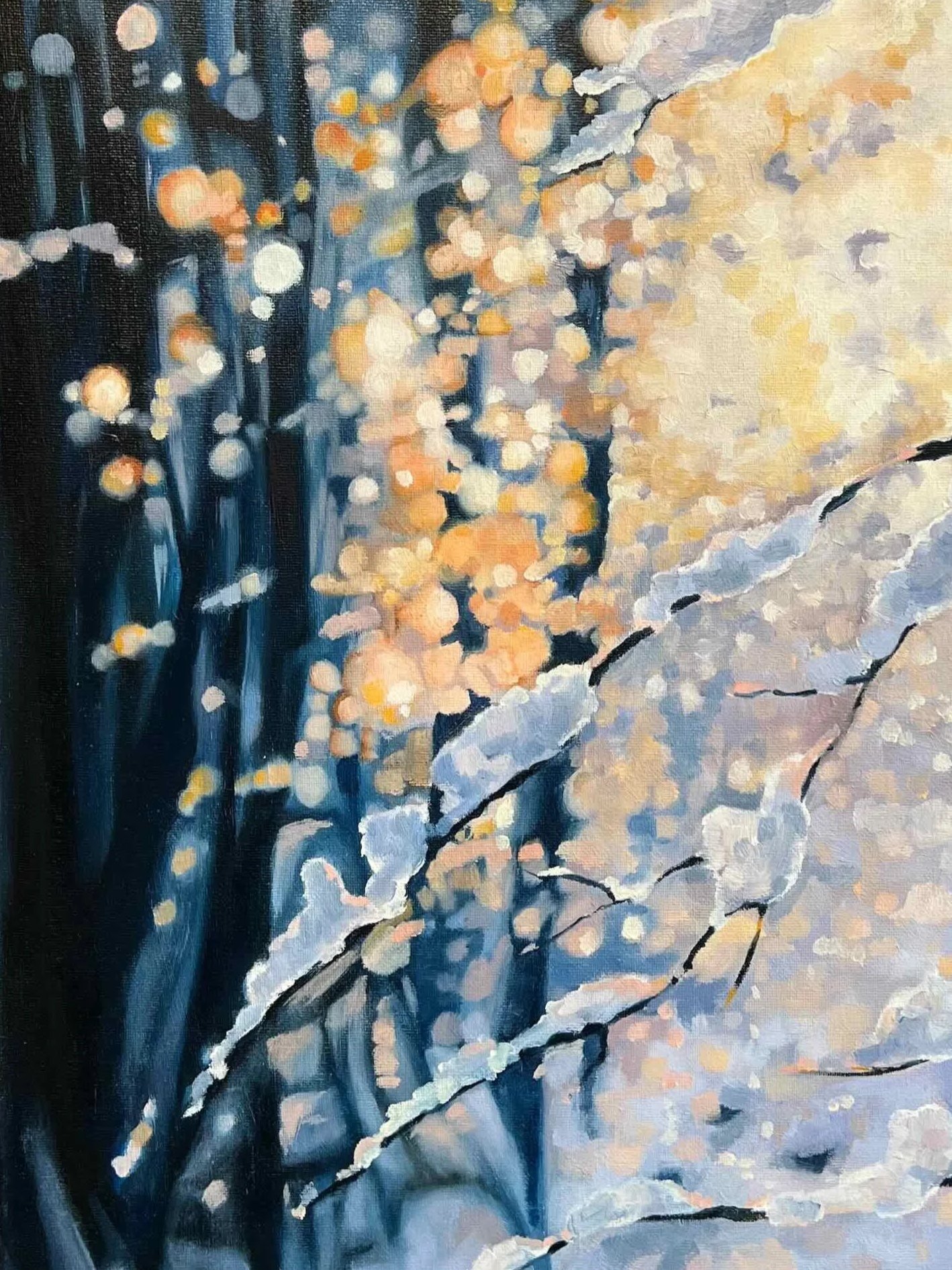
A section from my painting Snowy Branches that I reworked and struggled to get the depth I desired.
Let Curiosity Lead
When I stop focusing on whether a painting is "good enough" and instead ask, “What can I adjust to get where I’m going?" something shifts.
The pressure begins to disappear.
Every painting becomes an opportunity to experiment with a new color relationship, a different brushstroke, or a fresh approach to composition.
Curiosity leaves room for mistakes.
Confidence often doesn't.
Some of my favorite discoveries have happened because I was willing to try something that might not work. Whether it's an unexpected color mixture or a different way of approaching a landscape, exploration has consistently taught me more than certainty ever has.
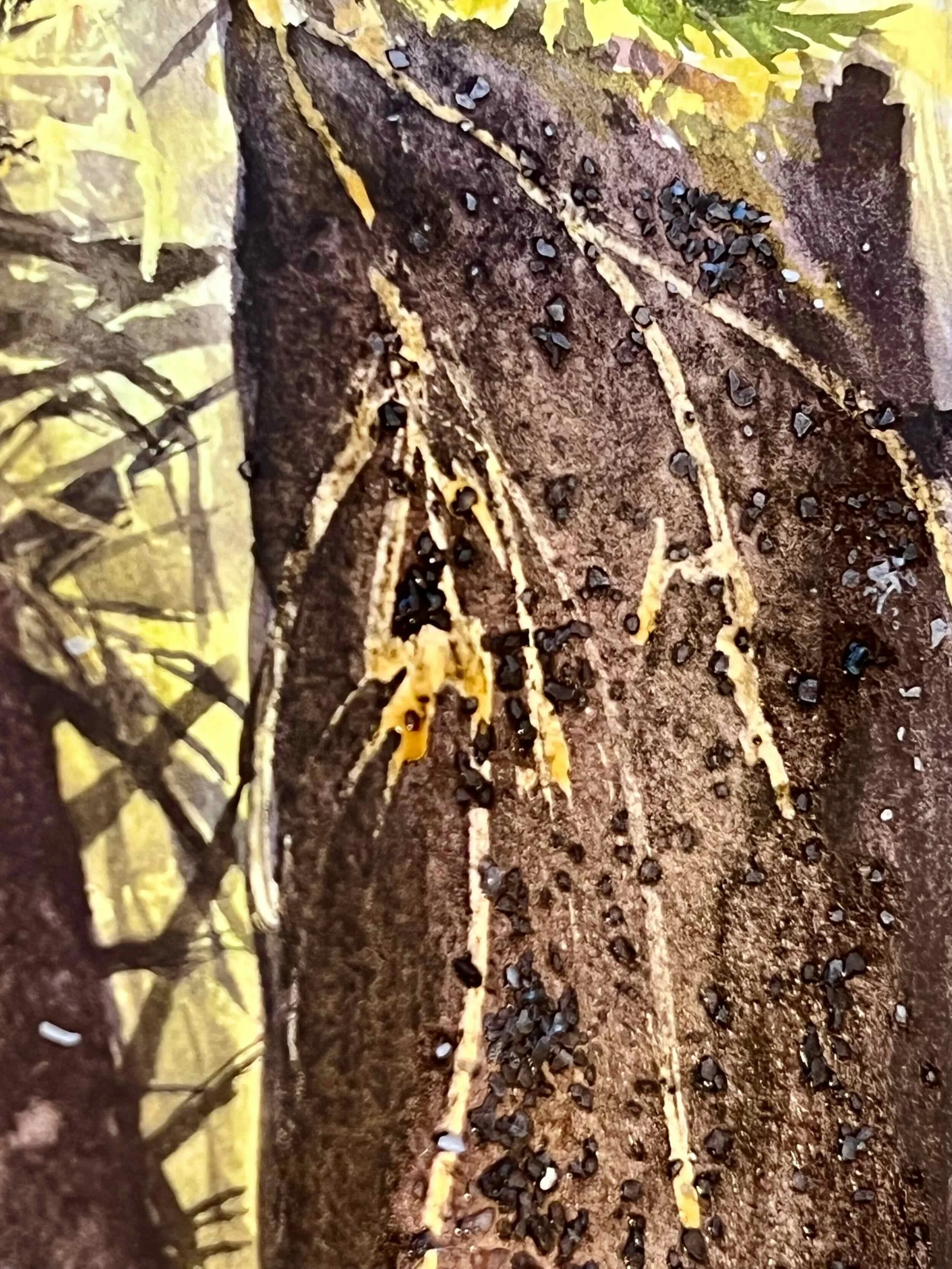
Here I expirimented with salt and masking fluid. It was a bit of a mess but I learned what not to do.
Learning from Both Sides of the Easel
One of the unexpected ways I've grown in confidence has been through teaching.
When I work with students, I'm reminded that every artist begins somewhere. I watch people try unfamiliar techniques, make mistakes, ask thoughtful questions, and celebrate small breakthroughs. Their willingness to keep learning reminds me to extend that same grace to myself.
Teaching has also reinforced that I am still very much a student. Every workshop I prepare, every demonstration I paint, and every question I answer encourages me to think more deeply about my own process. It pushes me to keep exploring, experimenting, and refining my skills.
Working with students has also reminded me that confidence isn't reserved for those who have mastered a craft. Some of the most rewarding moments I've witnessed have come from someone trying a new technique despite their uncertainty. That willingness to begin—to risk making mistakes—is something I strive to carry into my own studio practice as well.
Being both teacher and student has shown me that confidence doesn't come from having all the answers. It comes from knowing that growth never really ends. There is always another lesson to learn, another painting to begin, and another opportunity to discover something new.
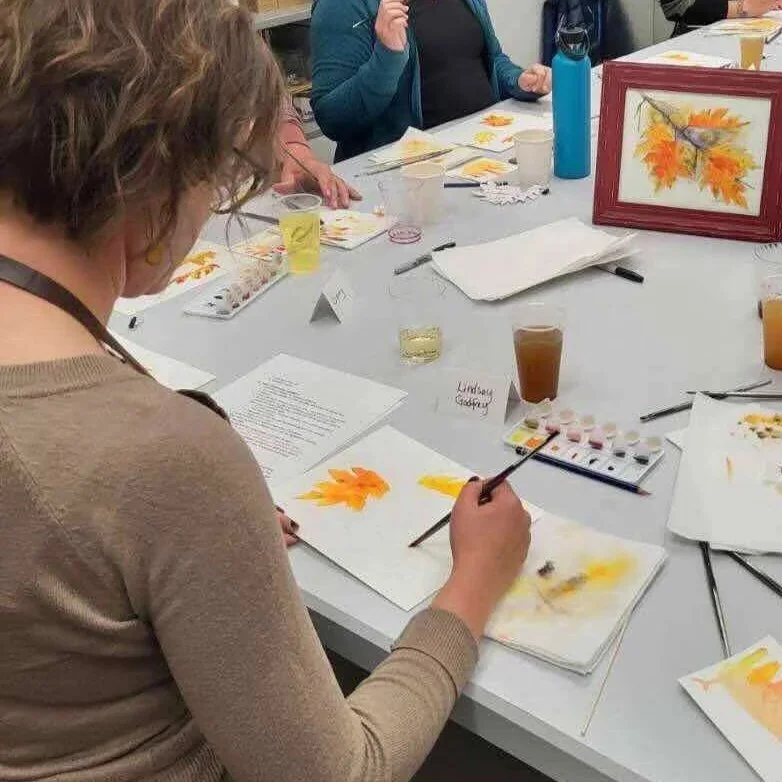
Instructing my workshop is a learning expirience for me and my students.
Keep Showing Up
There are still days when I question a painting halfway through. There are still moments when I wonder whether an idea will work.
The difference now is that experience has taught me those feelings are temporary.
I've learned to trust the process even when my confidence hasn't fully caught up.
Every hour spent painting adds to a foundation that isn't always visible in the moment. Each study, sketch, and finished piece strengthens skills that slowly become part of how we see and create.
Confidence may arrive quietly, but it has a habit of growing in the background while we're busy doing the work.
If you've been waiting to feel confident before trying something new, consider reversing the order.
Paint first.
Experiment often.
Allow yourself to be a beginner again.
Your skills may already be growing faster than your confidence realizes.
Keep creating, keep learning, and trust that confidence will follow—not because you've become perfect, but because you've continued to show up, one painting at a time.
Thank you for taking a few moments to read along. If this reflection resonated with you, I hope you'll continue following my journey as I share new paintings, thoughts from the studio, and the lessons I'm learning along the way. The creative path is always unfolding, and I'm grateful to have you here for a part of it.