Painting Safely and Sustainably: How I Make Oil Painting Work as a Busy Mom in Montana
As a busy mom, my creative time does not come in long, uninterrupted stretches. It is planned and intentional, and sometimes tucked into pockets of the day when the house is quiet, and responsibilities pause, if only briefly. Because of that, the environment I paint in matters just as much as the time itself.
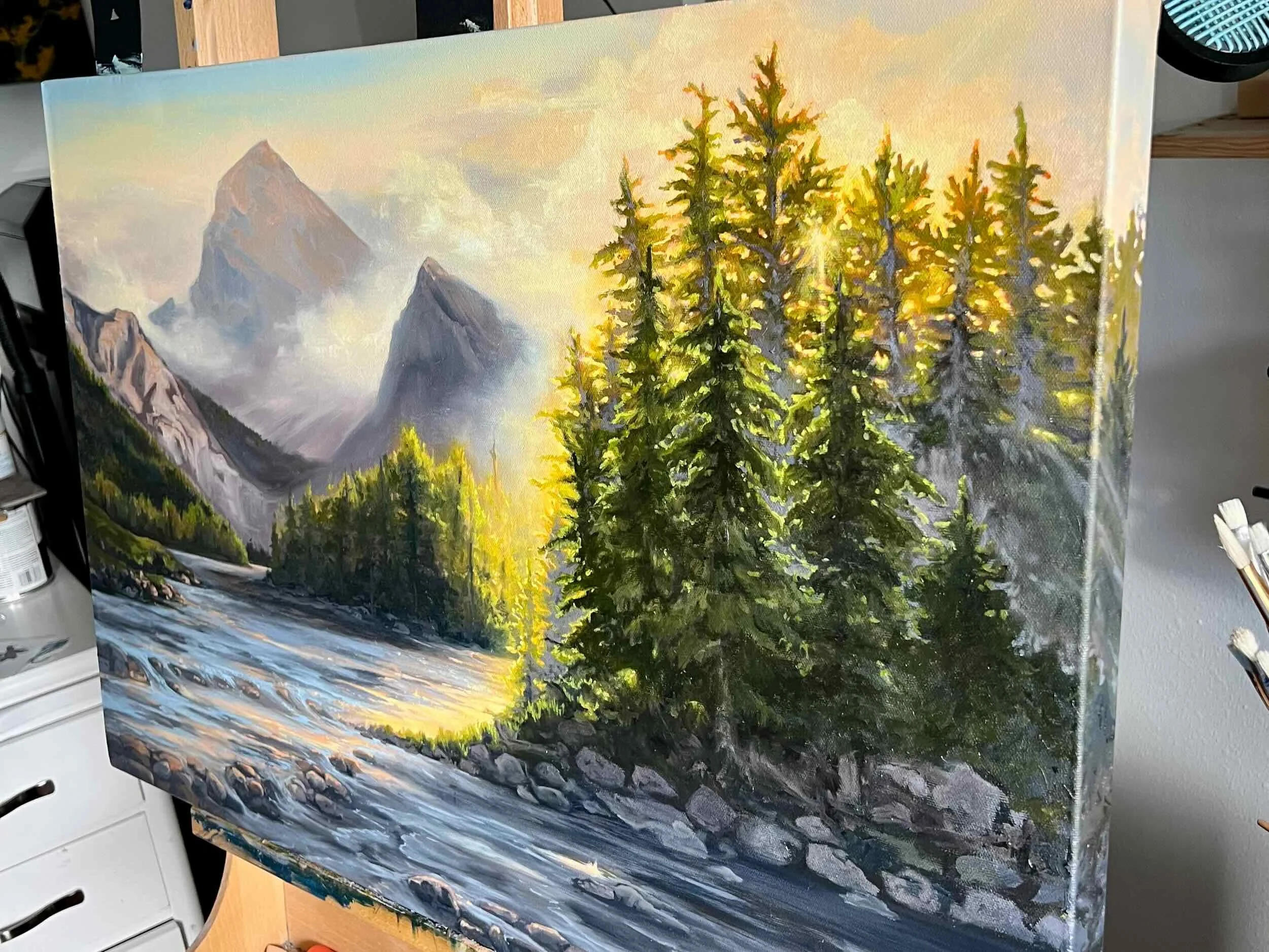
An oil painting in progress at Lindsay Godfrey’s home studio.
Living in Montana adds another layer to this reality. Much of the year, painting outdoors or in a detached studio simply is not practical. Cold temperatures, snow, and limited daylight mean my studio space needs to be inside. That reality has shaped how I approach oil painting, from the products I use to the systems I have put in place to keep my space safe, warm, and efficient.
The Importance of Safe Materials in my Home Studio
Having a home studio means safety is non-negotiable. I share my home with my family, and I want to feel confident that the materials I am using are not filling the air with harmful fumes or introducing unnecessary risks. For that reason, I do not use solvents indoors at all. Solvent is flammable, produces strong fumes, and can be toxic with repeated exposure. While it has long been a staple in oil painting, I have chosen to find alternatives that allow me to continue working in oils without compromising my health or my home environment.
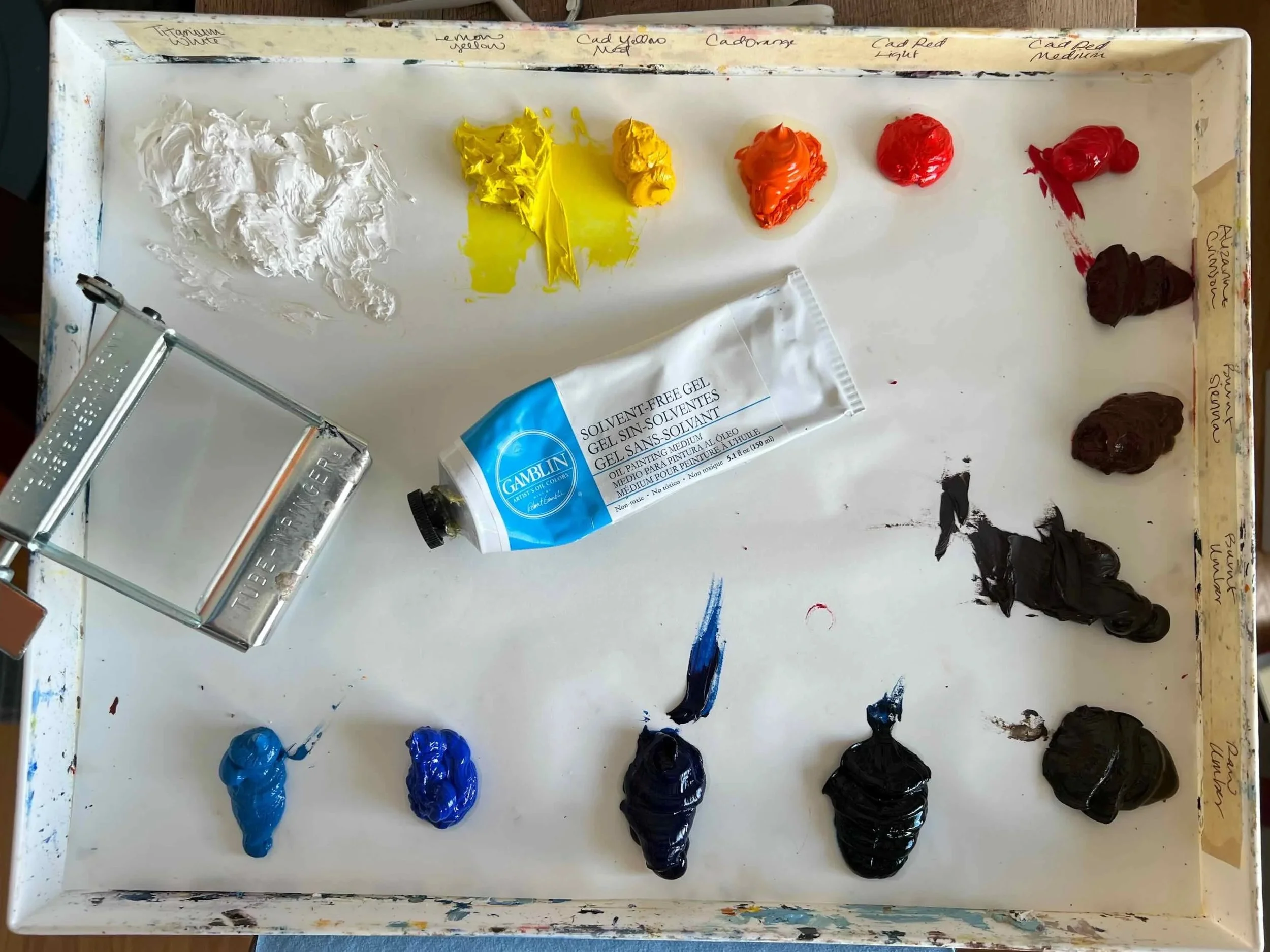
Setting up an oil painting palette.
Solvent Alternatives
Instead of solvent, I have developed a workflow that relies entirely on safer materials. The primary medium I use to mix with my paint is linseed oil. Linseed oil is a classic choice for a reason. It thins paint beautifully, enhances flow, and adds a rich sheen to the surface. It allows me to work fluidly while maintaining the integrity of the paint. For years, this was my go-to medium, and I still use it regularly.
More recently, I have added a product to my practice that has truly changed the way I work. Gamblin Solvent Free Gel has a soft, Vaseline-like consistency that keeps the body of the paint intact while also shortening drying time. What I love most is that it is non-toxic and designed specifically for artists who want to avoid solvents altogether. Since incorporating it into my process, I have found that my paintings dry nearly twice as fast while still maintaining the gloss and depth I appreciate when using linseed oil. Faster drying times mean I can move through layers more efficiently, which is an enormous benefit when studio time is limited.
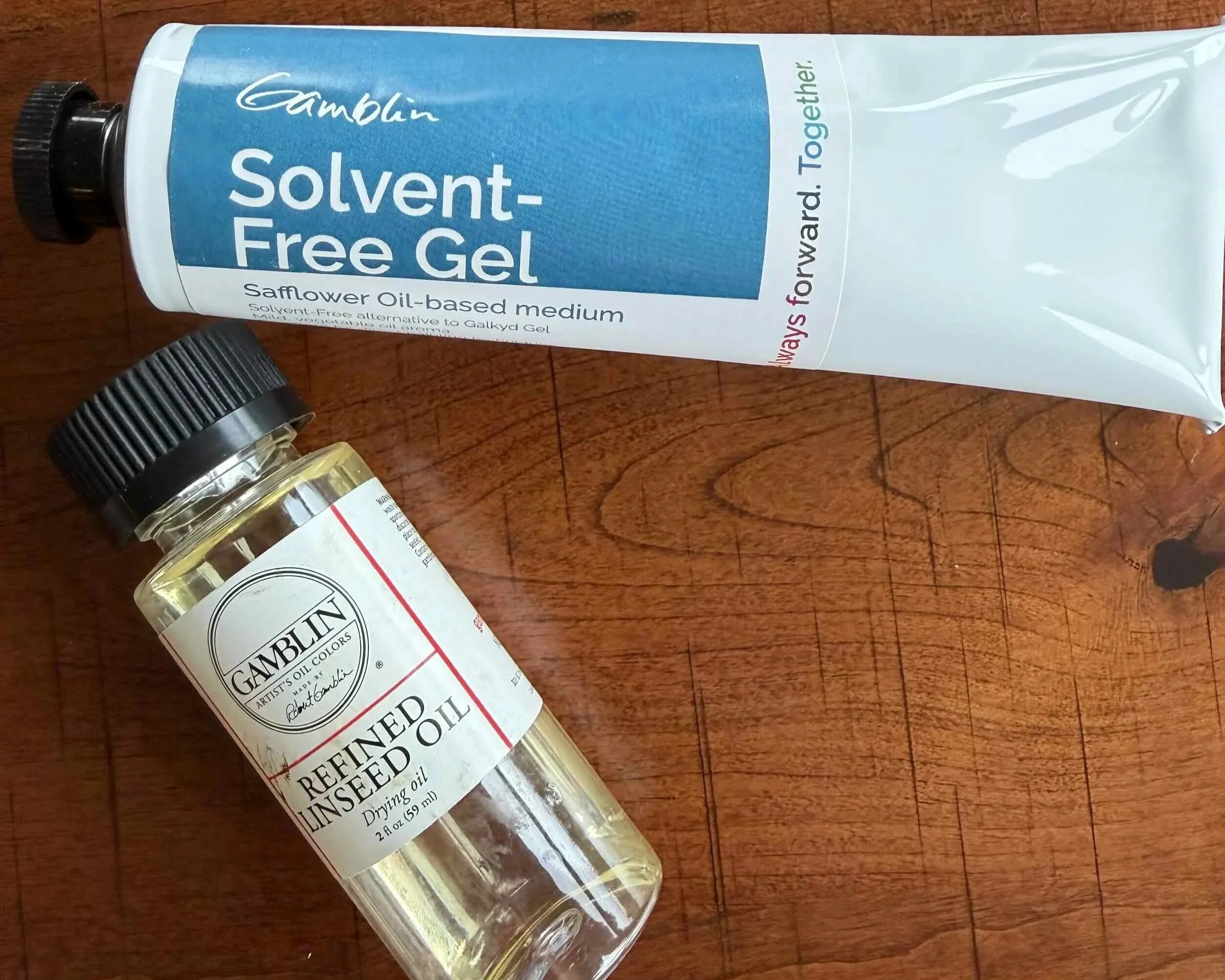
Two of the best mediums to use with oil paint.
Solvent-Free Paint Brush Care
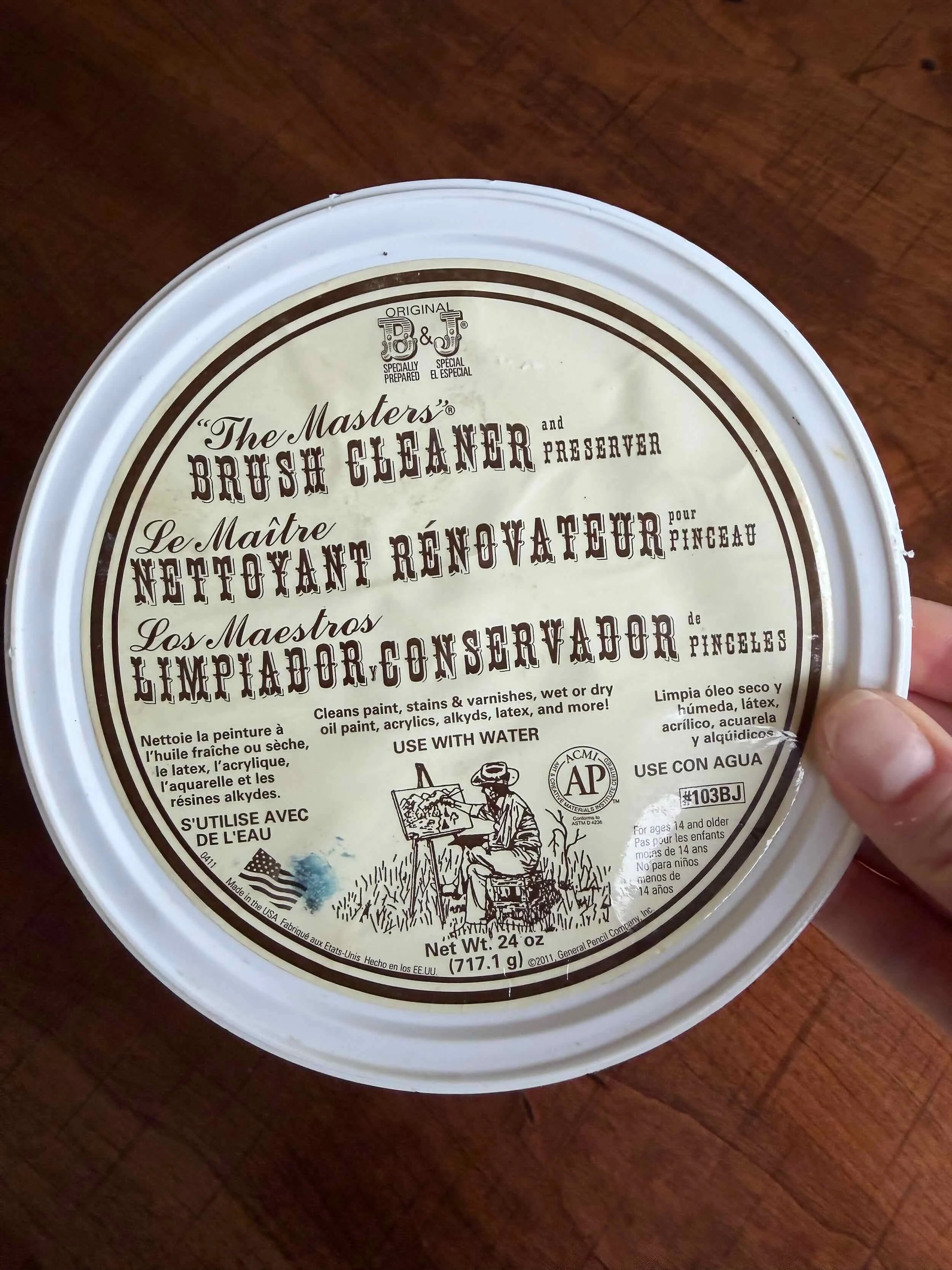
The best brush cleaner.
Brush care is another area where I have made intentional, solvent-free choices. I clean my brushes every single time I paint, no exceptions. It is part of my ritual, and it ensures my tools stay in good condition for years. I rely on B and J The Master’s Brush Cleaner, and I truly consider it magic. It cleans thoroughly while also conditioning the bristles, and I have even had success reviving brushes that had dried paint in them.
My cleaning process is simple but effective. First, I remove as much excess paint as possible using a rag or paper towel. Then I gently work a small amount of dish soap into the bristles to release the initial layer of pigment. After rinsing, I use The Master’s Brush Cleaner to remove any remaining color, working it carefully into the brush until the water runs clear. Once clean, I lay my brushes flat to air dry, which helps maintain the shape of the bristles and prevents water from seeping into the ferrule.
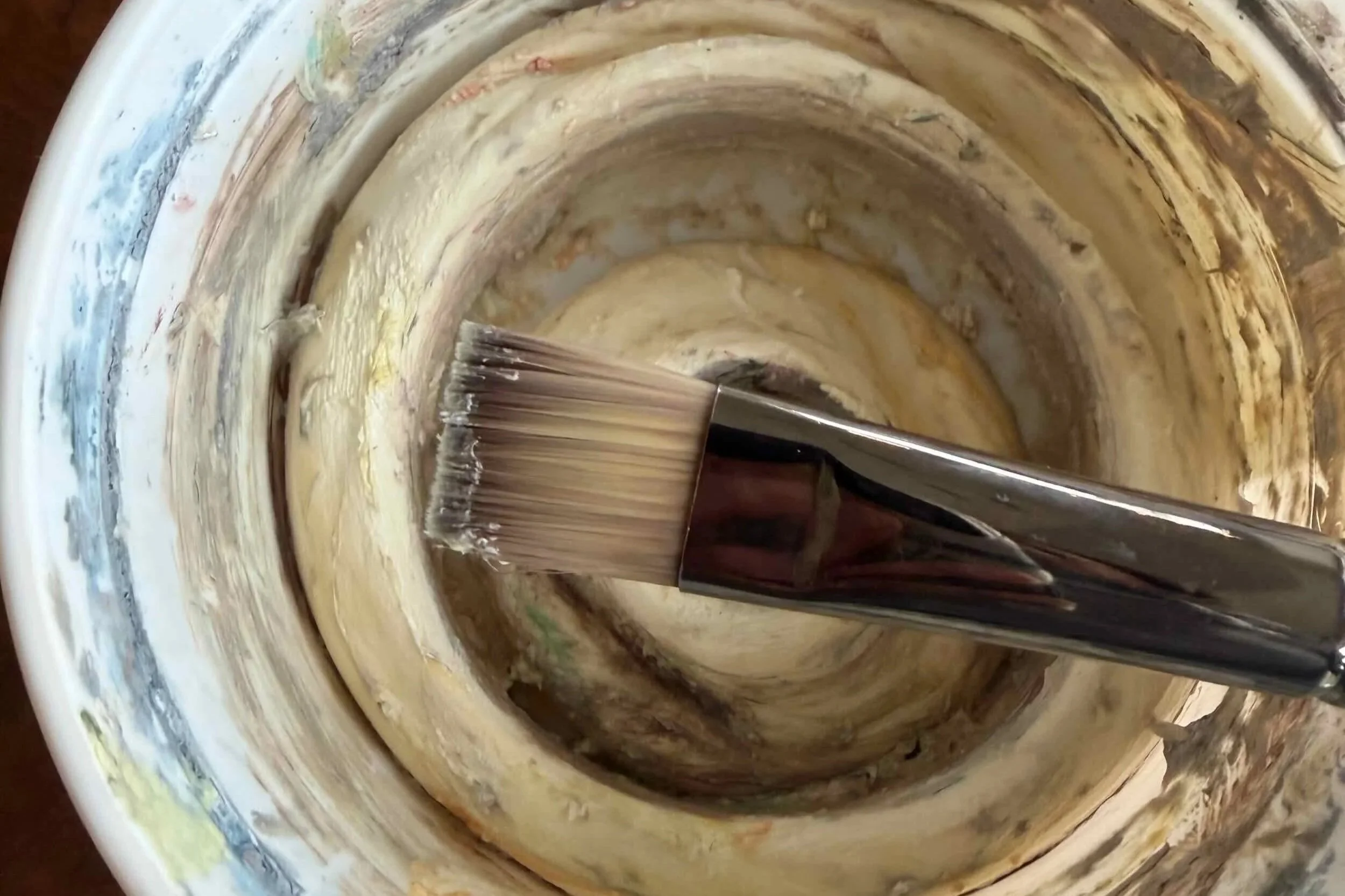
Cleaning an oil paint brush.
Saving My Palette for Later
Another practice I have adopted, especially helpful for a busy schedule, is freezing my palette. This has been a game-changer for preserving paint between sessions. Instead of scraping dried paint at the start of each session, I can pick up right where I left off. I use a Masterson lidded palette with a piece of palette paper in the bottom, then place the entire palette in the freezer when I am done painting. On days I plan to work, I simply remove it fifteen to twenty minutes before my session to allow the paint to thaw. The pigment comes back to a workable consistency, and I waste far less paint overall.
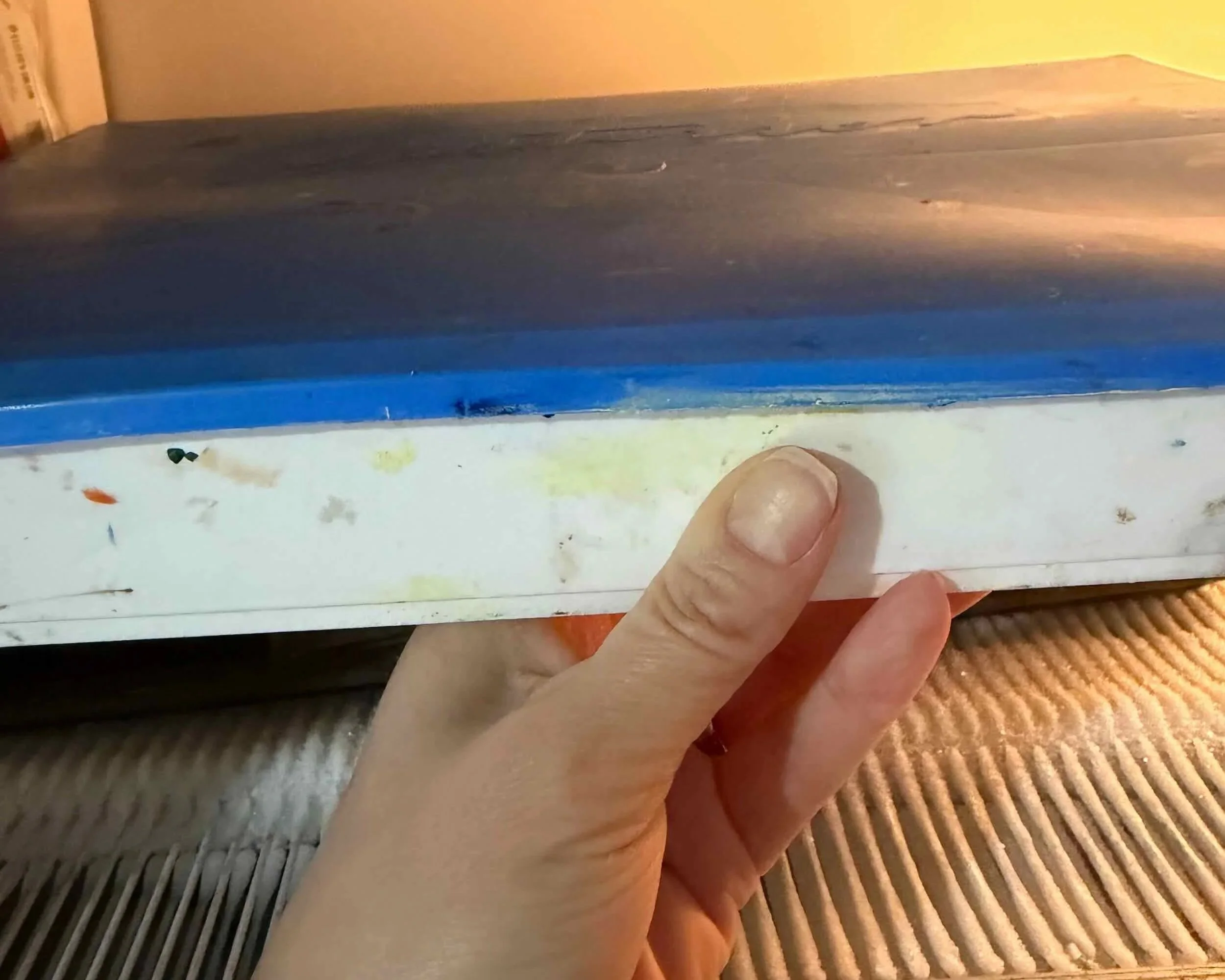
I store my oil palette in the freezer between painting sessions.
The importance of Safe and Sustainable Art Practice
Ultimately, these choices allow me to maintain a sustainable oil painting practice that fits into my life, not the other way around. Painting safely in my home studio gives me peace of mind, and the systems I have built help me make the most of the time I have.
Thank you for taking the time to read and for supporting thoughtful, sustainable studio practices. Sharing this process is part of how I continue to build a body of work that honors both craft and daily life. Please share any tips you have for safe painting in the comments below. I’m always looking to improve my painting systems and practices.