More Than a Painting: What I Want Students to Take Away From My Watercolor Workshops
When I first began teaching watercolor workshops, my main goal was fairly simple. I wanted people to have the opportunity to try watercolor, learn a few techniques, and leave with a painting they were proud of.
Over time, I have realized that the finished painting is only part of what I want students to take away from a workshop.
I want them to leave with a little more confidence, a better understanding of watercolor, and hopefully a desire to keep creating.
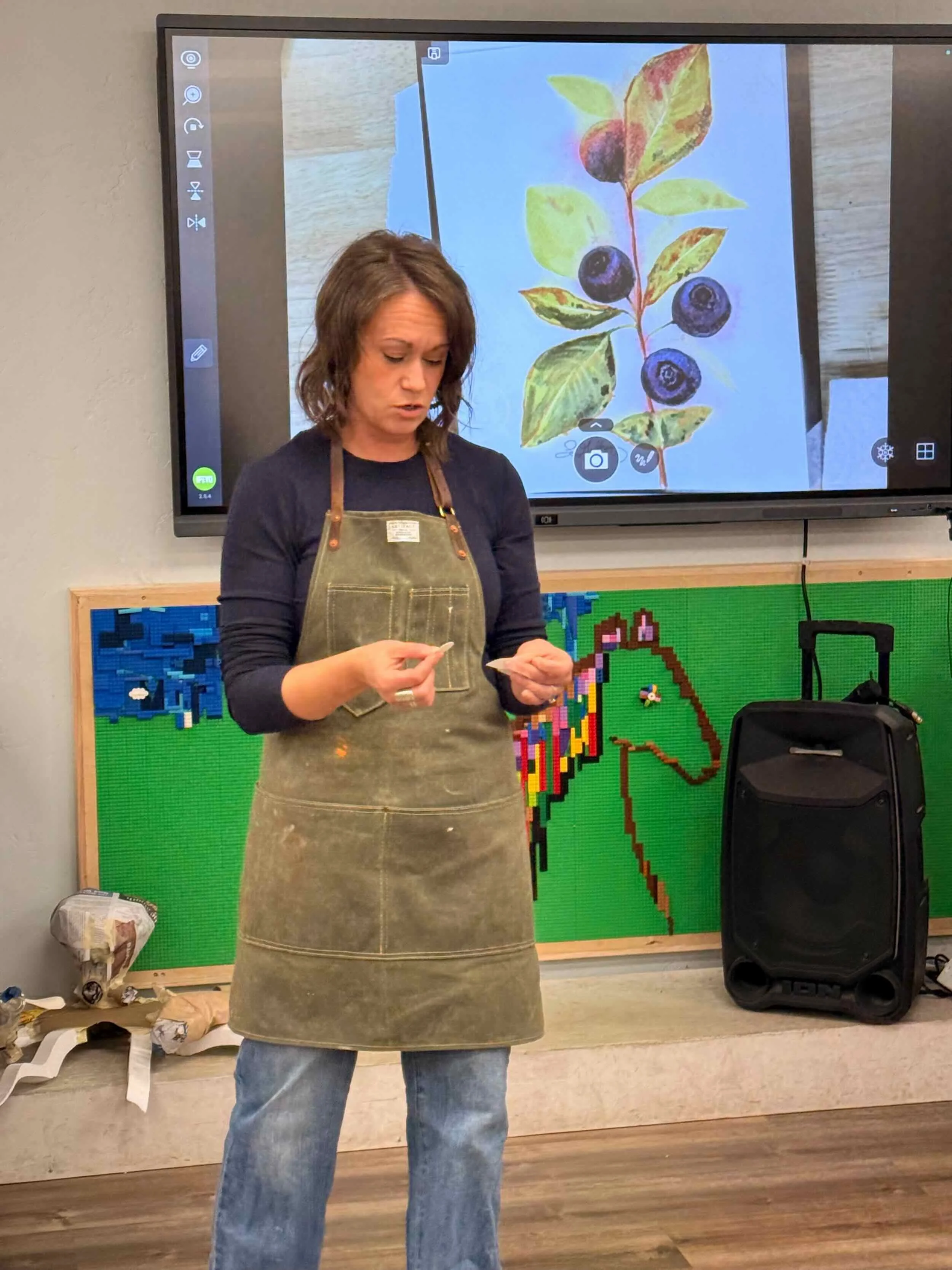
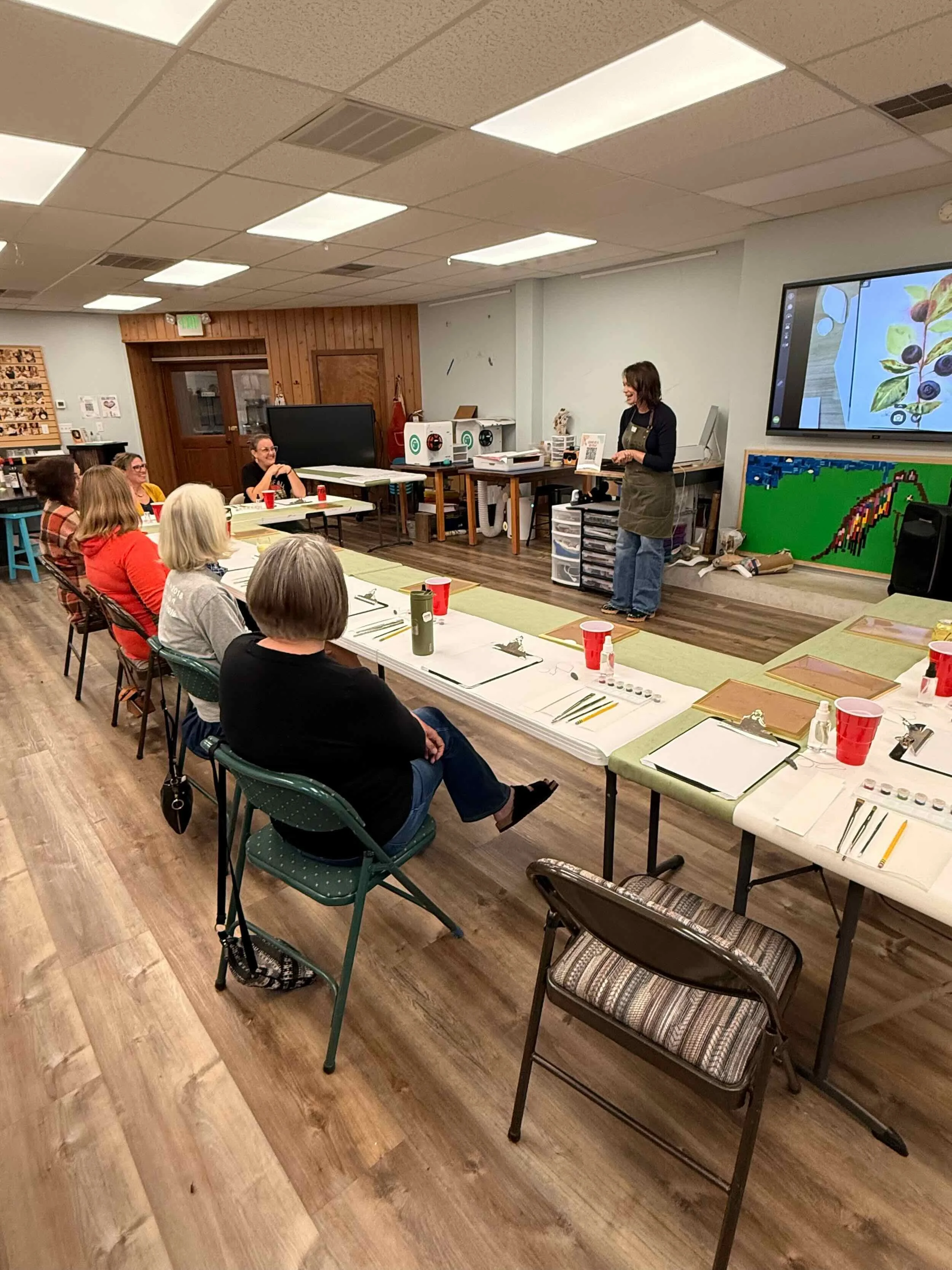
Explaining my method of teaching at a worskshop.
Creating an Approachable Starting Point
Watercolor can feel intimidating.
There is something about the white paper and the fluidity of the paint that can make it seem like every brushstroke matters. If you are new to painting, it is easy to assume that you need to know how to draw or understand color theory before you can even begin.
That is one of the reasons I design my workshops to be approachable.
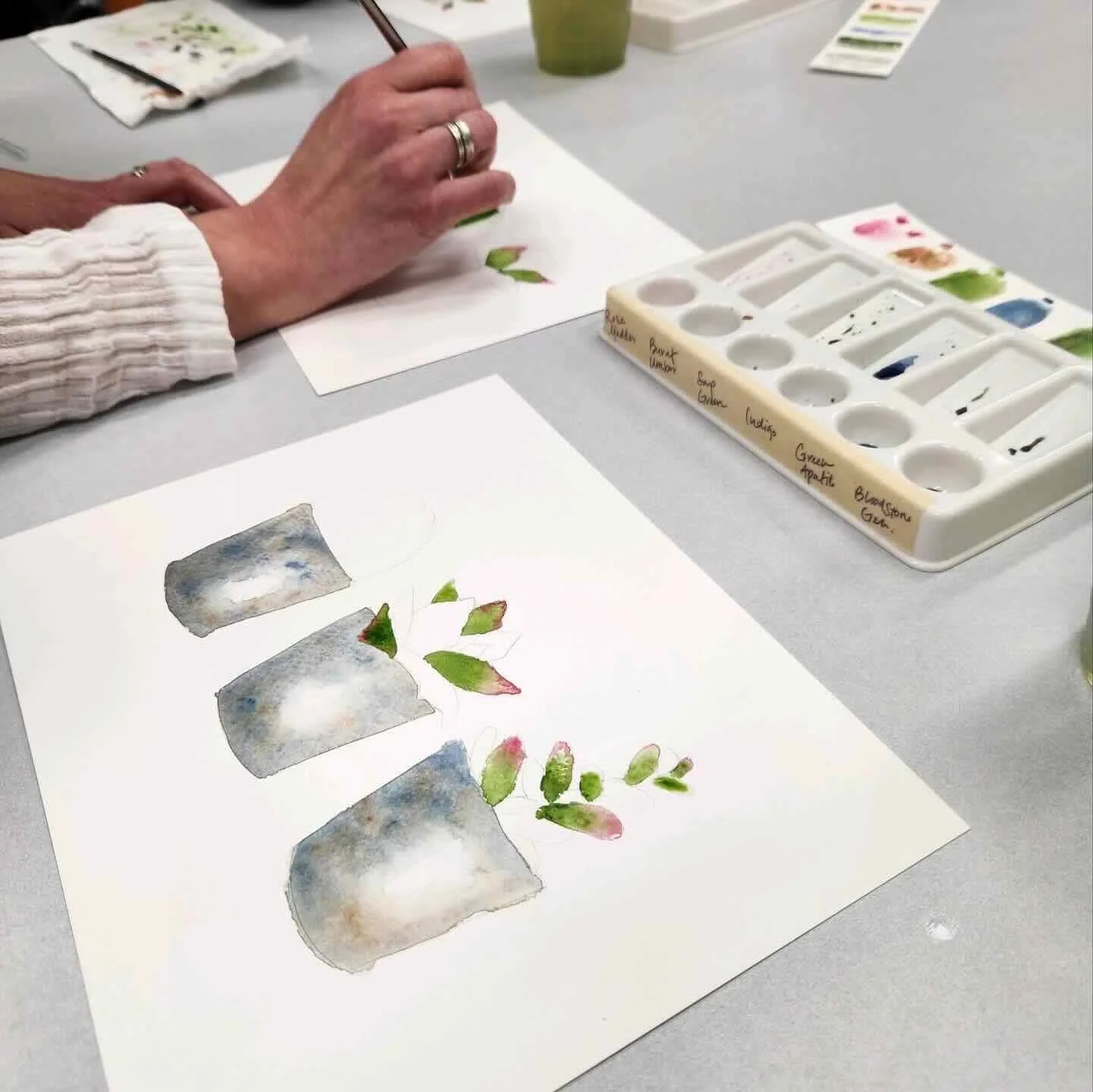
I provide the materials, prepare the painting ahead of time, and keep the drawing requirements minimal. Instead of spending the first part of the class worrying about whether everyone has drawn the subject correctly, we can focus on actually painting.
My goal is to remove some of those initial barriers so students can experience the process itself.
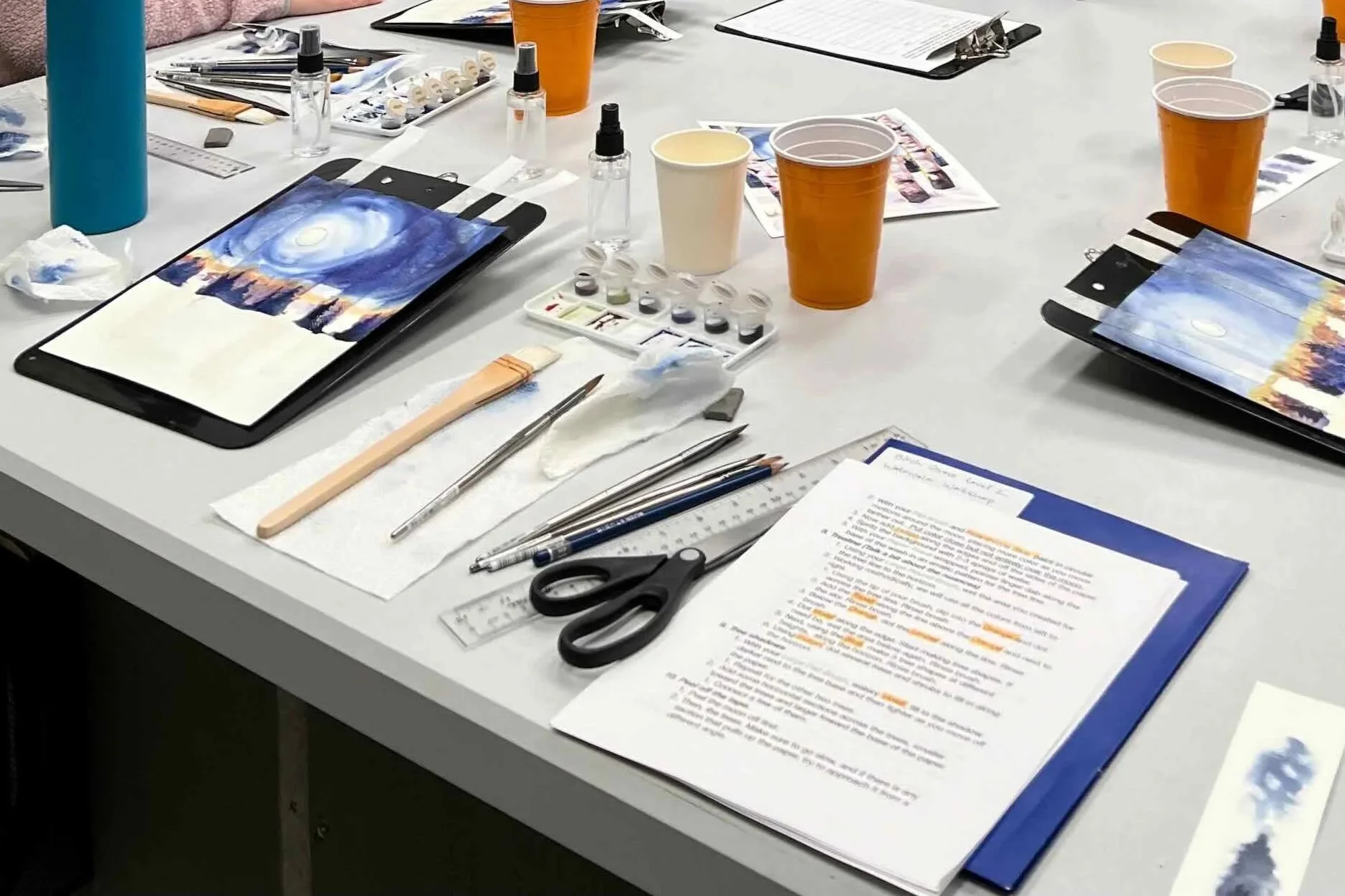
A workshop in progress.
Watching It Come Together
One of the most rewarding parts of teaching is introducing a skill to someone who may not yet have the confidence to believe they can do it.
There is often a moment during a workshop when I can see the shift happen. A student has been carefully watching the demonstration, maybe hesitating a little as they begin, and then suddenly the technique starts to make sense. A few brushstrokes later, they are looking at their painting differently.
Sometimes it is a particular technique that clicks. Sometimes it is seeing how several layers of paint begin to work together. And sometimes it is simply the realization that the person sitting at the table has created something they were not sure they could create when they walked through the door.
I love that moment.
There is a particular thrill in watching someone's capability emerge as their confidence catches up with it. I can explain a technique, demonstrate it, and encourage them to give it a try, but ultimately they have to make the brushstroke themselves.
Getting to watch that happen is a big part of why I teach.
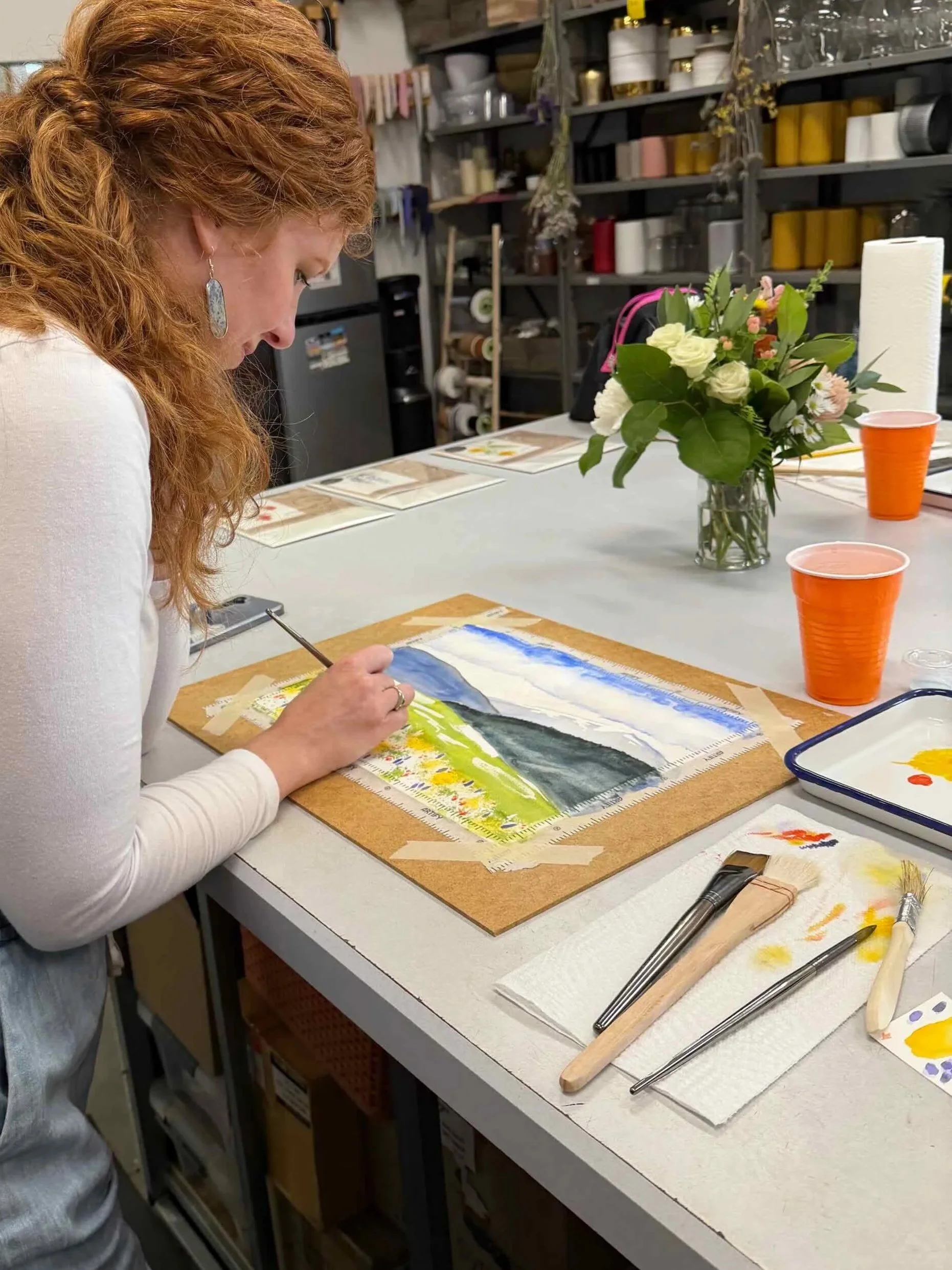
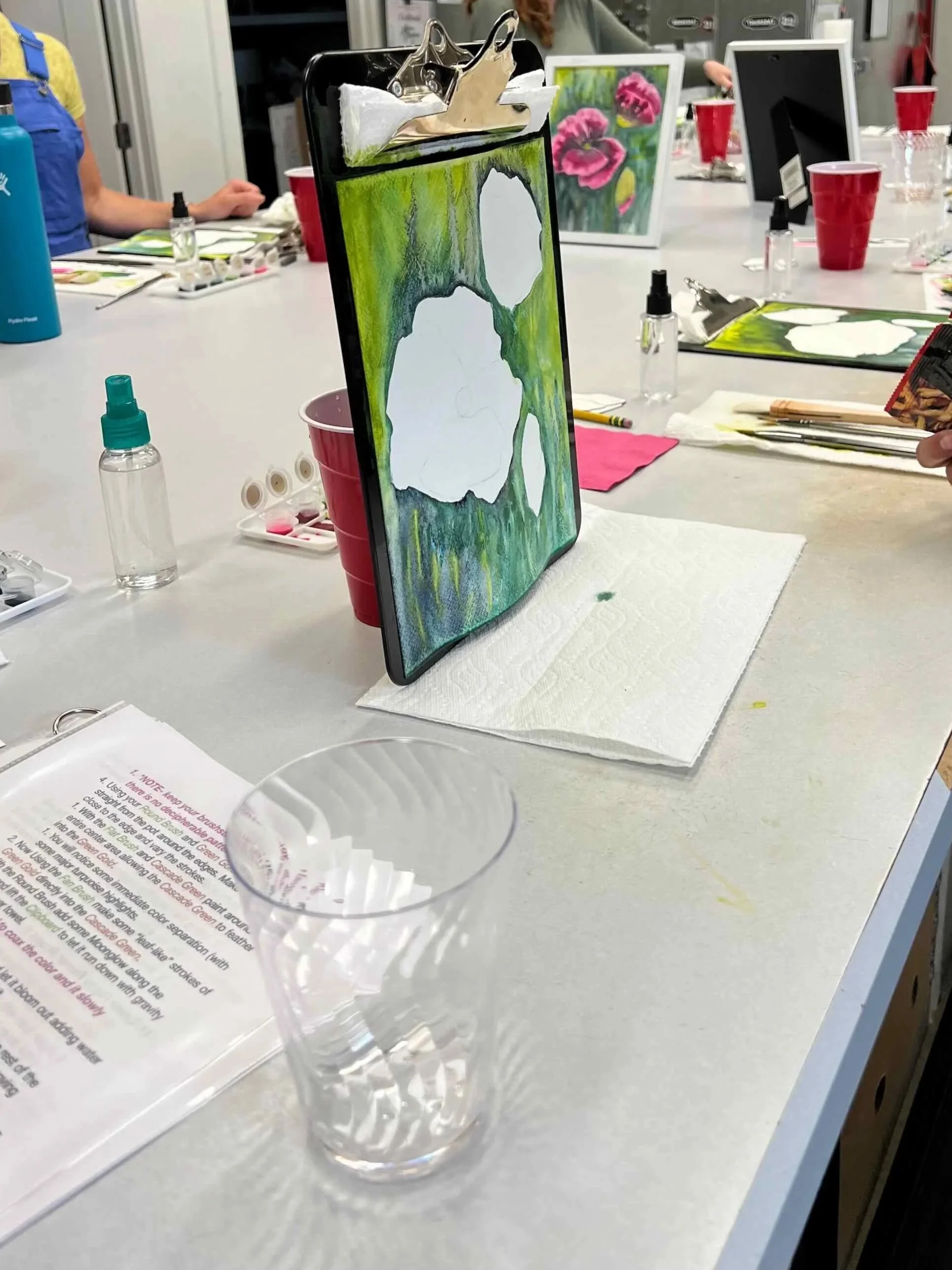
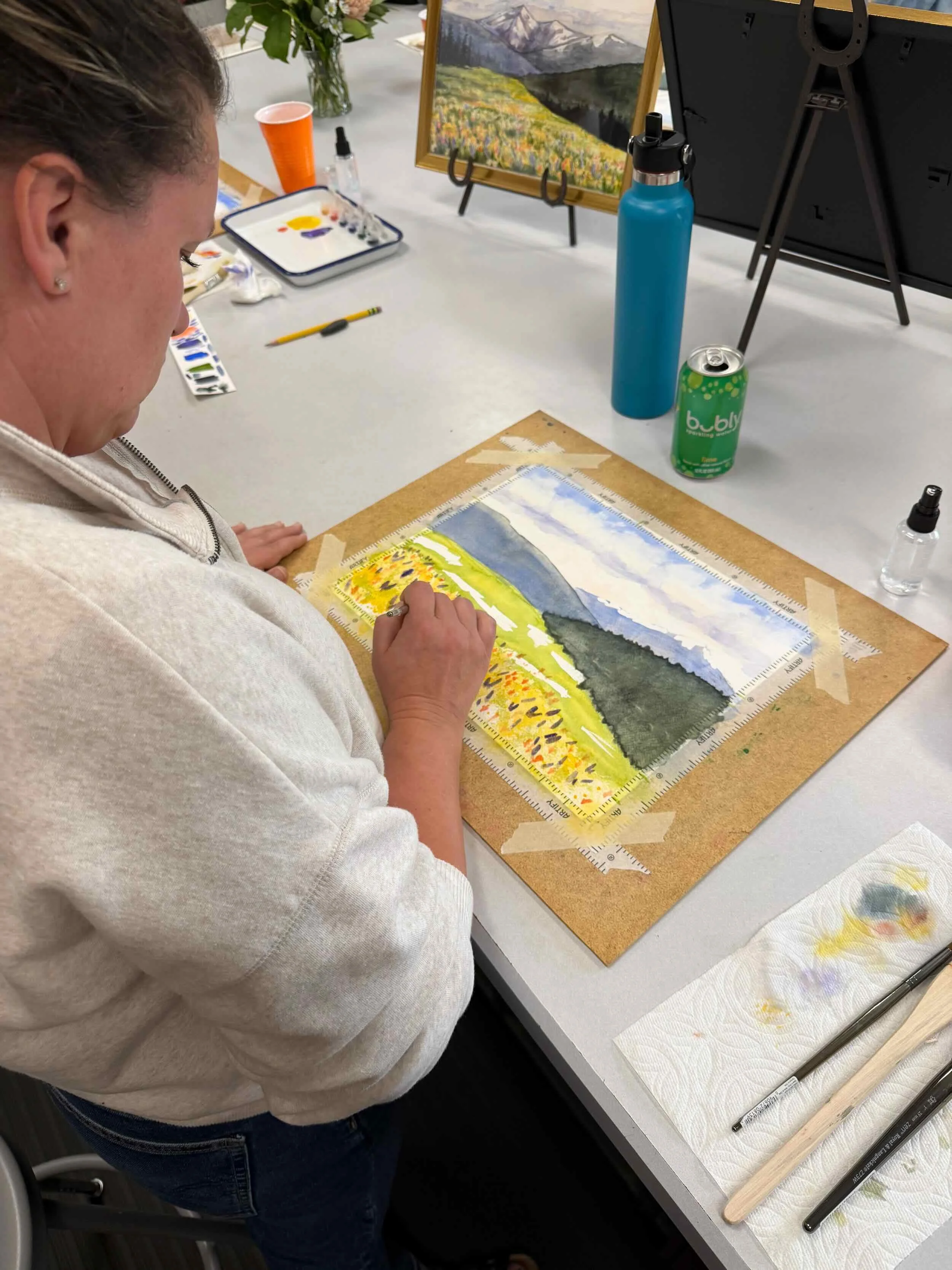
One of my students working on a Level 3 workshop painting.
Learning Through a Painting
Each workshop is built around a particular subject, but the subject is really a vehicle for learning.
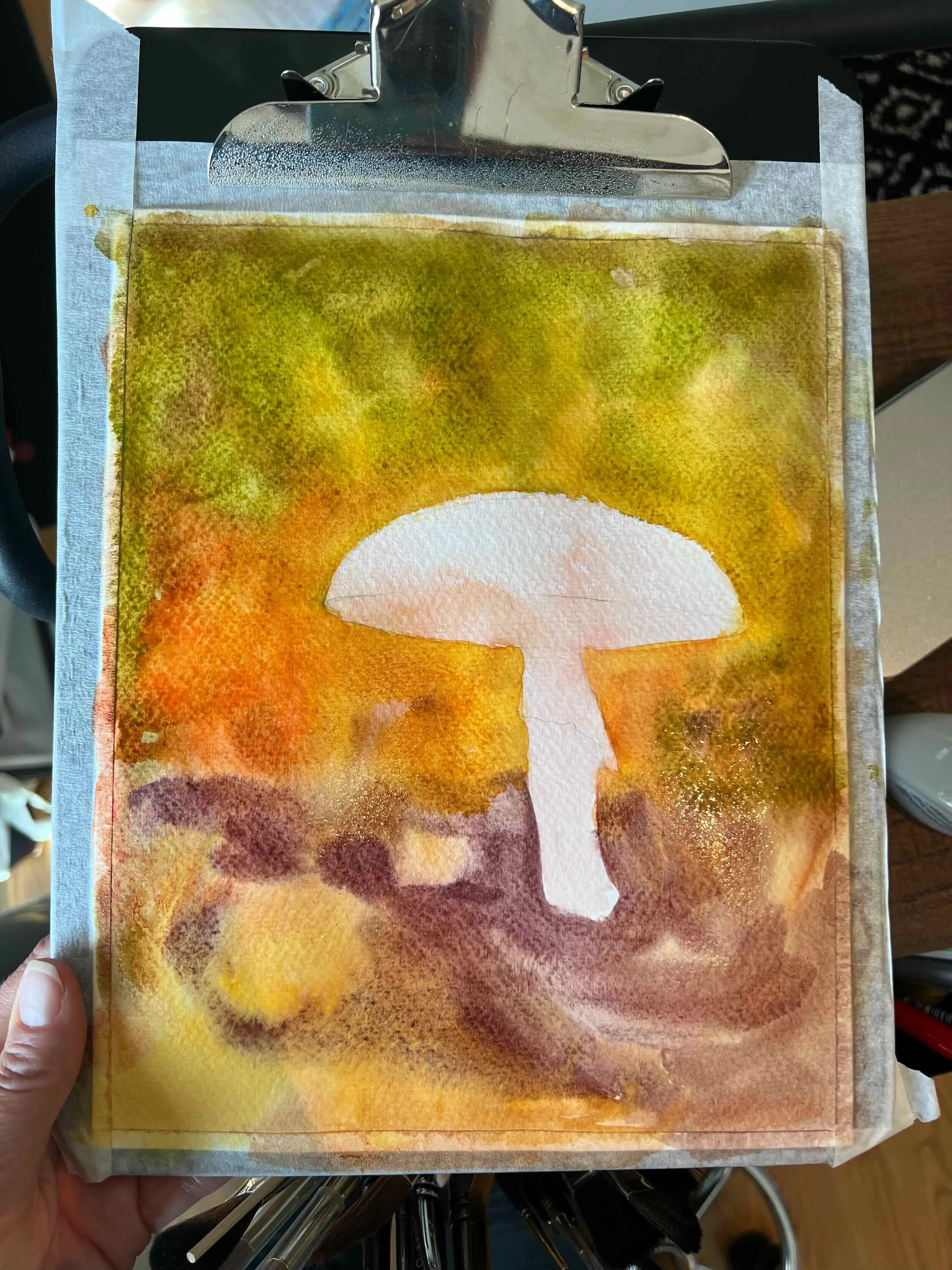
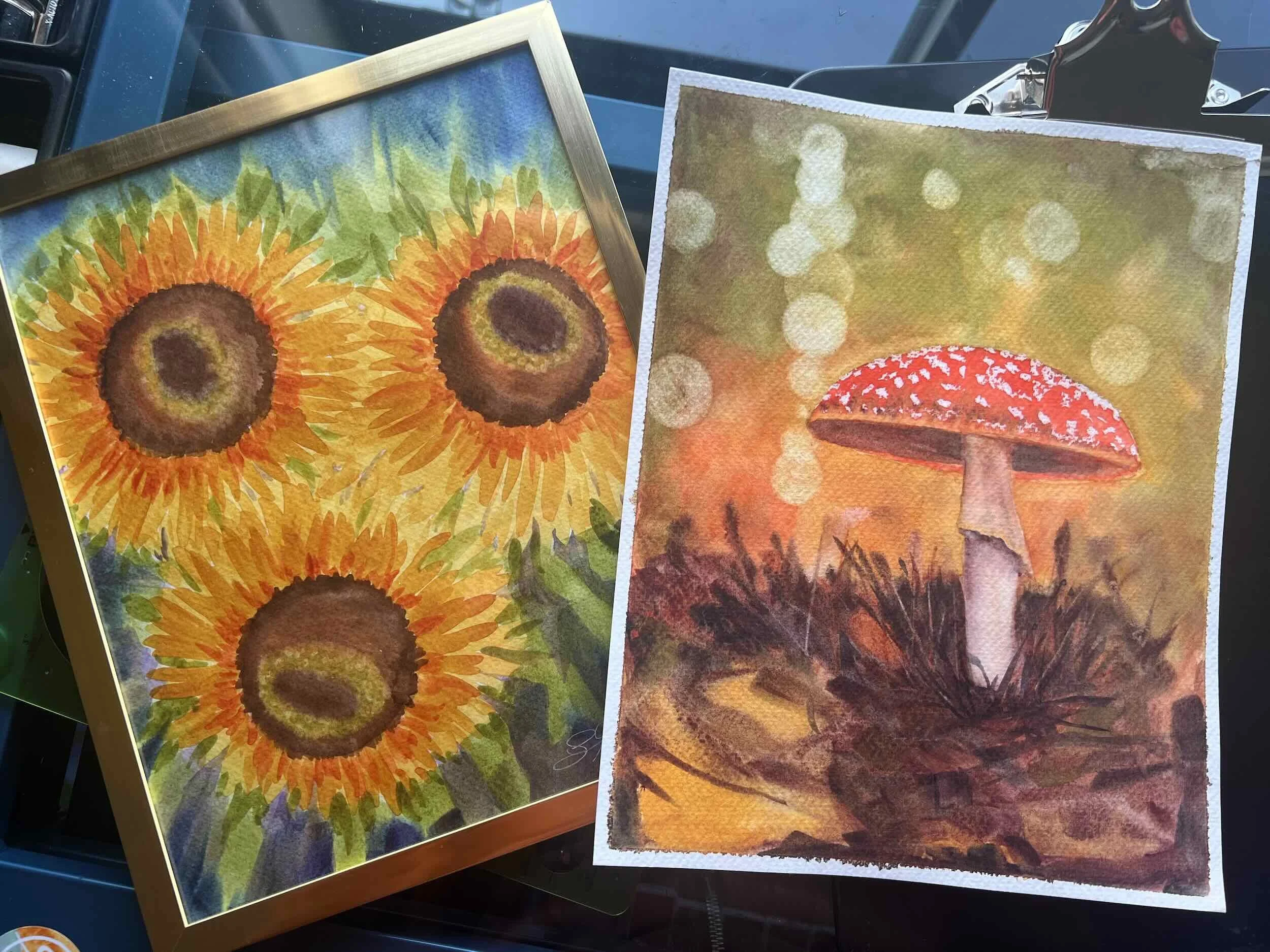
A sunflower might introduce negative painting and lifting. A bird nest can become an opportunity to experiment with wet washes, brushwork, spatter, and even paint blowing. A mushroom painting might introduce bokeh and oil pastel resist.
These techniques are useful beyond the particular painting we create that day.
I want students to start recognizing possibilities in their own work. Maybe they notice a place where lifting could create a highlight. Maybe they begin seeing how a background can make a subject stand out. Maybe they discover that a technique they thought would be difficult is actually something they enjoy.
That is where the learning becomes more meaningful.
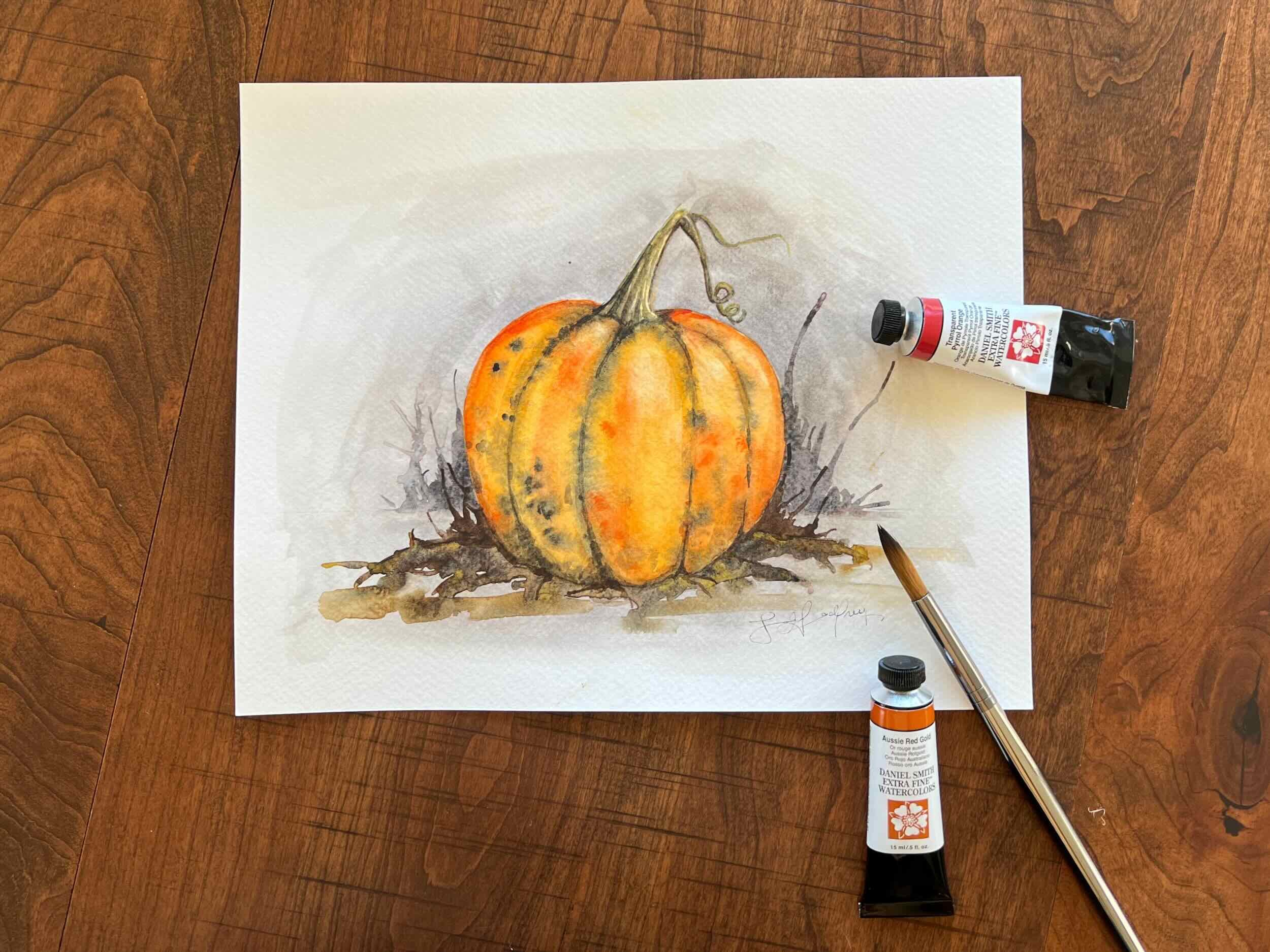
A Finished Painting Still Matters
Even though the techniques are important, I also believe there is value in leaving with something finished.
Students always get to take home their original artwork, and I provide a frame for it. There is something satisfying about being able to put your finished painting into a frame and immediately enjoy it rather than putting it in a folder and forgetting about it.
But I also want the painting to be the beginning of the experience, not the end.
Students take home the pigments they used during the workshop as well. I want them to have the opportunity to sit down with those same materials later and try the techniques again on their own.
The day after the workshop, I send each student a follow up email with tips from the class, a supply list, information about where to find those supplies, and templates they can print and use to recreate another painting.
That follow up is intentional.
By the time students leave the workshop, they have learned the process, created an original painting, taken home the materials they worked with, and have resources waiting for them when they are ready to try it again.
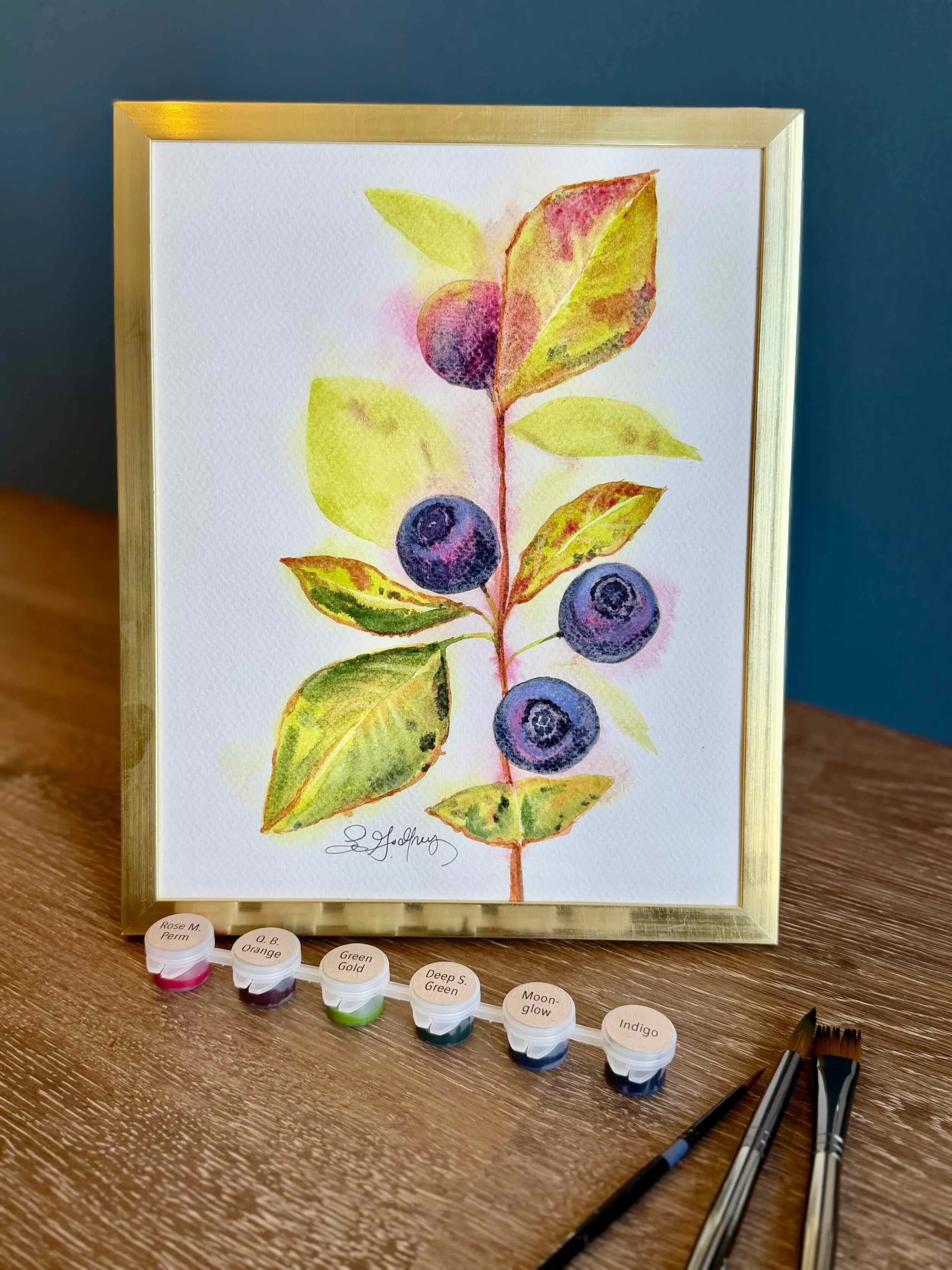
Framed workshop and pigment sample.
Learning Together
One of my favorite parts of teaching in person is the atmosphere that develops in the room.
Everyone arrives with a different level of experience. Some students may have painted for years, while others may not have picked up a paintbrush since childhood. Some work quickly. Others take their time.
That variety is part of what makes a workshop interesting.
Questions are always welcome. If something is not making sense, we stop and work through it. If someone wants to try something a little differently, we talk about it.
I am not interested in creating a room where everyone is expected to produce an identical painting.
The demonstration gives students a path to follow, but there is still room for their own hands, their own decisions, and their own interpretation.
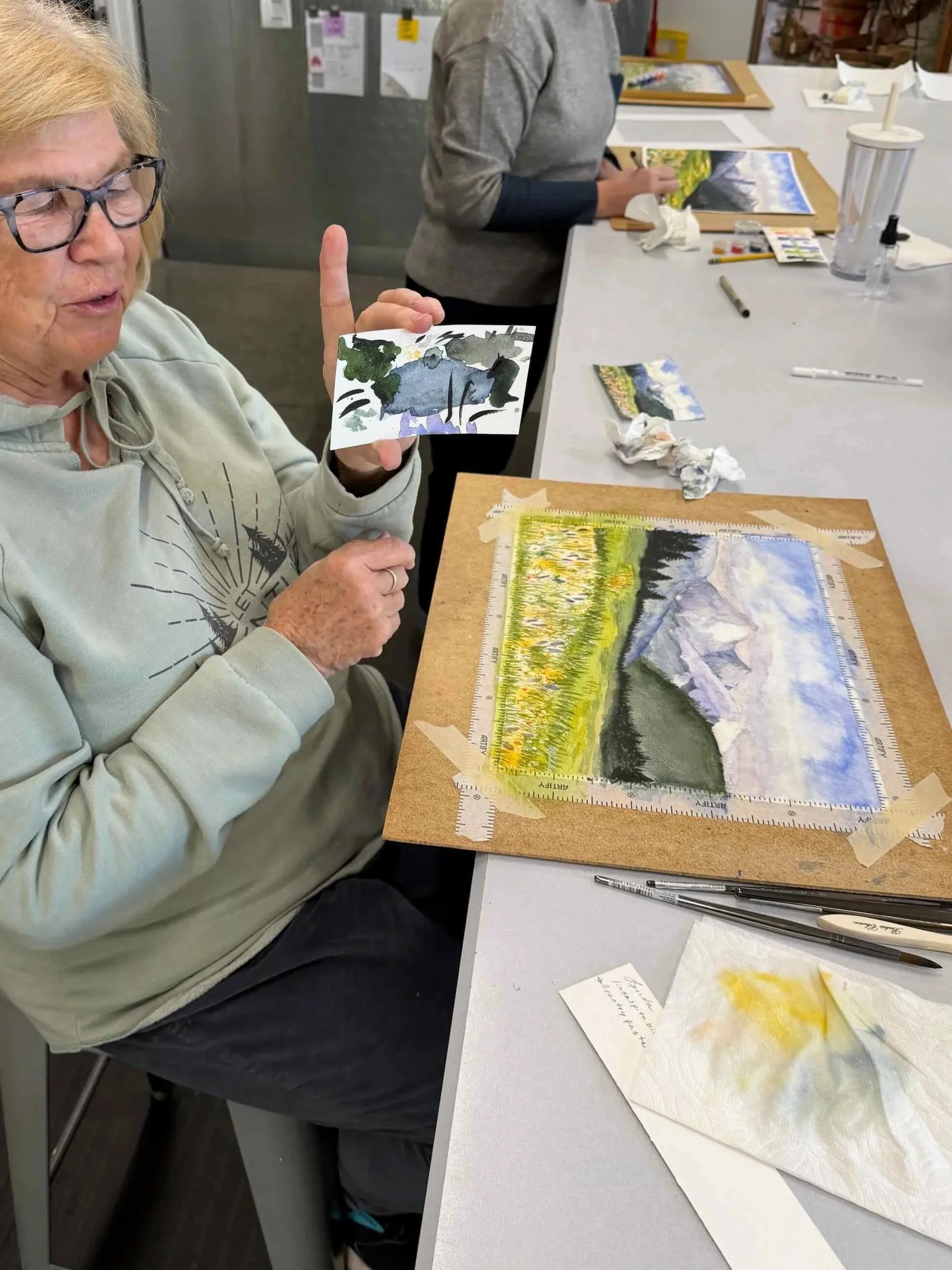
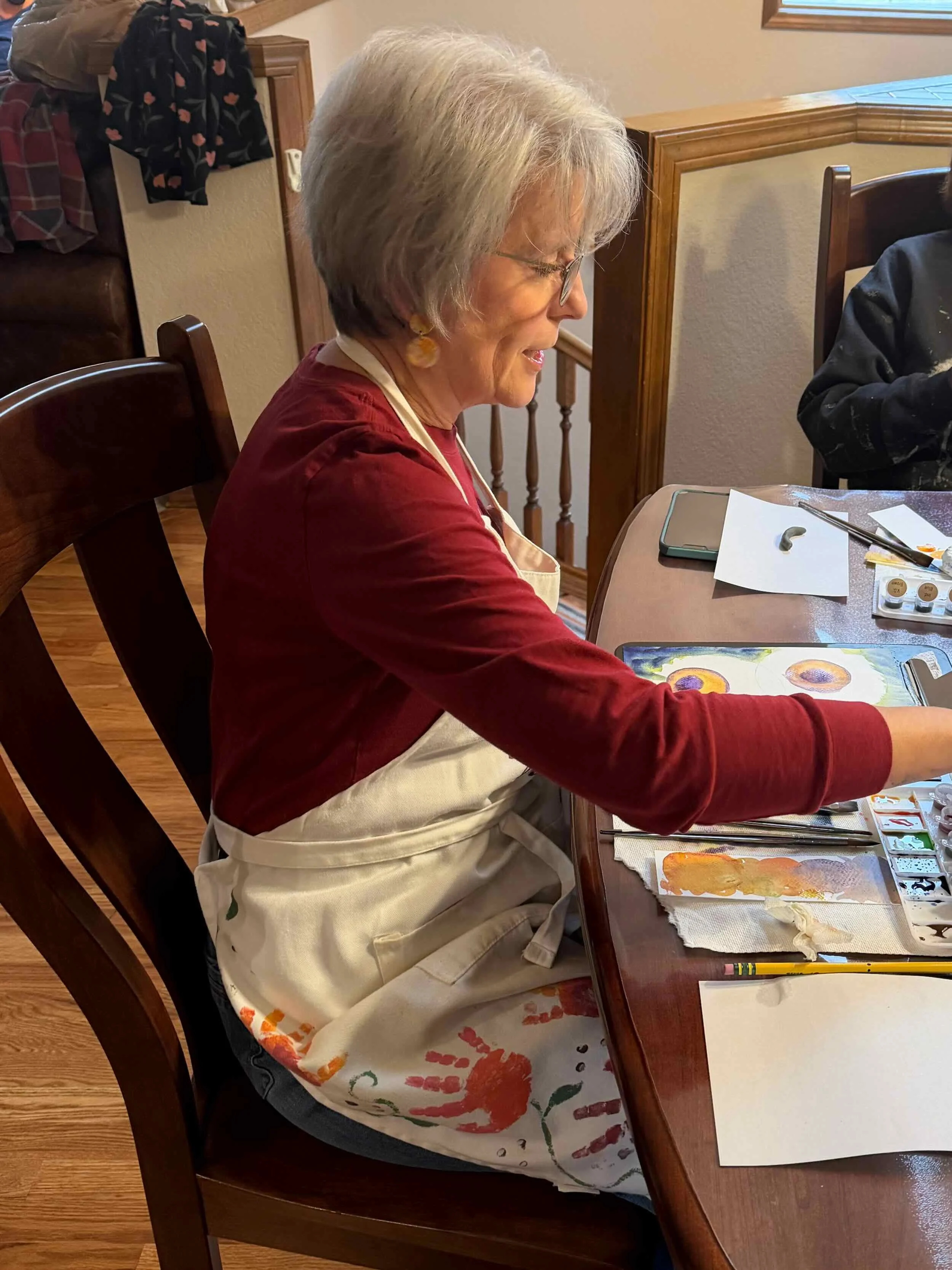
A student discussing color mixing with me.
Growing From One Workshop to the Next
As my workshops have developed, I have also started thinking more intentionally about progression.
My Level 1 workshops are designed to be accessible to beginners while introducing foundational watercolor skills. From there, Level 2 workshops build on familiar techniques while adding new challenges. At the Level 3 level, students have more experience with watercolor and can begin making more independent artistic decisions.
That progression is something I really enjoy.
A student might begin with a simple introduction to watercolor and eventually find themselves working on a larger piece, experimenting with new brushes, using liquid frisket, mixing more intentional colors, and making choices about how they want their finished painting to look.
Watching that development is incredibly rewarding.
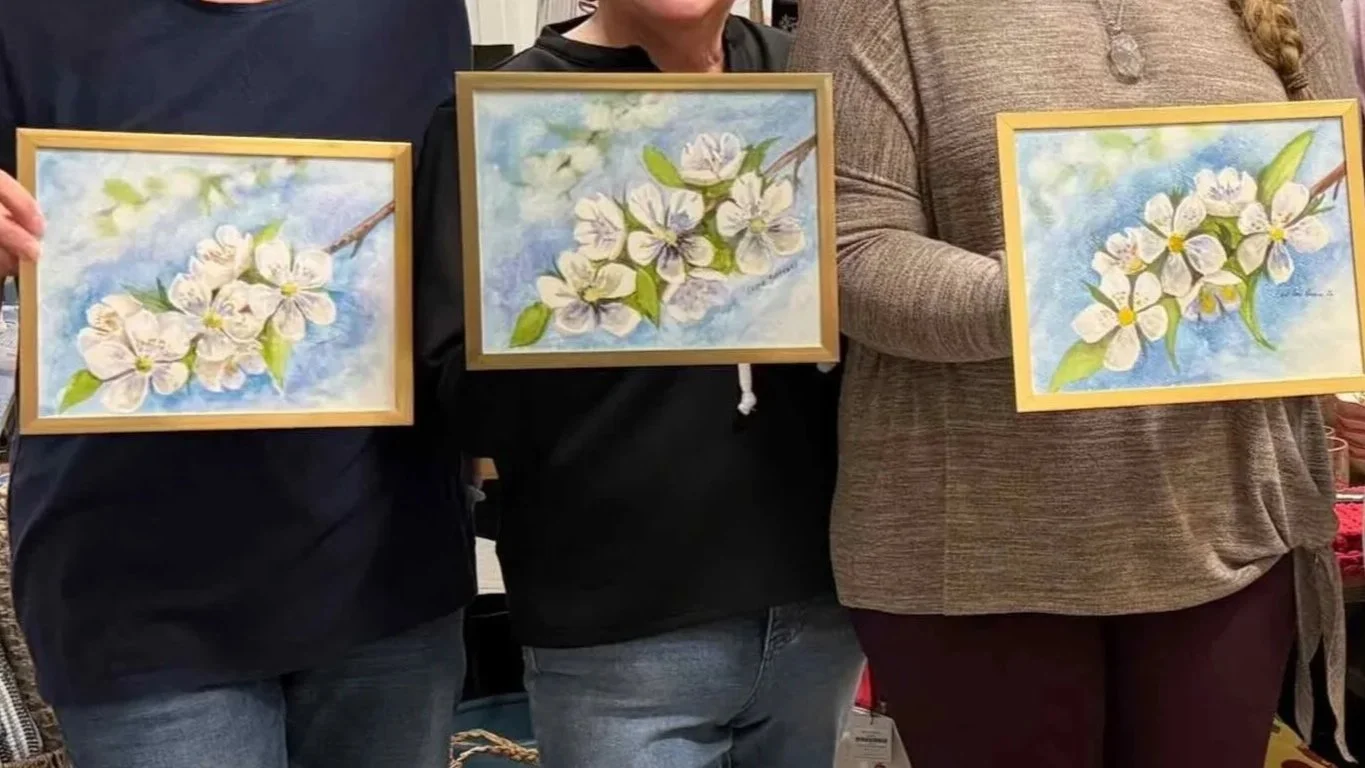
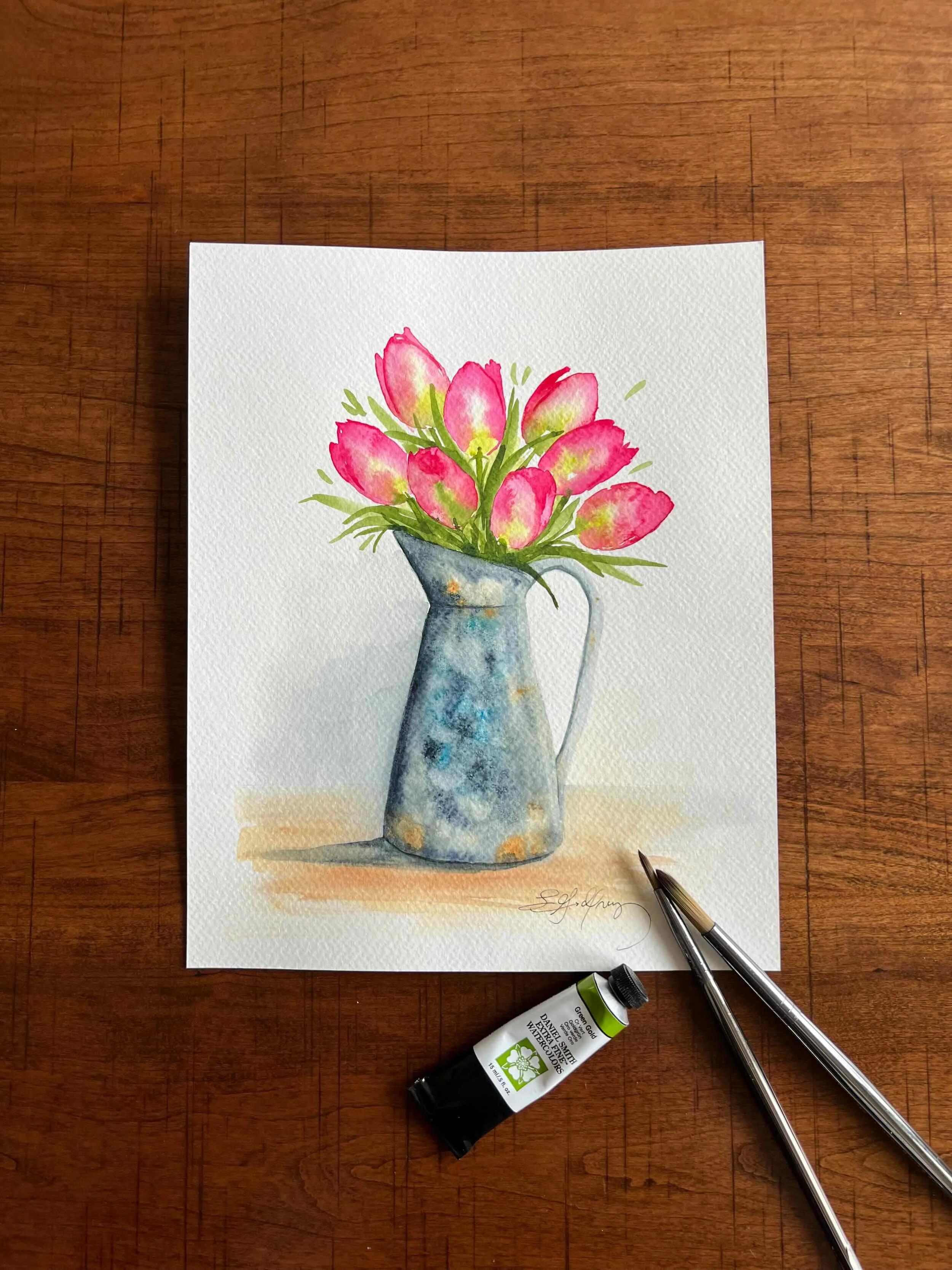
Beauty and nuance in every finished painting!
The Part That Happens After Class
Perhaps the most important thing I hope students take home is not actually the painting.
It is the feeling that they can do this.
Maybe they leave wanting to paint again. Maybe they notice light differently the next time they are outside. Maybe they pull out the paints they brought home and experiment on their own. Maybe they use one of the templates from my follow up email to recreate the painting with a different color palette or make something entirely their own.
Those small moments are what make teaching worthwhile to me.
Watercolor has become such an important part of my own artistic practice because it continually invites me to observe, experiment, and respond to what is happening on the paper. I hope my workshops offer students a small version of that same experience.
Not perfection.
Not a finished painting that looks exactly like mine.
Just a few hours to slow down, learn something new, make something with your own hands, and perhaps discover that you are more capable than you thought.
That, to me, is what a watercolor workshop is really about.