Exploring Bokeh: Finding New Ways to Paint Light and Atmosphere
One of the things I enjoy most about being an artist is that there is always something new to explore. Even after years of painting, I can still come across a technique that makes me stop and think, I wonder what would happen if I tried that?
Bokeh is one of those techniques.
Although I have been experimenting with bokeh for a while, I recently decided to make it a much more intentional part of a watercolor painting. It has been an interesting way to continue exploring one of the subjects I return to again and again in my work, light.
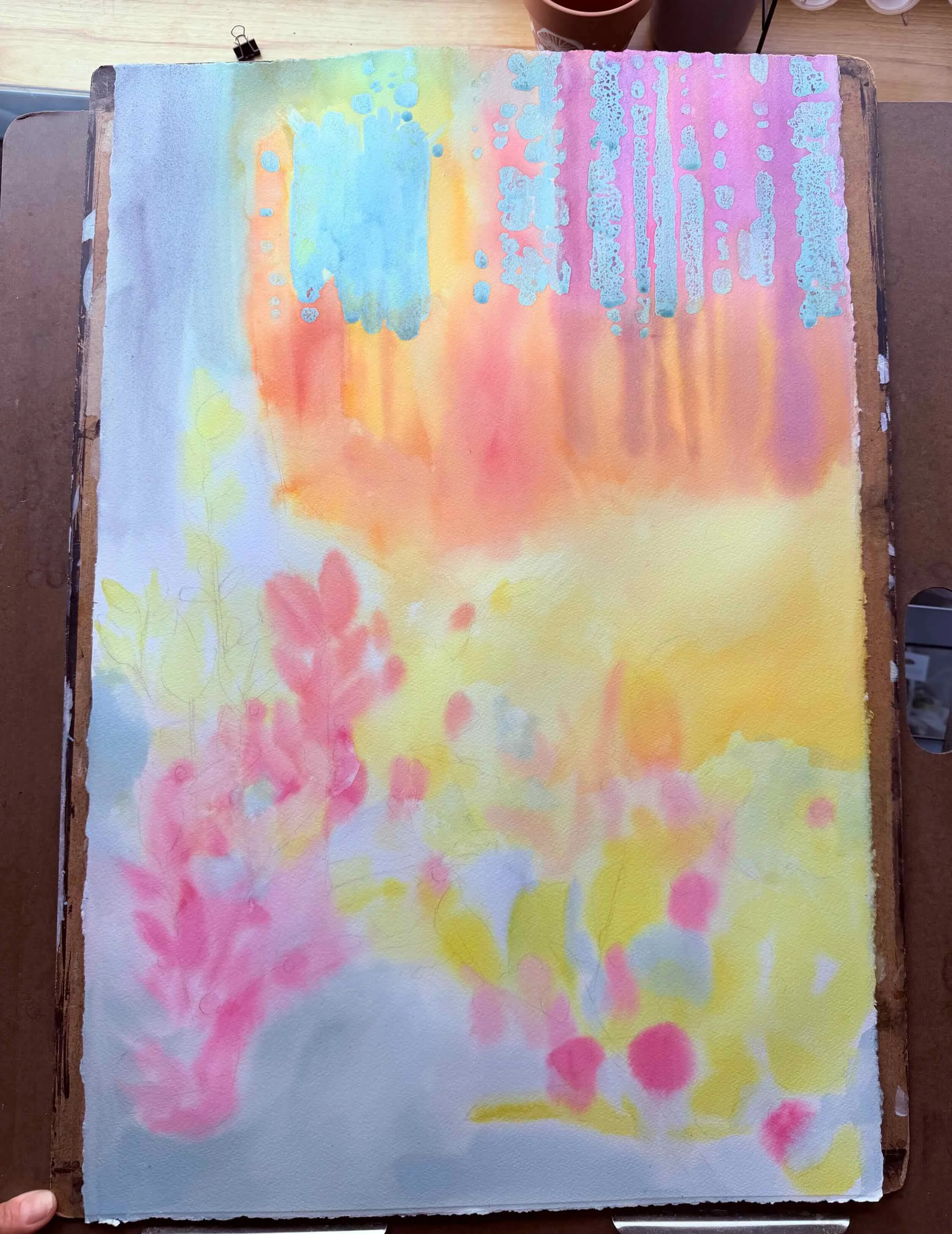
Early stages of my new work- L.Godfrey
What Exactly Is Bokeh?
The word bokeh comes from the Japanese word boke, meaning blur or haze. The term became associated with photography as photographers began intentionally using shallow depth of field to create soft, out of focus areas in an image.
You have probably seen it without realizing it. A photograph might have a sharply focused subject in the foreground while lights, foliage, or other details in the background dissolve into soft circles or glowing shapes.
The interesting thing about bokeh is that the blur itself becomes beautiful.
Instead of every part of an image being clearly defined, some areas are suggested rather than described. We understand that something is there, but we don't necessarily need to know exactly what it is.
That idea really intrigues me as a painter.
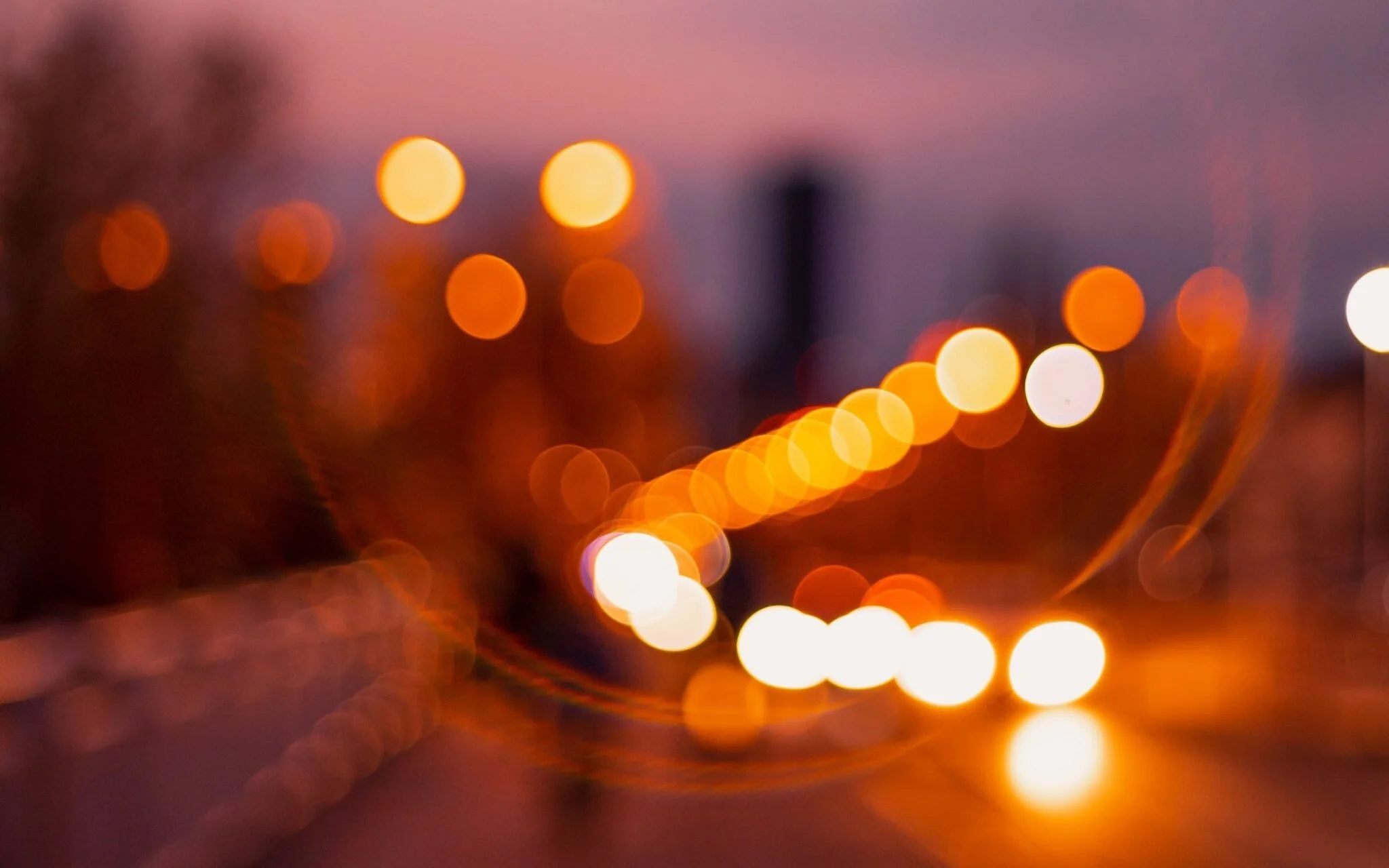
An example of bokeh in photography.
Why Does Bokeh Work So Well?
I think part of the success of bokeh comes from contrast.
Our eyes are naturally drawn to areas of sharpness and detail. When those areas are surrounded by softness, they become even more noticeable. The opposite is also true. Areas of blur create visual breathing room and allow the more defined parts of a painting to stand out.
Bokeh can also create a sense of depth. A soft shape in the background tells us that the landscape continues beyond what we can clearly see. It gives a painting atmosphere without requiring me to paint every leaf, branch, or blade of grass.
And then there is the quality of light itself.
A sharply painted object tells us what something looks like. A soft glow can tell us how something feels.
That distinction is something I have become increasingly interested in as I have spent more time studying light in my own work.
A Technique I Keep Coming Back To
My exploration of bokeh actually started before this painting.
A few winters ago, I experimented with the technique in an oil painting. I enjoyed the way it created softness and depth, and it stayed somewhere in the back of my mind as a technique I wanted to revisit.
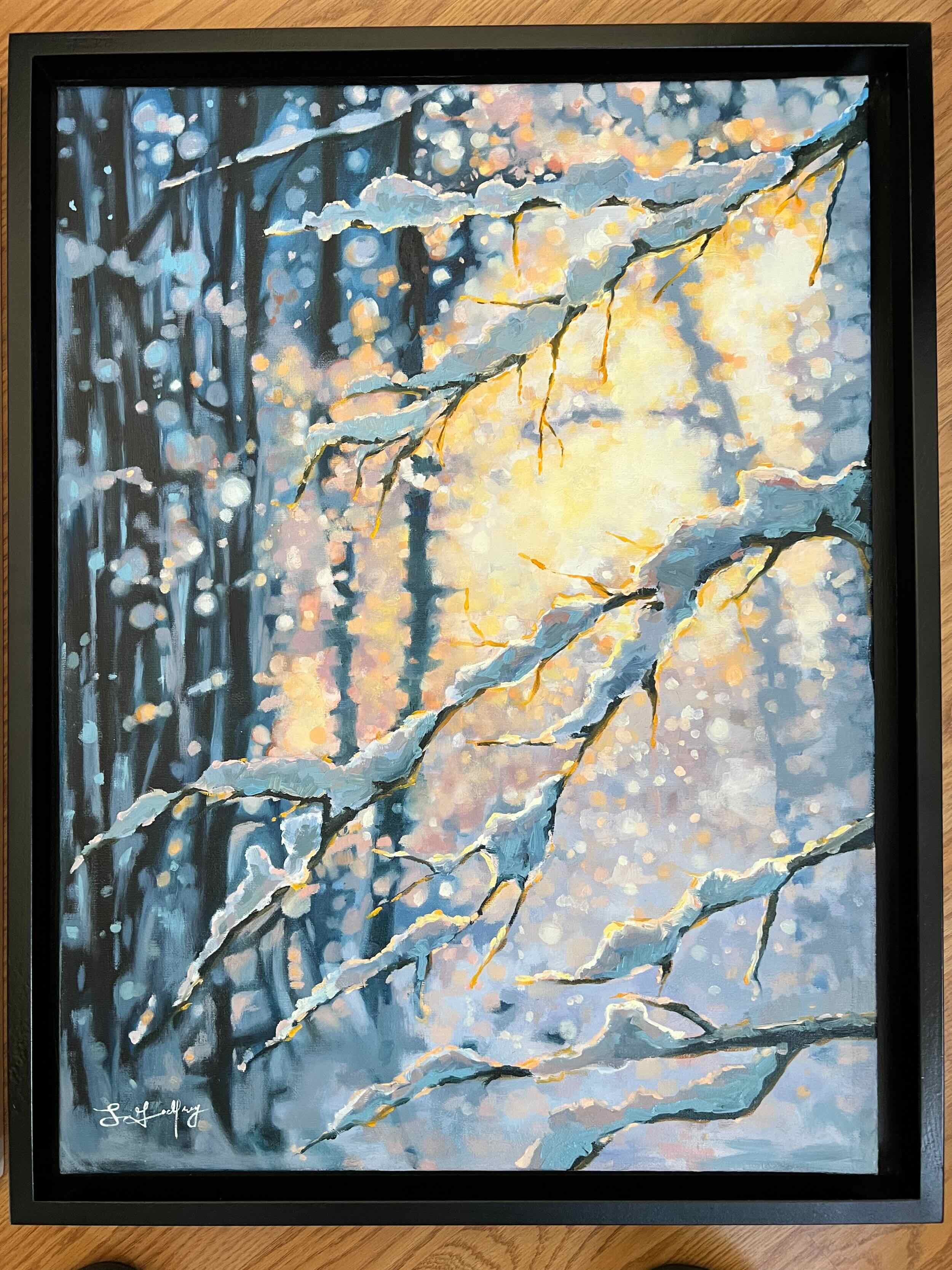
An oil painting I created a few years ago exploring bokeh.
Then last year, I decided to take that exploration into the classroom. I taught a watercolor workshop centered around the bokeh technique, and it turned out to be a very successful workshop. It was fun to see students discover how much atmosphere they could create by intentionally letting some areas of their paintings become soft and indistinct.
Teaching a technique often gives me an entirely different perspective on it. When I have to explain why something works, I find myself examining it more carefully myself.
That experience stayed with me.
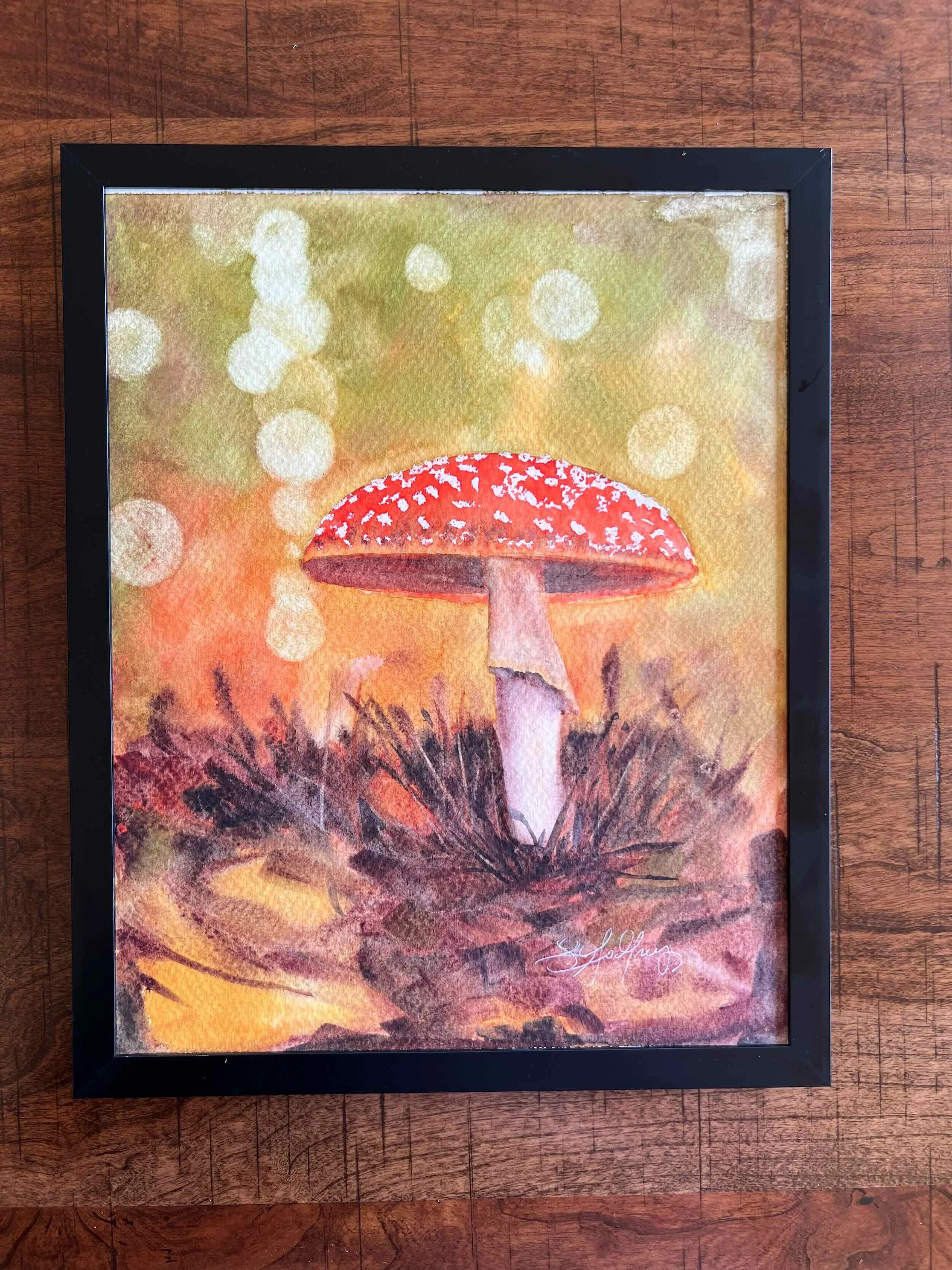
The example from my watercolor bokeh workshop last autumn.
So when I began working on my most recent watercolor, I knew I wanted to explore bokeh again. This time, rather than simply incorporating it as an interesting effect, I wanted the technique to play a more intentional role in the painting.
Bringing Bokeh Into My Watercolor Practice
Watercolor seemed like a particularly interesting medium for this because it naturally lends itself to softness and transparency. At the same time, creating an intentional blur in watercolor requires some thought. Unlike photography, I can't simply change the focus of the lens. I have to create the illusion of focus and softness with pigment, water, edges, and timing.
That became part of the experiment.
I wanted the bokeh to feel like light filtering through the landscape rather than simply a collection of painted circles. I varied the size and softness of the shapes and allowed some areas to remain more subtle than others.
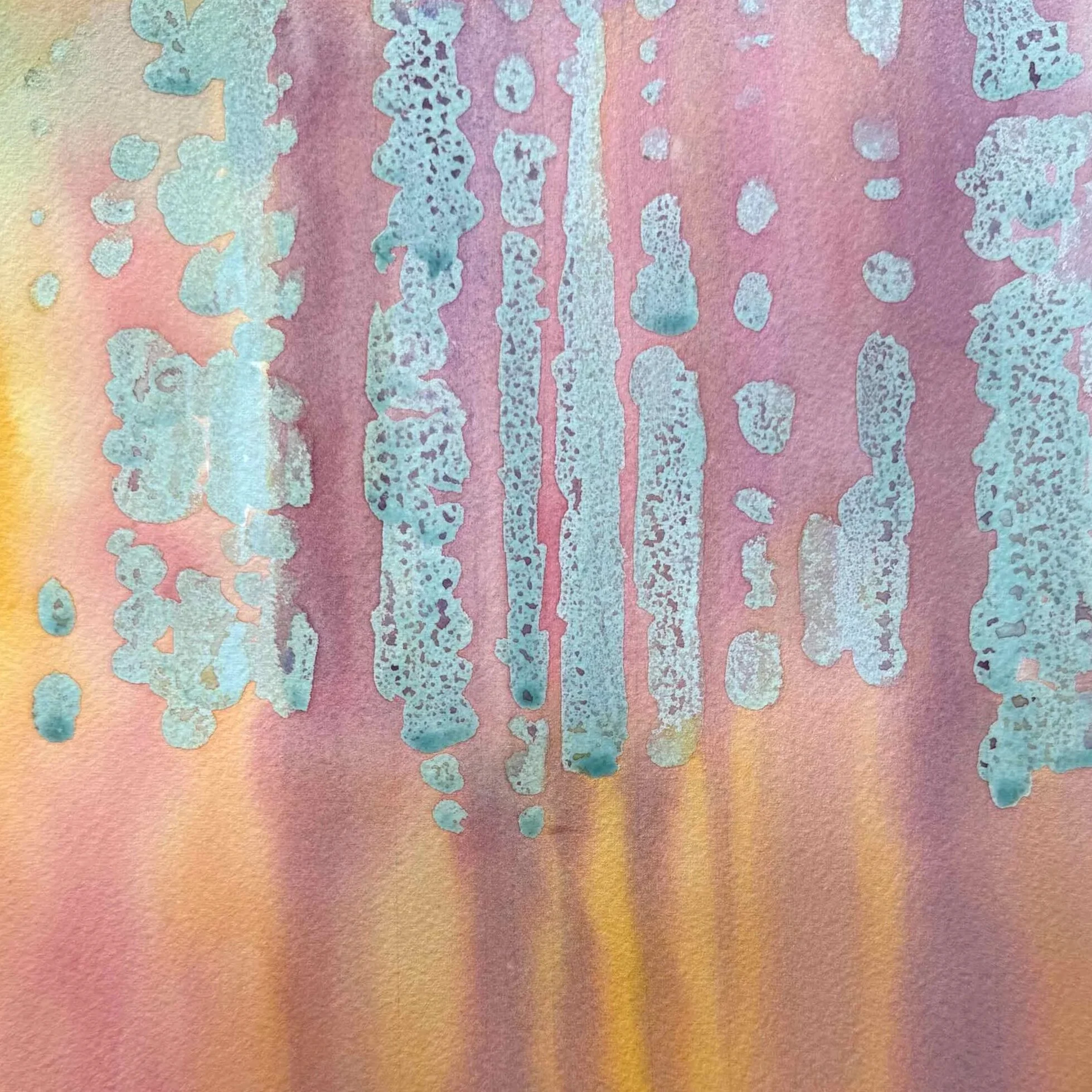
Close up of the masked layer and diffused washes I used to create the bokeh background.
The goal wasn't to make every glowing shape equally obvious.
In fact, I found that the quieter areas were just as important as the more noticeable ones. Some of the bokeh needed to almost disappear into the surrounding washes so that the viewer could sense the light without immediately analyzing it.
That balance is what made the technique so interesting to me.
Learning Through Experimentation
Trying something new always reminds me that learning to paint isn't necessarily about mastering a technique immediately.
Sometimes it is about discovering what the technique can teach you.
With bokeh, I found myself thinking differently about edges. I became more aware of where I wanted clarity and where I wanted softness. I had to consider how much information the viewer actually needed and where I could let the painting simply suggest what was happening.
That is something I think about often in my work.
There can be a temptation, especially as an artist, to explain everything. To add another detail, another branch, another texture, another brushstroke because we know it is there.
But sometimes the painting becomes stronger when we leave something unresolved.
Bokeh gave me another way to practice that idea.
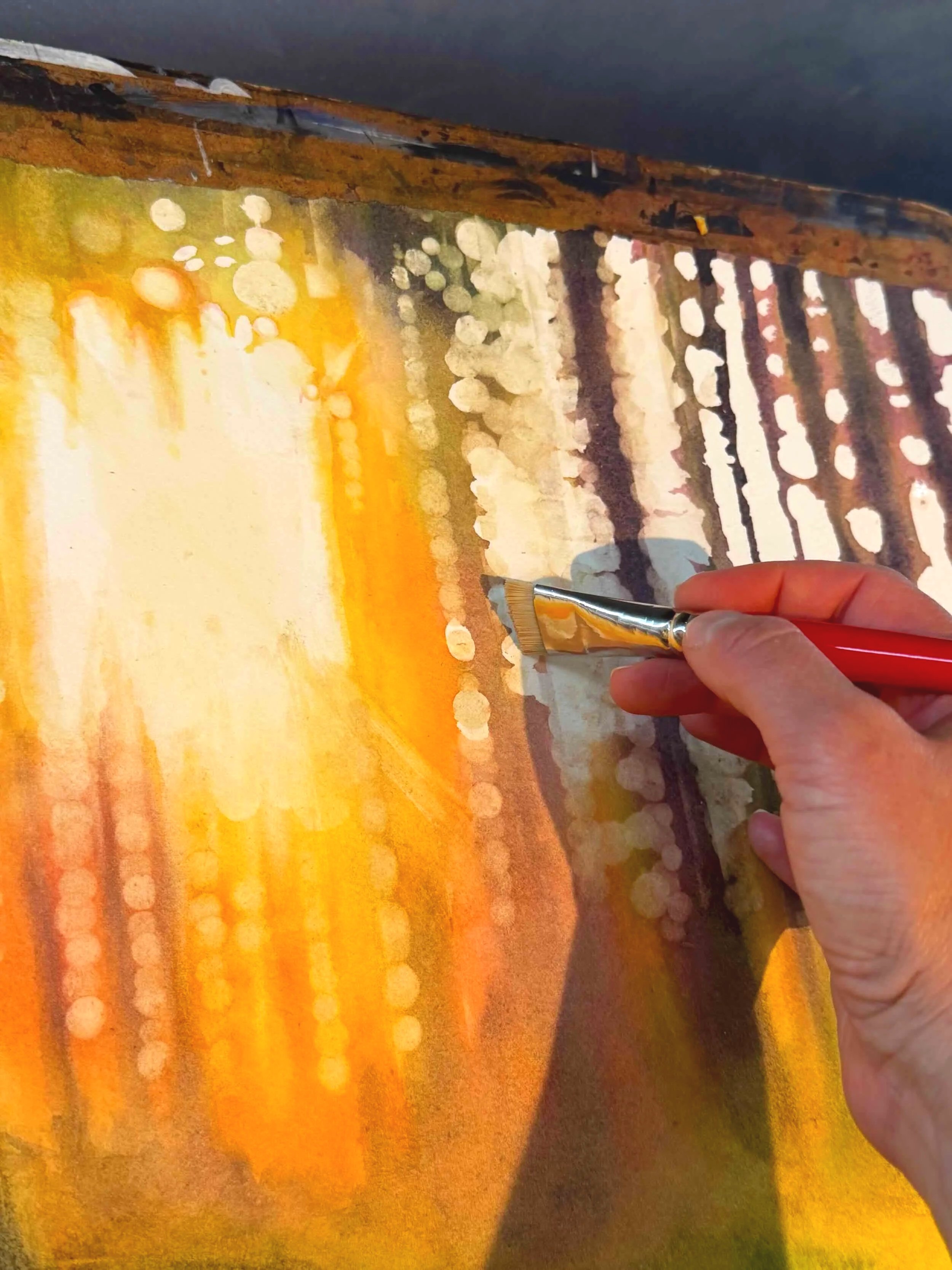
Lifting more light circles from the background washes.
A New Way to Paint Light
What excites me most about experimenting with bokeh isn't necessarily the technique itself. It is having another tool for communicating something I have been fascinated by for a long time.
Light doesn't always arrive in crisp, clearly defined shapes. Sometimes it filters through trees. Sometimes it reflects off water. Sometimes it catches the edge of something in the distance. Sometimes it is barely visible at all.
Painting those moments requires more than simply observing what is in front of me. It requires deciding what needs to be described and what can simply be felt.
That is where bokeh becomes more than a photographic effect.
It becomes a way of painting atmosphere.
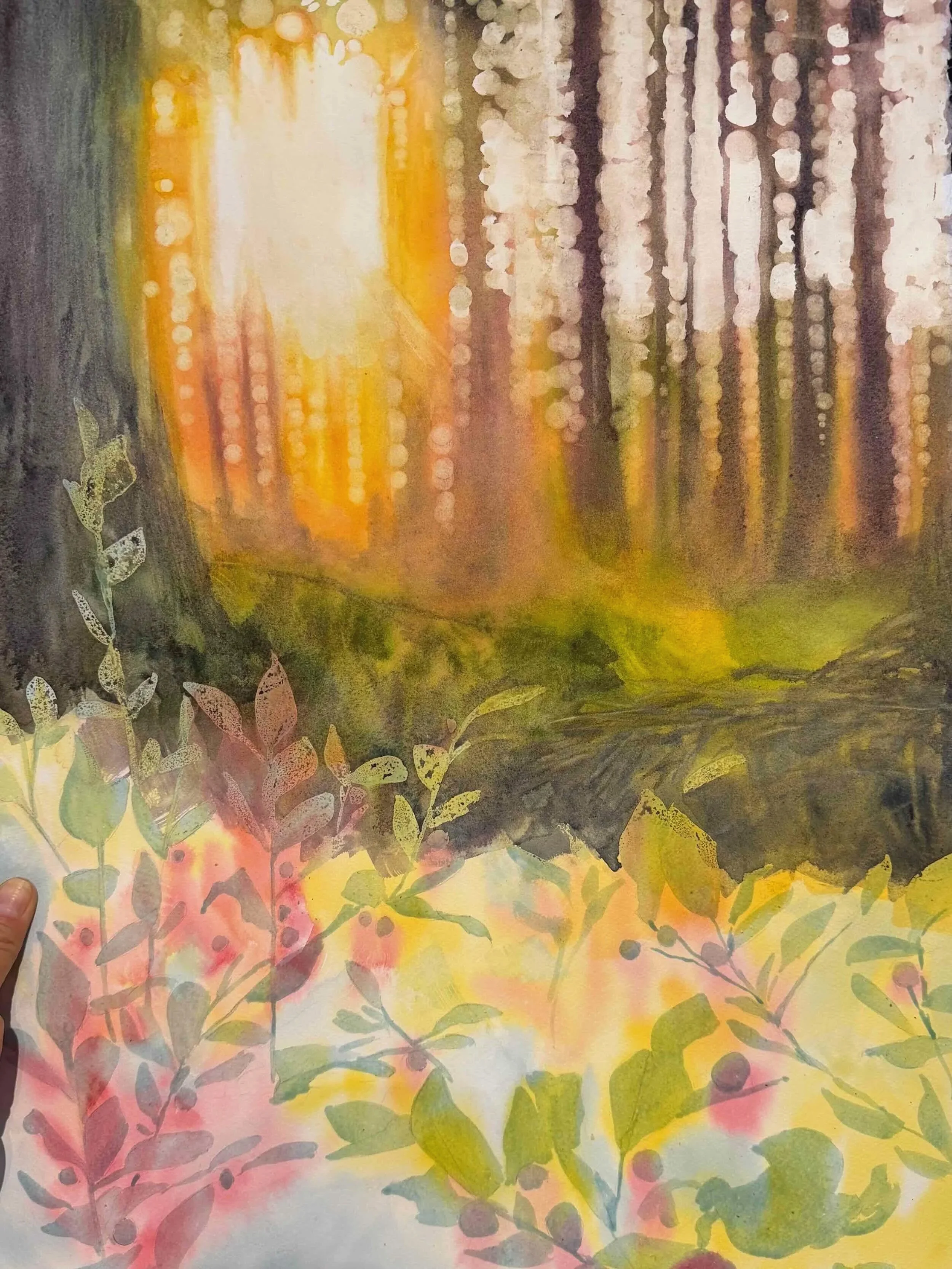
With the background finished, more crisp detail needs to be added to the foreground which creates the appropriate amount of contrast in soft verses hard edges.
I'm sure this won't be my last experiment with it. One of the best parts of trying a technique more than once is seeing how it changes from painting to painting. What worked in an oil painting a few winters ago, what I discovered while teaching the watercolor workshop last year, and what I explored in this most recent piece have all given me a slightly different understanding of the technique.
And perhaps that is the most valuable part of experimentation. A technique doesn't have to be entirely new to be worth revisiting. Sometimes returning to an idea allows you to see it differently.
This painting gave me the opportunity to make bokeh a more intentional part of the composition and to continue exploring the relationship between softness, depth, and light.
If you'd like to see how that exploration came together, you can view the finished watercolor on my portfolio page.