Painting Light: How I’ve Learned to See Instead of Just Look
Light is an elusive inspiration that I can't seem to get enough of. I've been chasing it through landscapes for as long as I can remember, and I suspect I always will. No two moments are ever the same. The angle of the sun shifts, clouds drift overhead, and colors change by the minute. Even a familiar scene can become something entirely new simply because the light has changed.
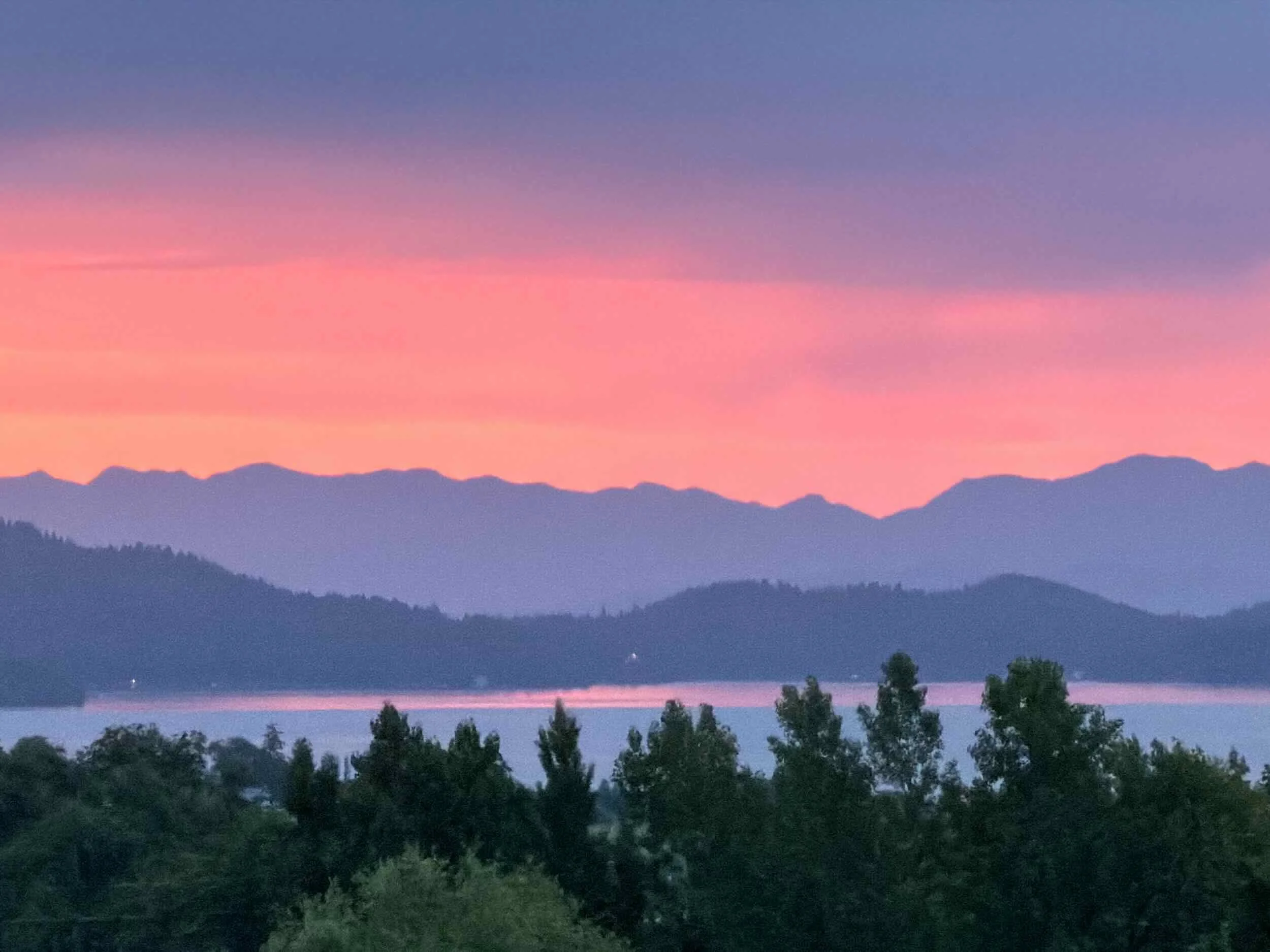
A coral sunset from my deck.
For me, light is what transforms a landscape from a collection of trees, mountains, and water into an experience. It creates atmosphere, evokes emotion, and invites the viewer to join me in that place. Capturing those fleeting moments is one of my biggest challenges and greatest joys of painting.
Light is an endless source of inspiration. Every sunrise, storm, or quiet evening offers a different lesson. There is always something new to observe, and every painting teaches me to see a little more carefully.
As artists, we are not simply painting the objects in front of us. We are painting the effect light has on those objects. Understanding that shift in perspective can completely change how we approach a painting.
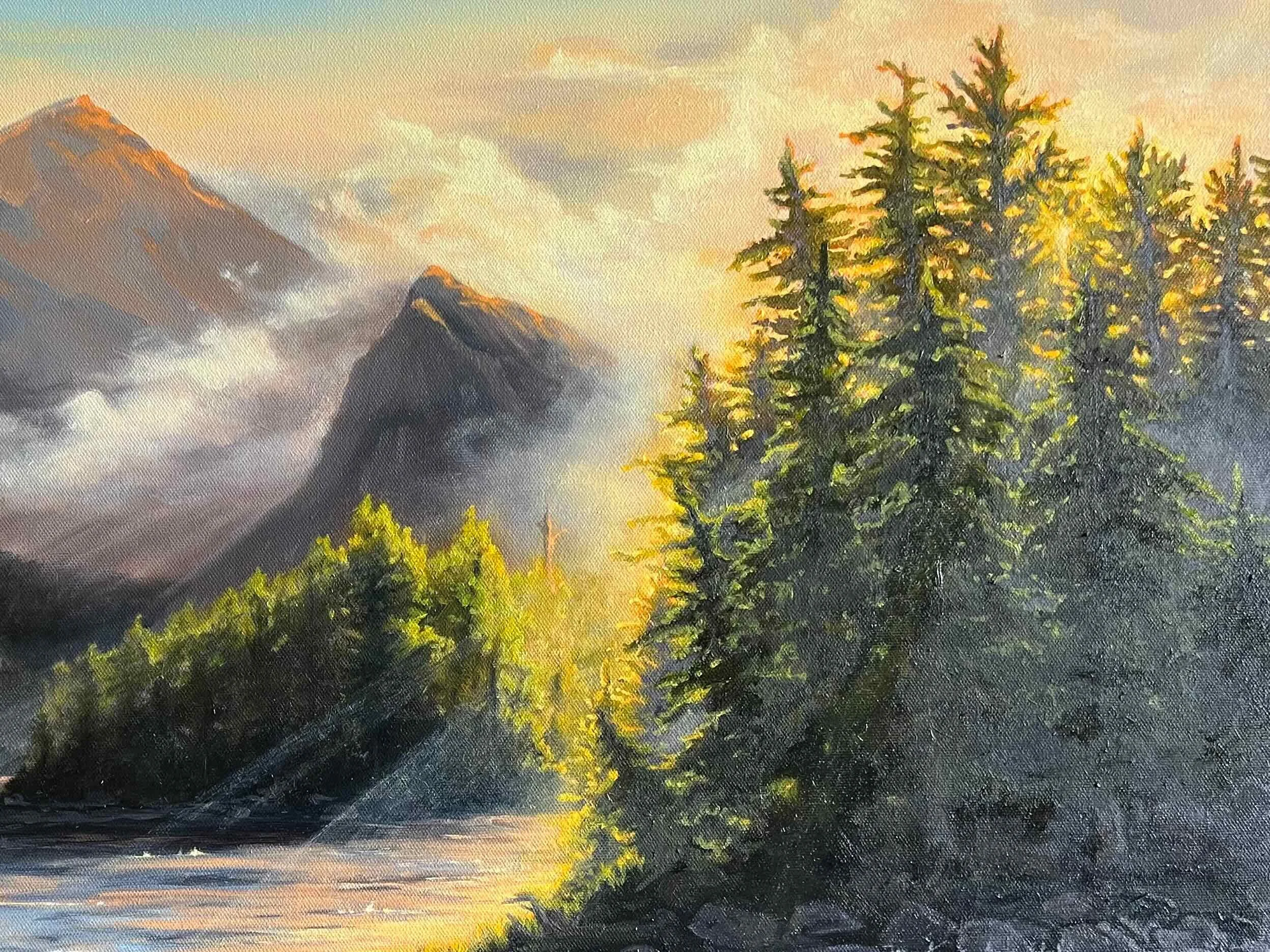
A section of backlit trees painted in oil on canvas.
Color Creates Temperature and Mood
One of the most powerful ways light influences a painting is through color temperature. I often depict warm morning sunlight in golds and oranges while the cool shadows of winter might be best portrayed with muted purples and blues. The coral glow before sunset, or the soft blue light of an overcast afternoon each tell a different story.
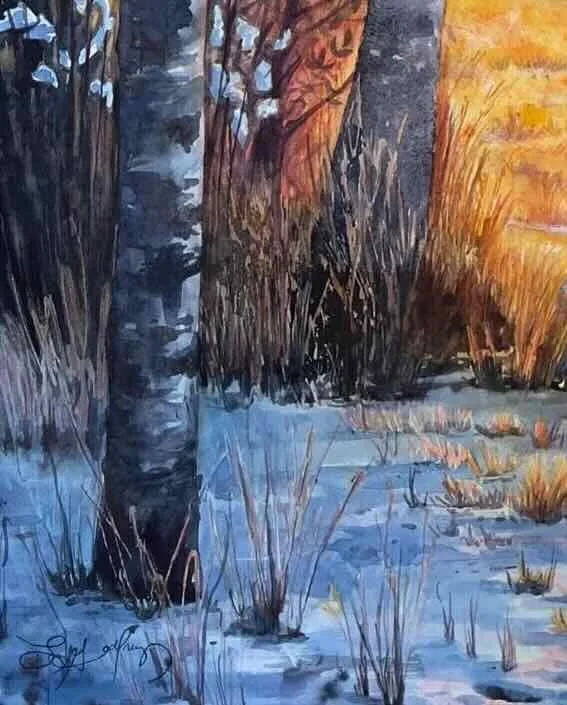
Cool blue and purple shadows in a winter watercolor.
When I begin planning a painting, one of my first considerations is the overall color palette. Before thinking about individual objects, I ask myself what kind of light I am trying to capture. Is it warm and inviting? Cool and peaceful? Dramatic and stormy? Establishing that palette early helps create a sense of unity throughout the painting and gives the viewer an immediate emotional impression.
The colors we choose do not just describe a place. They communicate how that place feels. The universal expirience of feeling a place and time is what I am trying to capture.

Bright warm sunlight behind a snowy tree painted in oil.
Shadows Are Just as Important as the Light
One of the biggest misconceptions I see among beginning artists is focusing only on the brightest highlights. While highlights certainly draw attention, they only exist because of the shadows around them.
Without dark values, light loses its impact.
Shadows create contrast, reveal form, and give a painting depth. They guide the viewer's eye through a composition and help establish where the light is coming from. Often, I spend just as much time studying the shapes and values of the shadows as I do the illuminated areas.
In many ways, painting light is really about learning to compliment it with shadow.
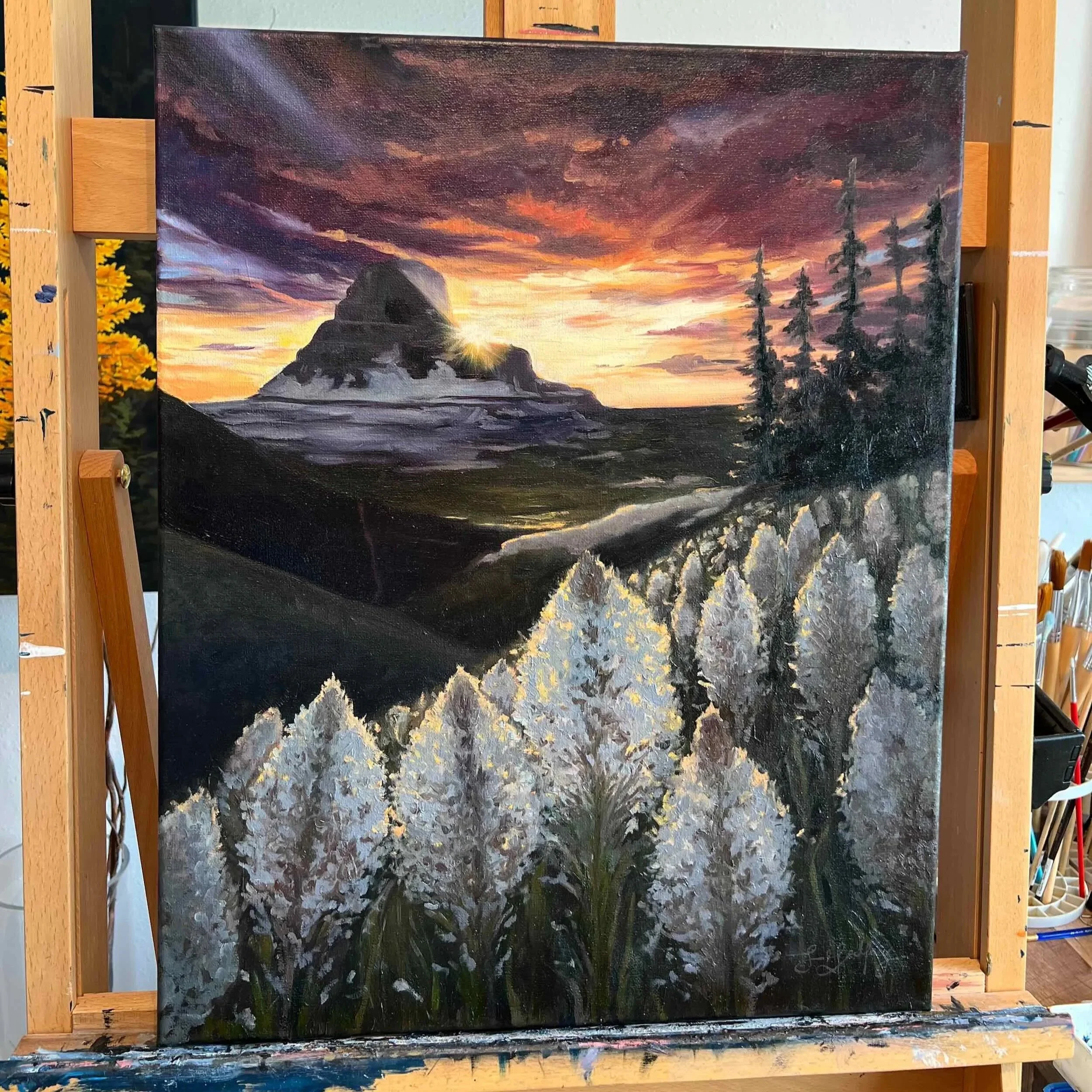
Dark shadows make the bright sky stand out.
Learning to Observe, Not Just Look
One of the greatest lessons painting has taught me is that our eyes naturally simplify the world around us. We recognize a tree as green, a mountain as gray, or a shadow as dark. But when I slow down to paint, I have to set those assumptions aside and observe what is actually there.
As artists, we train ourselves to see analytically. Instead of painting what we think an object should look like, we study the subtle relationships that make it believable. A white cloud may contain warm creams where the sun hits it and cool lavenders underneath. A shadow on a tree may reflect deep blues and greens from the surrounding landscape.
Every object is influenced by the light around it. Color shifts, edges soften or sharpen, and values change depending on the direction and quality of the light. The more carefully we observe those relationships, the more convincing and expressive our paintings become.
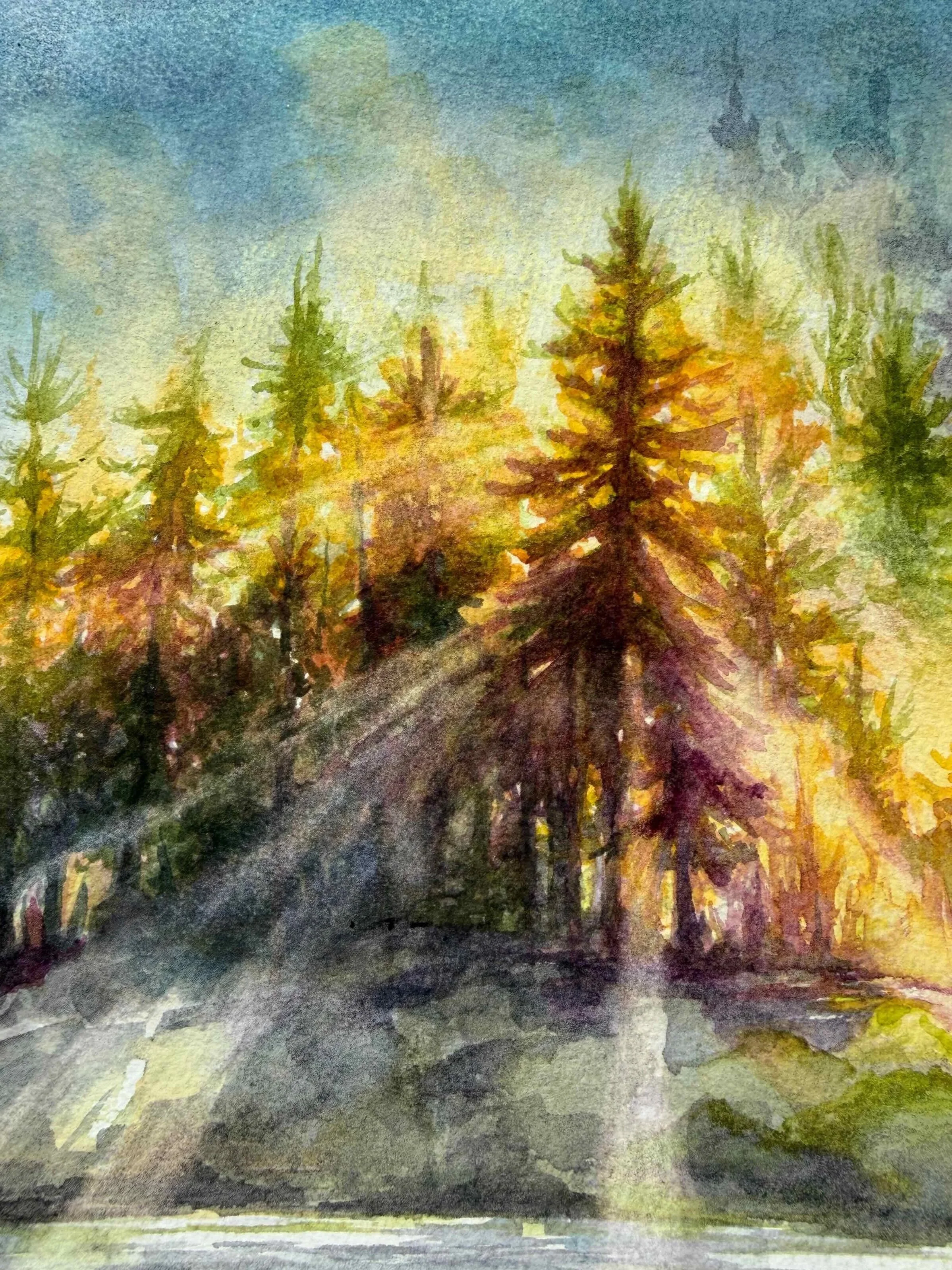
Rays of sunlight glow from behind a section of trees in watercolor.
When I am considering a landscape, I am constantly asking questions. Where is the light coming from? Which shapes are catching the most light? How dark are the shadows compared to the highlights? Are the colors warming as they move toward the light or cooling as they move into shadow?
Rather than simply copying what I see, I am studying the scene to understand why it appears the way it does. If I can express the why through my brushstrokes then I am well on my way to a successful piece.
Painting is not really about learning to paint objects. It is about learning to see them.
A Lifelong Study of Light
Painting has taught me to slow down and observe the world differently. I notice how light filters through leaves, reflects across water, wraps around mountain ridges, or catches the edge of a cloud just before sunset. These moments often last only seconds before they change again.
That change is part of what keeps painting exciting. No matter how many landscapes I create, there is always another lighting condition to explore and another lesson waiting in the next scene.
Perhaps that is why I will never stop chasing light. It is endlessly changing, endlessly challenging, and endlessly beautiful. Every painting becomes another opportunity to capture not just what I see, but what I feel.
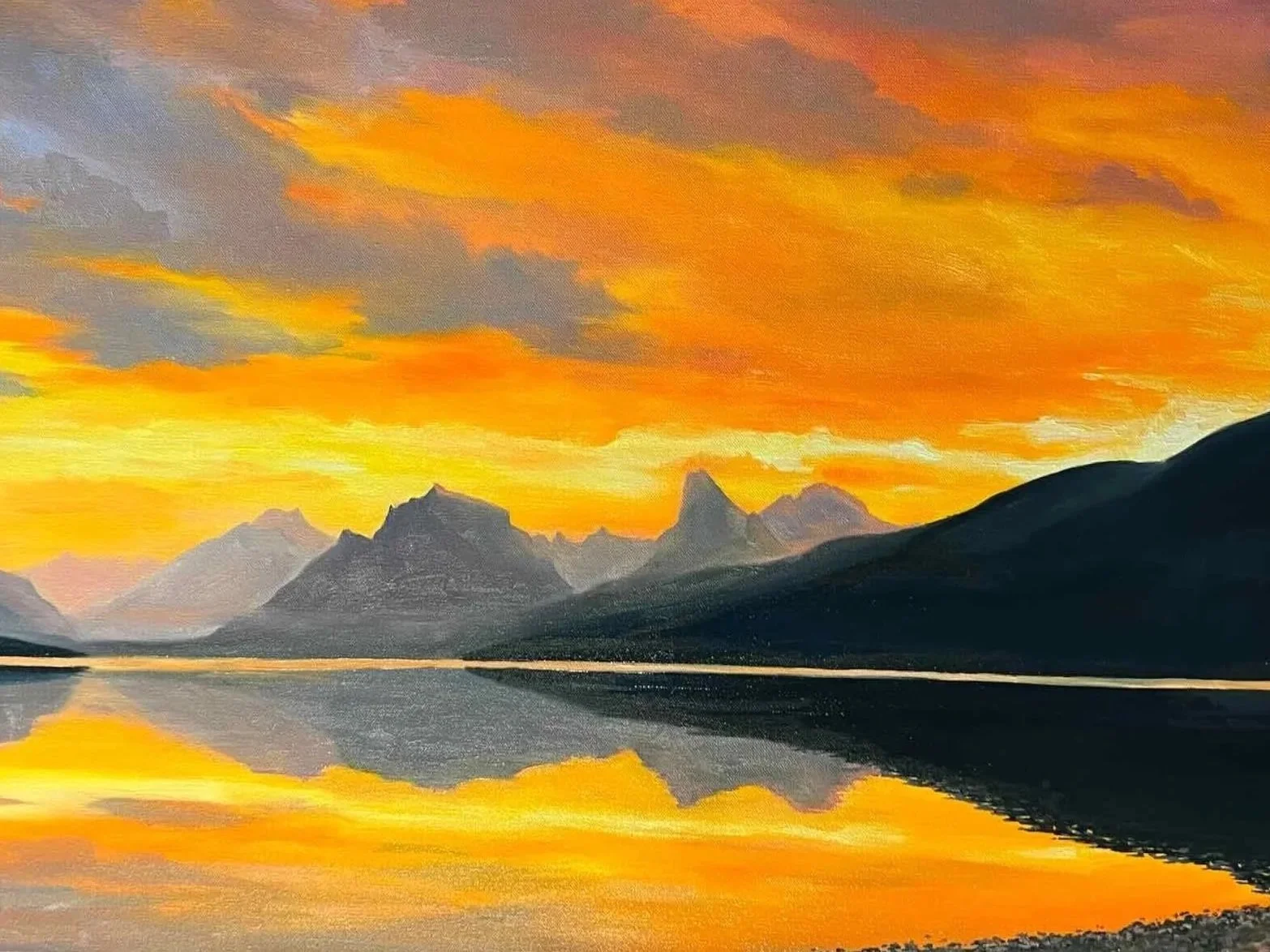
Bright clouds of orange and lavender in oil.
If you have ever found yourself stopping to admire the way sunlight catches the tops of the trees or the glow of evening across a quiet field, then you already understand the magic I am trying to paint. Those fleeting moments of light continue to inspire me every time I pick up a brush.
I hope my paintings encourage you to pause and notice those moments of beauty in the landscapes around you. There is always more to discover when we take the time to truly see.