The Value of Original Art: Presence in Every Mark
This is something I return to often in my own work, especially in the final stages of a painting.
A painting is not finished because every detail has been perfectly resolved. In fact, pushing too far in that direction often begins to erase some of the nuance and energy that gave the piece life in the first place. There is a point where continued adjustments stop adding to the painting and instead begin to overwork it.
What I look for instead is a sense of balance.
There comes a moment when the painting stops asking something of me. The relationships between light and shadow feel settled. The colors begin to hold together naturally. Areas of softness and sharper focus feel intentional rather than competing for attention.
More than anything, it is a shift in feeling.
I step back, sometimes from across the room, and realize I am no longer reaching for the brush. Instead of searching for what needs to change, I simply begin living with the painting in my space. I let it sit for a few days, passing by it in different light throughout the morning and evening. If I continue to return to it without feeling the need to adjust an edge, shift a color, or rework a passage, that is usually when I know it is finished.
Even then, I rarely see a painting as perfect. What matters more to me is that it feels honest. The small corrections, softened passages, layered washes, or textured marks often become some of the most important parts of the piece because they reveal the path it took to arrive there.
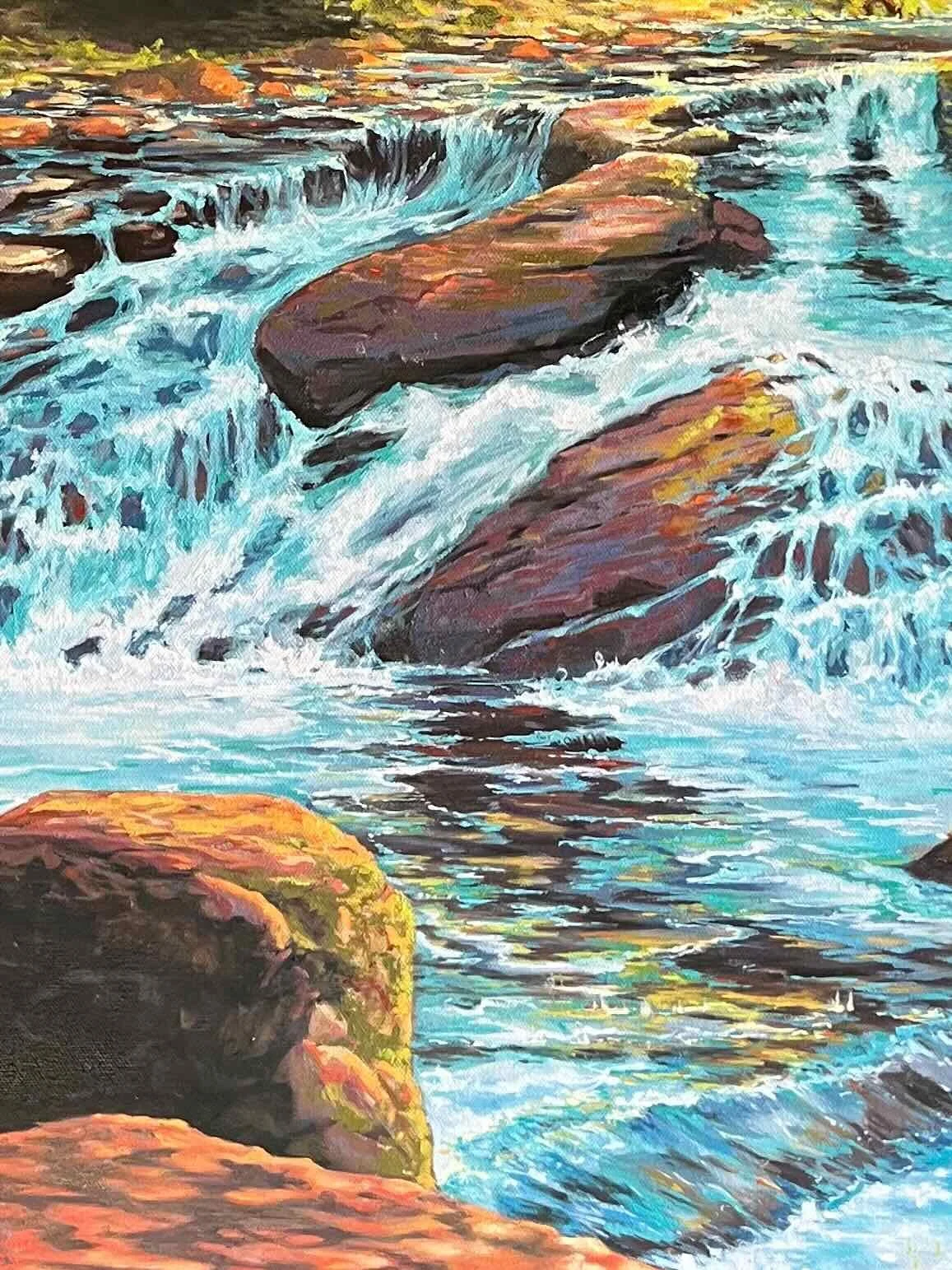
A detail from an original oil work from artist Lindsay Godfrey.
Why Originals Feel Different
Some of my clearest moments of artistic understanding have come from standing in front of a painting, sometimes my own, sometimes someone else’s, and following the path it took to become what it is.
The longer I look, the more I begin to notice. A shift in direction where something was reconsidered. A watercolor wash that settled unpredictably into the paper. A section of oil paint scraped back and rebuilt. Areas that feel completely resolved beside others that still hold a bit of tension and movement.
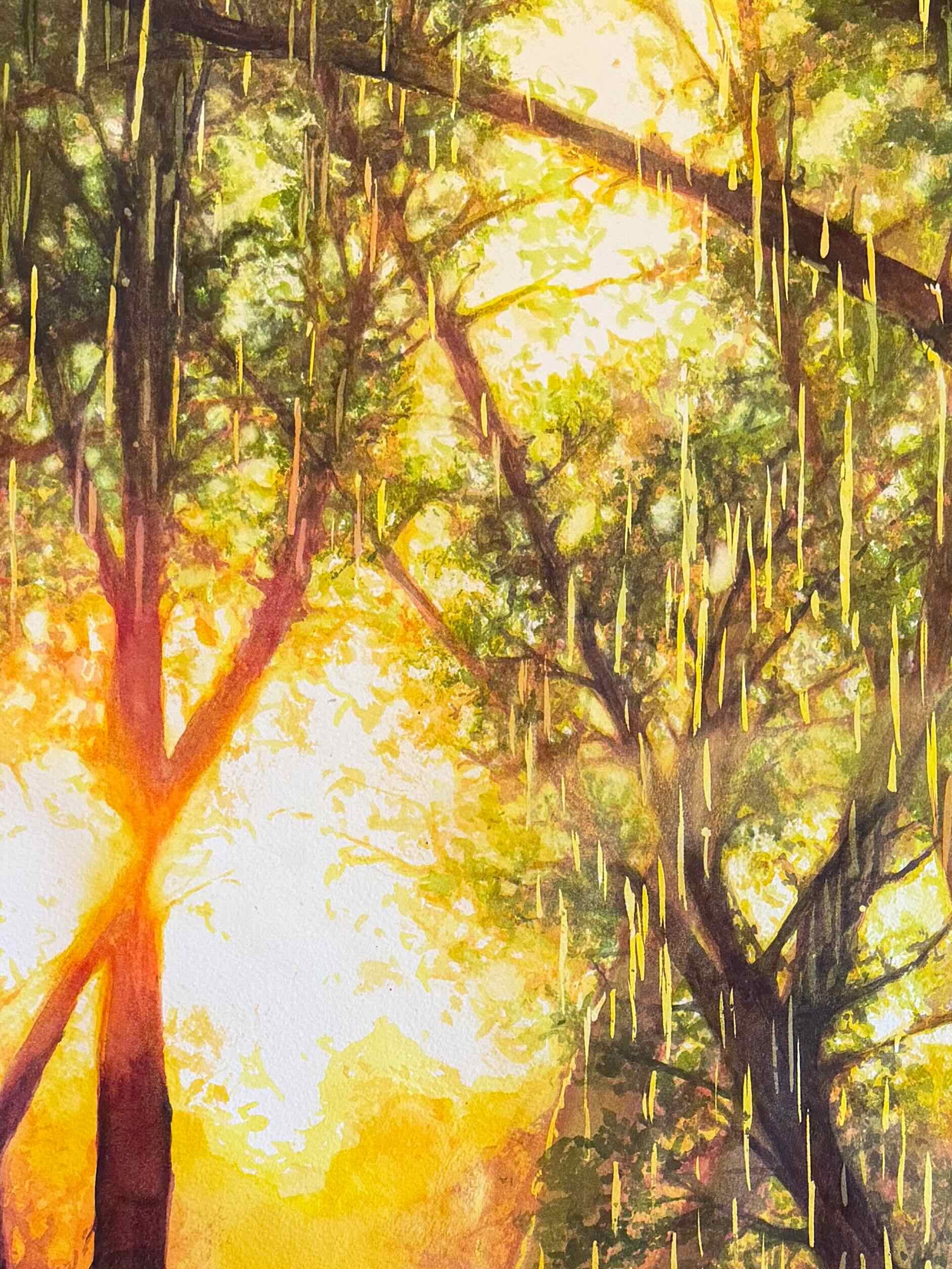
A detail of a new work in progress by Lindsay Godfrey.
Even the flaws or corrections begin to feel important, not as mistakes, but as evidence of thought, adjustment, and persistence.
That experience has deeply shaped how I think about original art.
There is such value in standing in front of a piece and seeing the decisions that built it over time. Original artwork carries presence in a way that is difficult to fully experience otherwise. It holds texture, surface, subtle color shifts, and the physical movement of the artist’s hand. It also carries something quieter, the hours of observation, uncertainty, experimentation, and revision that became part of the final piece.
I think observing original artwork helps train us to look more carefully, not just at paintings, but at the world around us. It slows the eye enough to notice nuance, atmosphere, and small moments that might otherwise be overlooked.
Creating original work carries that same importance for me. Whether in watercolor or oil, the process becomes a way of paying closer attention to light, color, shape, mood, and the feeling of a place or moment. Each painting becomes a record of that attention.
And for those who are able to live with original artwork in their homes or spaces, I think there is something meaningful about that too. Original paintings continue to reveal themselves over time. They shift with changing light, different seasons, and even different moods. The longer I live with a piece, the more familiar and layered it becomes.
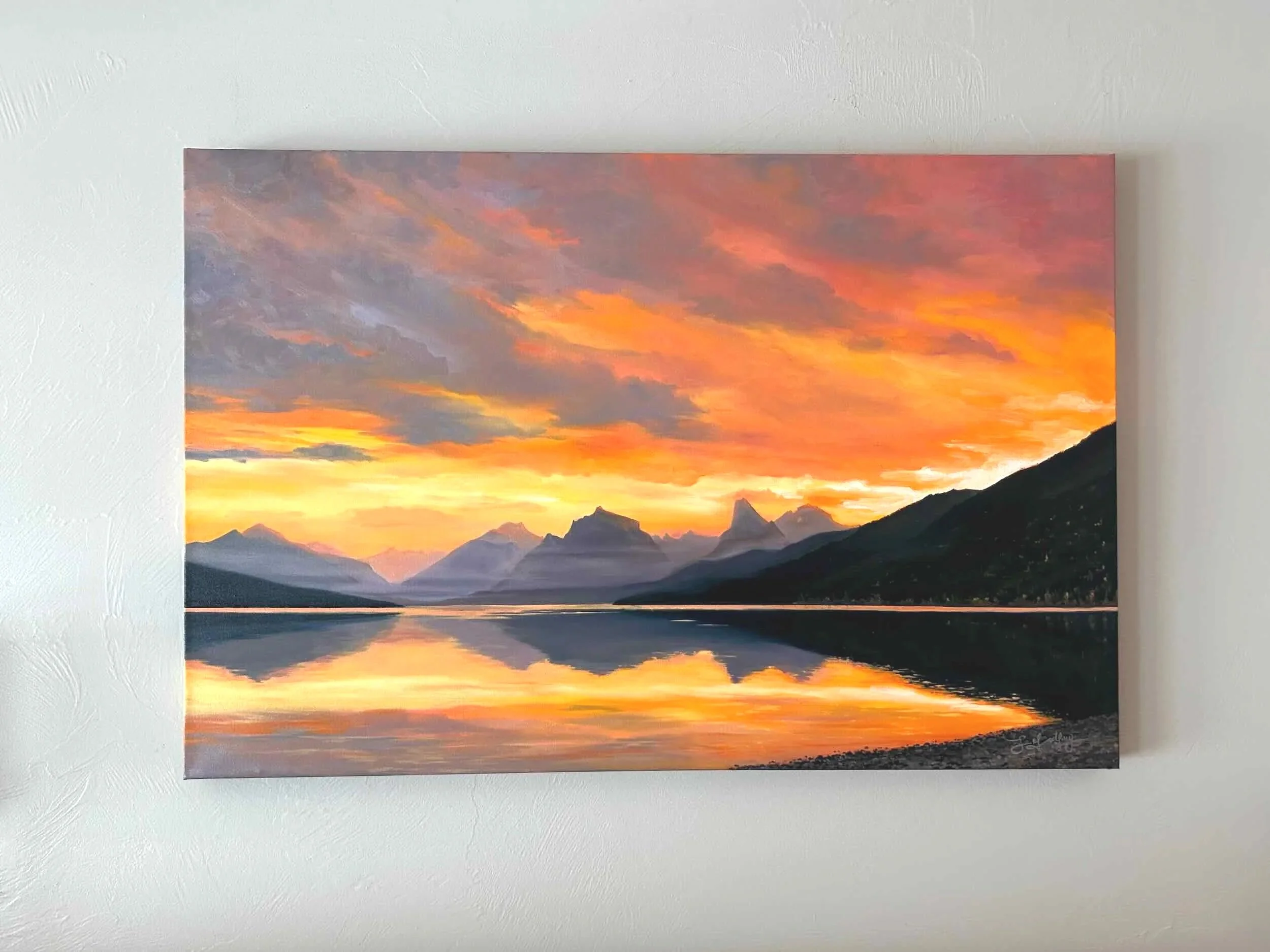
An oil painting by Lindsay Godfrey hangs in a collector’s home.
A Small Invitation
I continue to explore these ideas in both watercolor and oil, returning again and again to the same questions about light, color, atmosphere, and how much to leave unresolved.
My current collection of original paintings reflects that ongoing process, each piece shaped through observation, adjustment, uncertainty, and eventually, a sense of balance. If a particular piece resonates with you, or if you have questions about my work, available paintings, or upcoming workshops, I always enjoy hearing from people who connect with the artwork. Conversations around art and the way we experience it are some of the most meaningful parts of sharing this work with others.
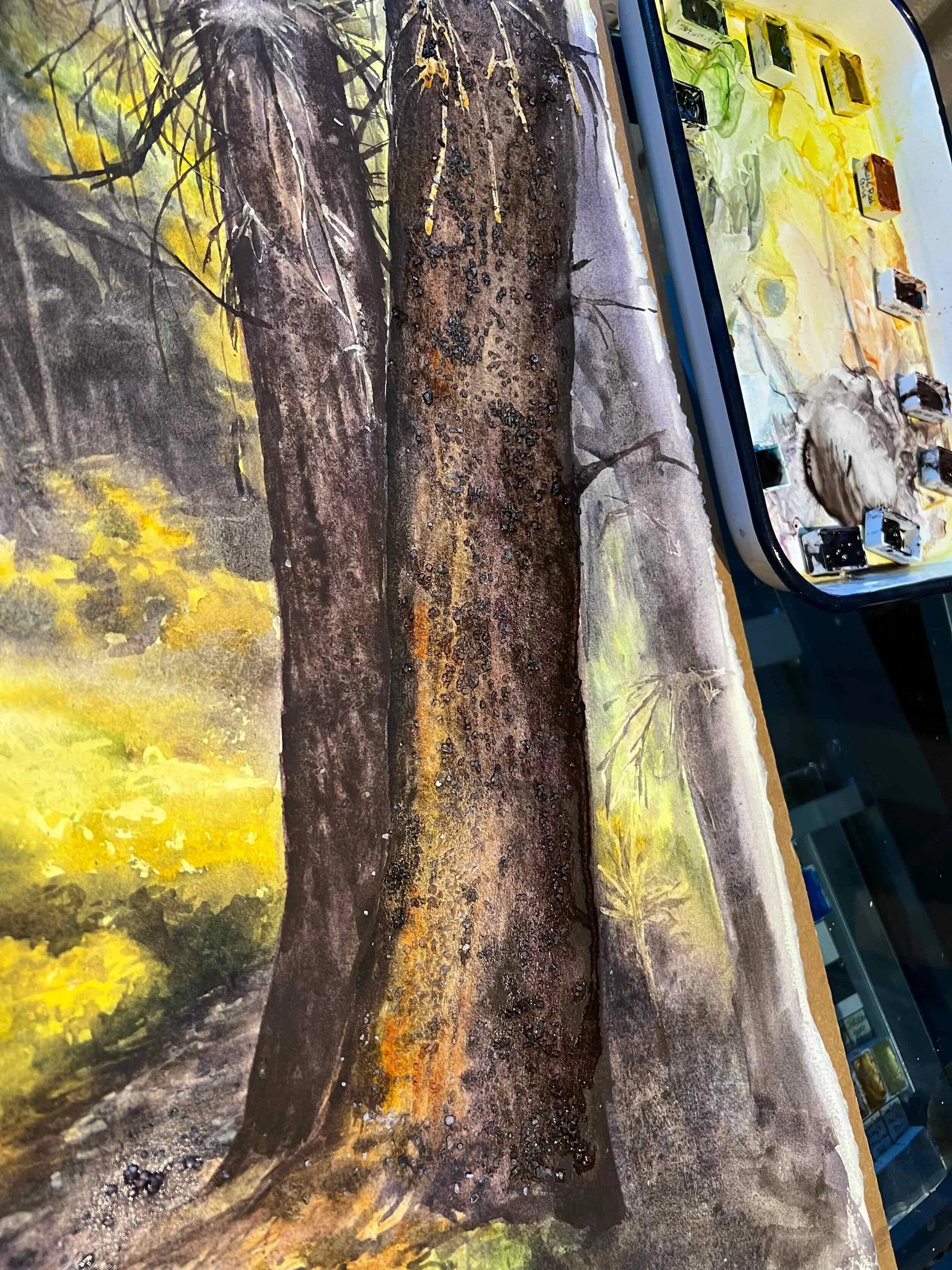
A section of watercolor painting in progress in the studio of Lindsay Godfrey.
For those interested in following along more closely, my newsletter is where I share new paintings, works in progress, upcoming workshops, and reflections from inside the studio. It is a place to see what is currently unfolding in my practice and to stay connected as new work develops over time.