The Planning Stage: How I Decide What an Idea Will Become
Every finished painting begins long before the surface is wet with paint. It begins with an idea.
Sometimes that idea arrives clearly. A specific color palette catches my attention. A bold combination of coral and turquoise. A moody arrangement of deep greens and shadowed blues. Other times it is a theme that pulls at me—a waterfall, a sunrise, an open stretch of landscape that feels both expansive and intimate.
The idea is rarely complete at first. It is more like a spark. But I have learned to pay attention to those sparks.
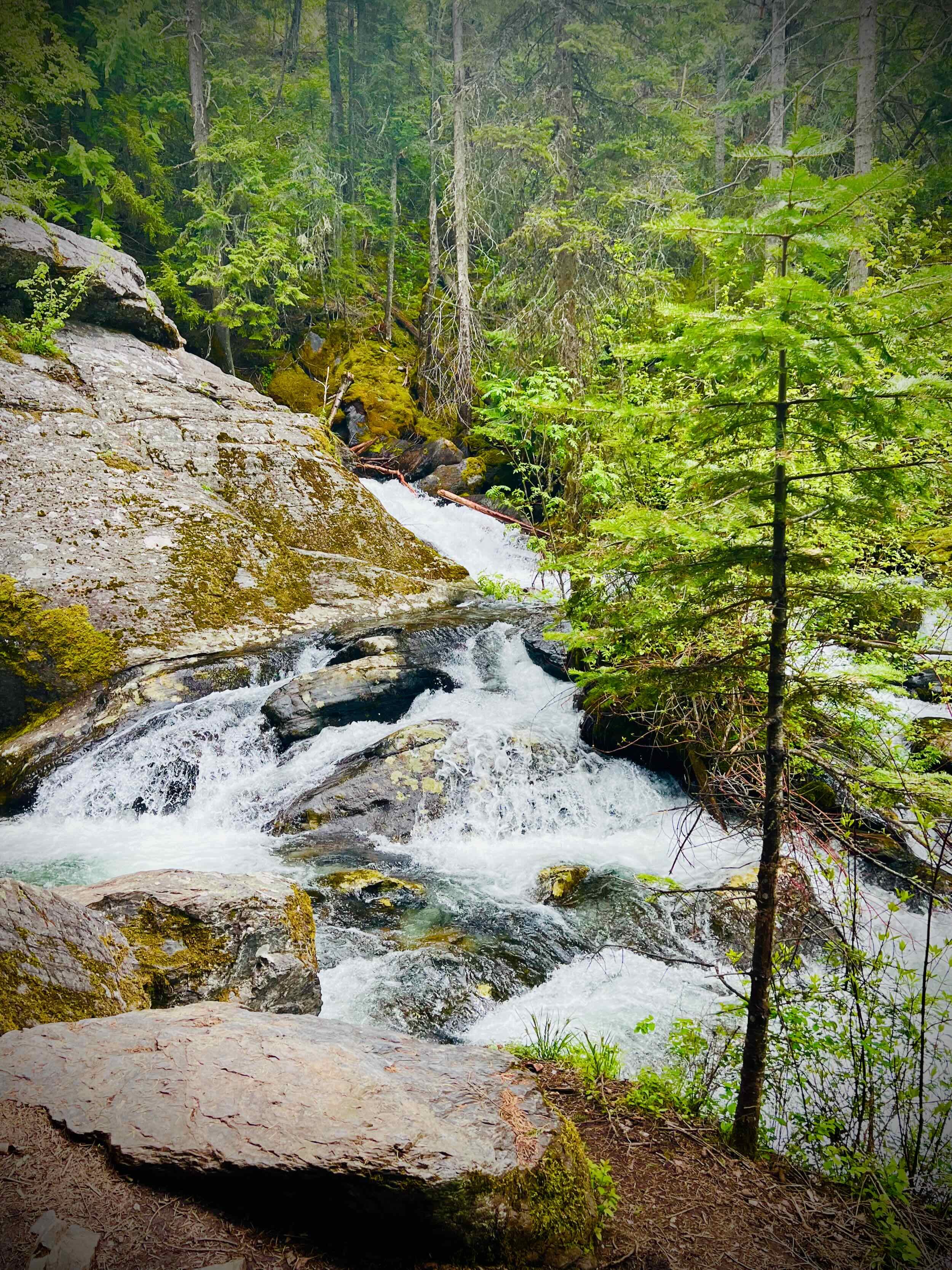
A photo I took on a hike.
It All Starts with the Idea
When something lingers in my mind longer than it should, I know it is worth exploring. It might be the way light breaks through trees or the rhythm of water moving over rock. It might simply be a color story that feels alive.
I do not rush into painting immediately. Instead, I let the idea sit for a moment. I ask myself what exactly is drawing me in. Is it the atmosphere? The energy? The contrast?
Clarity at this stage makes everything that follows stronger.
Gathering Visual Inspiration
Once I have identified the main focus, I begin building around it. I will spend time browsing my own photo gallery, on Pinterest, or searching online for images that expand on the central idea. I am not looking to copy a single reference. I am looking to gather visual language.
If I am painting a waterfall, I might collect images that show different rock formations, variations in water movement, or lighting conditions. If I am drawn to a sunrise palette, I will gather images that highlight subtle shifts in warm tones or dramatic sky compositions.
I create a dedicated file of images that inspire me for that specific piece. This becomes my reference pool. It allows me to combine elements thoughtfully rather than relying on one source. It also helps me refine the mood I want to convey.
This stage feels exploratory. It widens the idea before I begin narrowing it down.
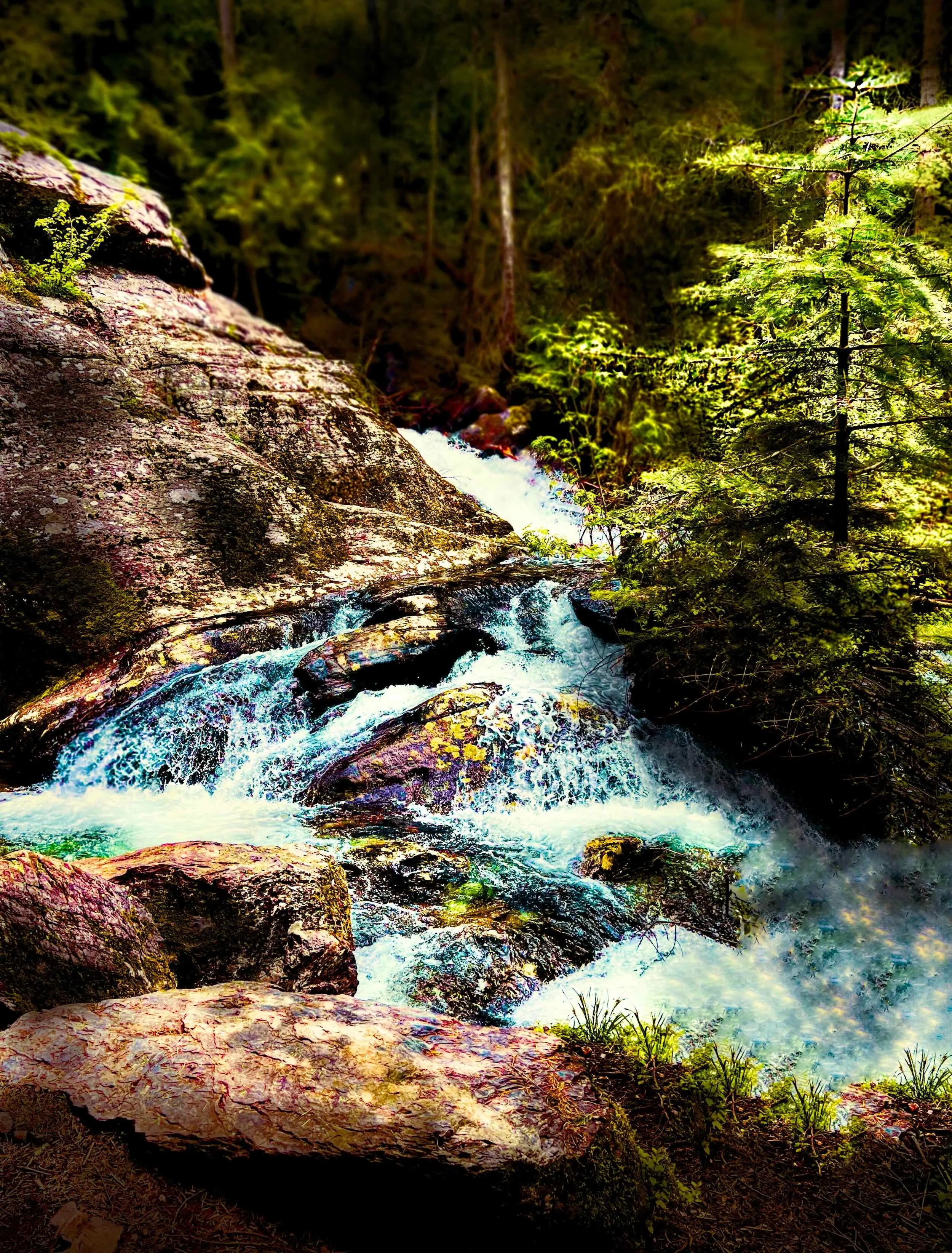
My image edited for more contrast and light adjustment.
Choosing the Medium
After I have built a strong visual foundation, I decide which medium the idea belongs in. This is not a mechanical choice. It is intuitive and practical at the same time.
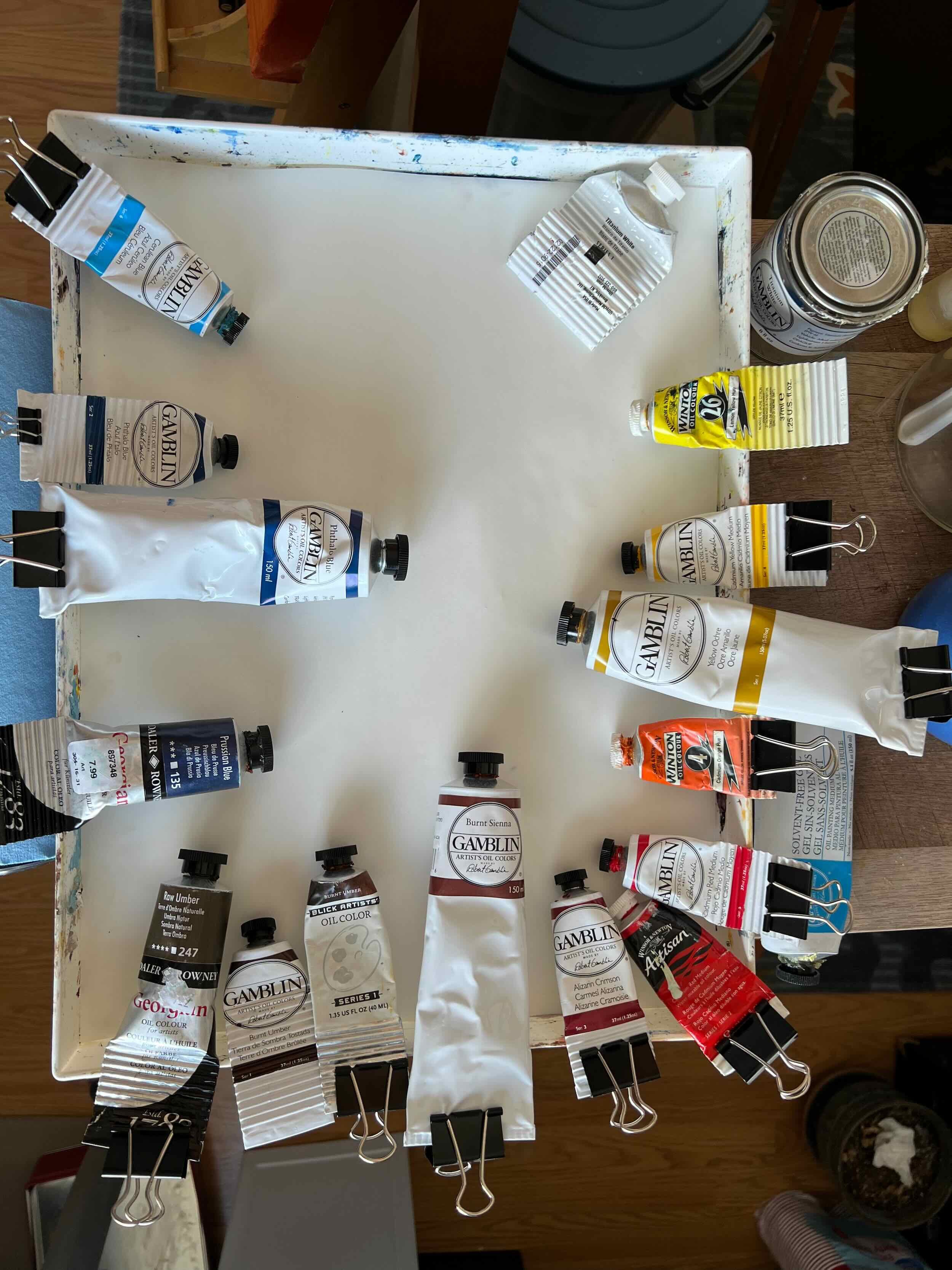
Oil paint color selection for a painting.
Some ideas naturally lean toward oil painting. If the landscape has a bold, eye-catching color palette or strong texture, oil is often the right fit. The body of the paint, the richness of pigment, and the ability to layer thick texture allow me to emphasize depth and intensity. Oil gives me room to push contrast and create dimensional surfaces.
Other ideas call for watercolor. When I want nuance and subtlety, watercolor becomes the better choice. I often turn to it when I want to focus on fluidity, motion, and softness. The transparency of watercolor lends itself beautifully to atmosphere and light. It encourages restraint and careful timing.
Often, it is my intuition that ultimately guides me. I have learned to trust that inner pull. If I imagine the piece and immediately see it in one medium, I follow that instinct.
Sketching and Working Through Details
Once the medium is chosen, I move into my sketchbooks. I keep one every media I work in. Each serves a different purpose, but are essential to my planning process.
For oil paintings, I sketch first using oil pastel. This allows me to block in shapes and values with a similar richness to the final medium. For watercolor, I paint a smaller version on watercolor paper and then attach it into my sketchbook. This gives me a true sense of how the paint will behave.
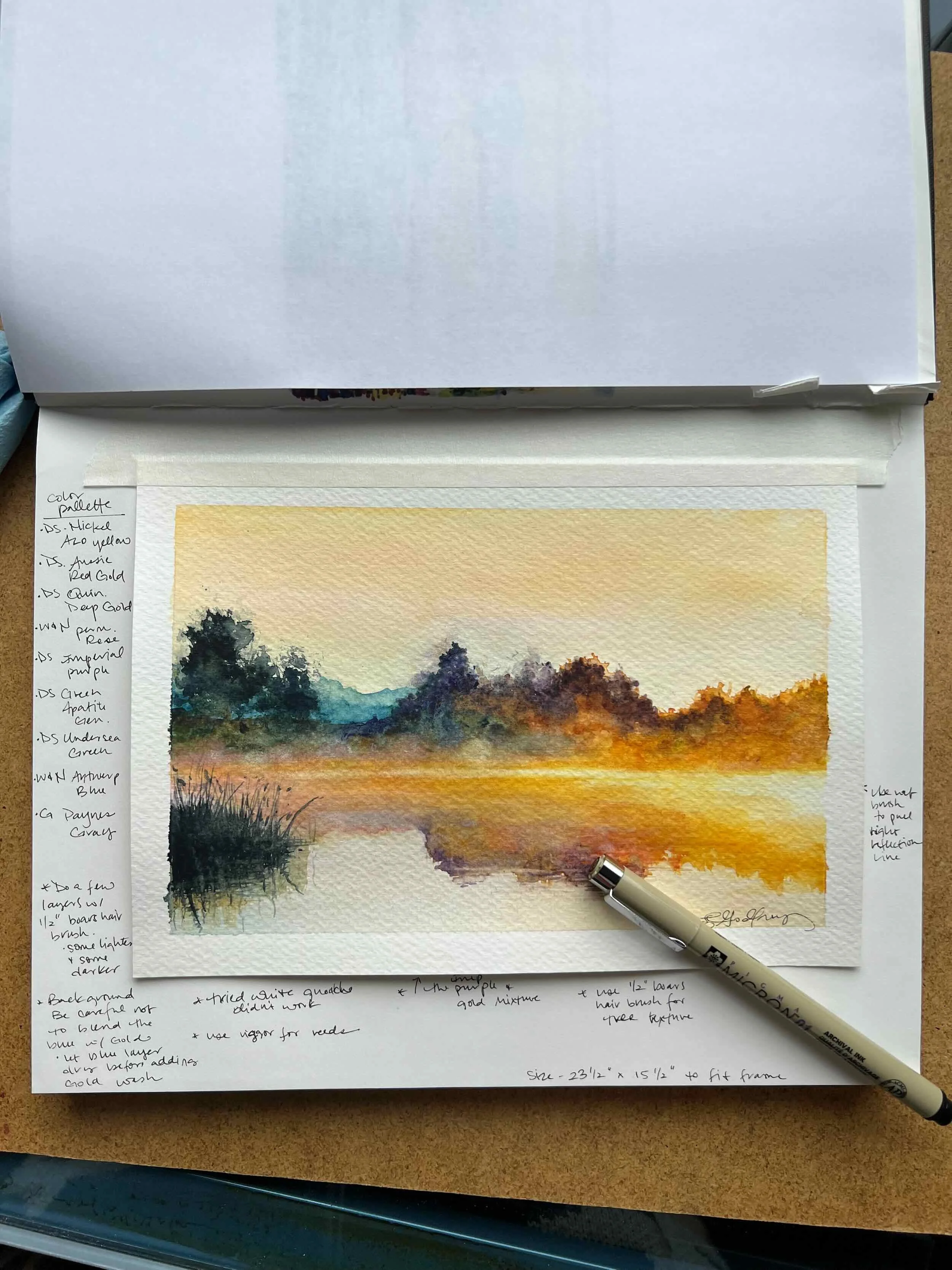
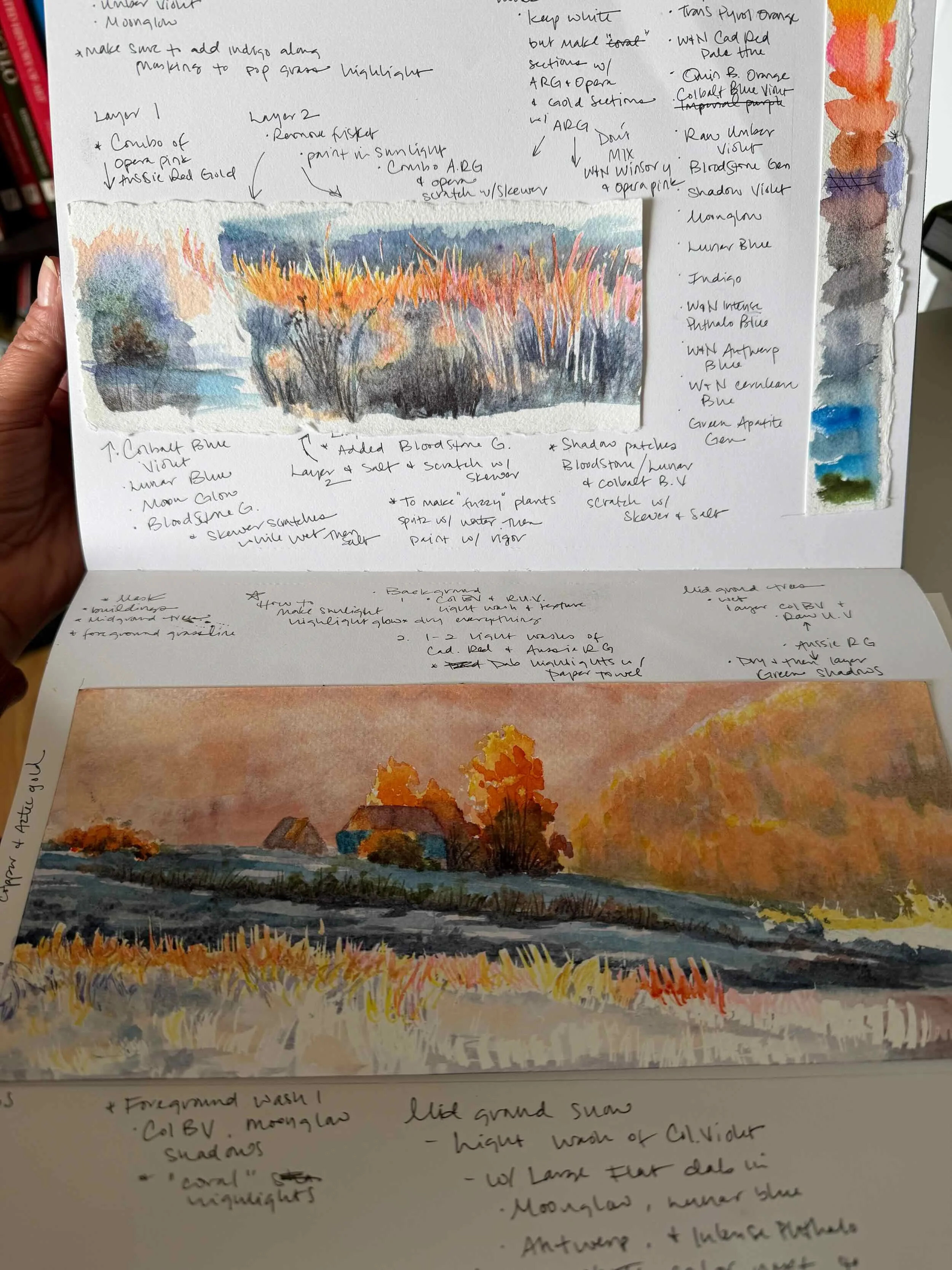
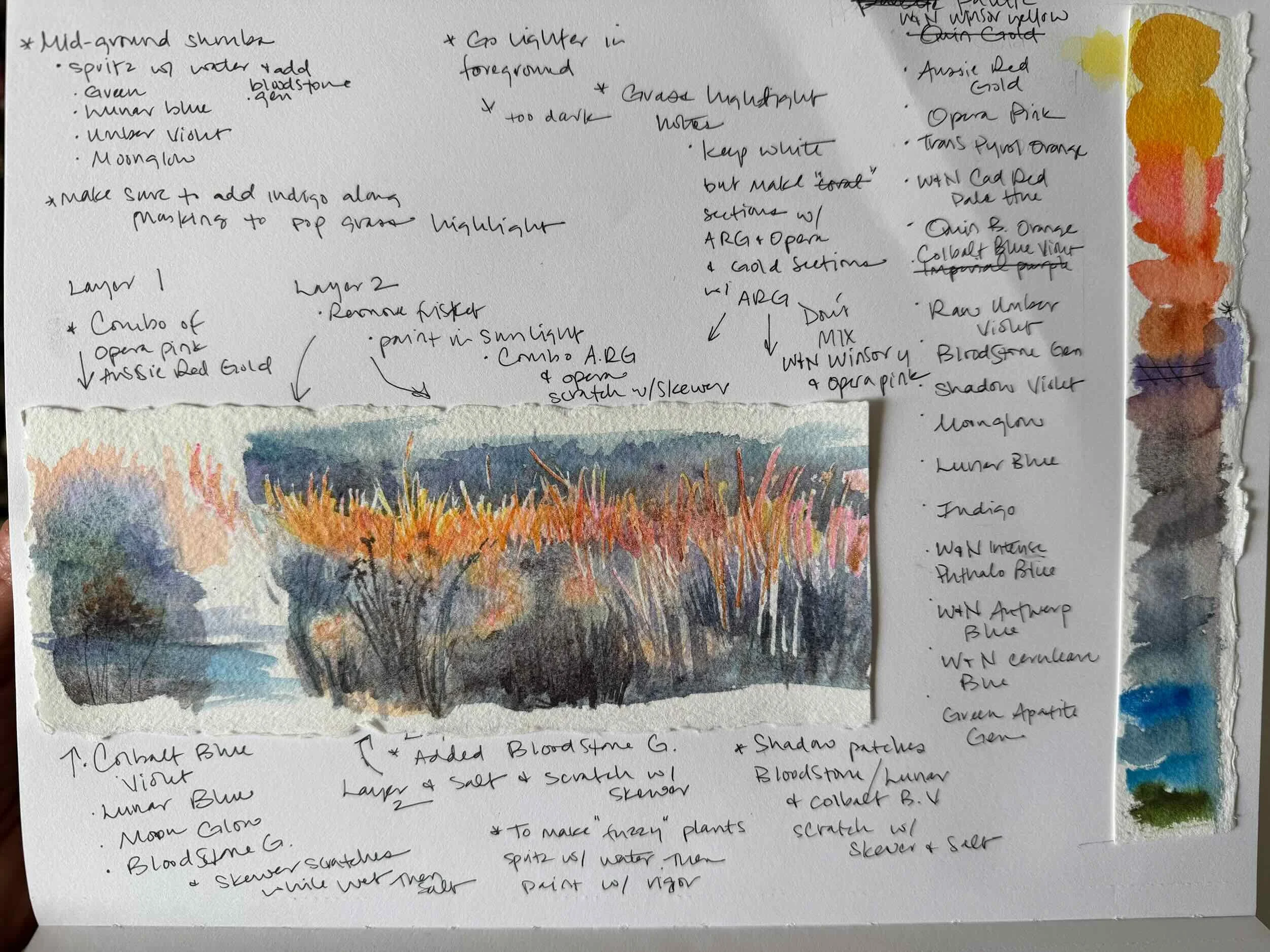
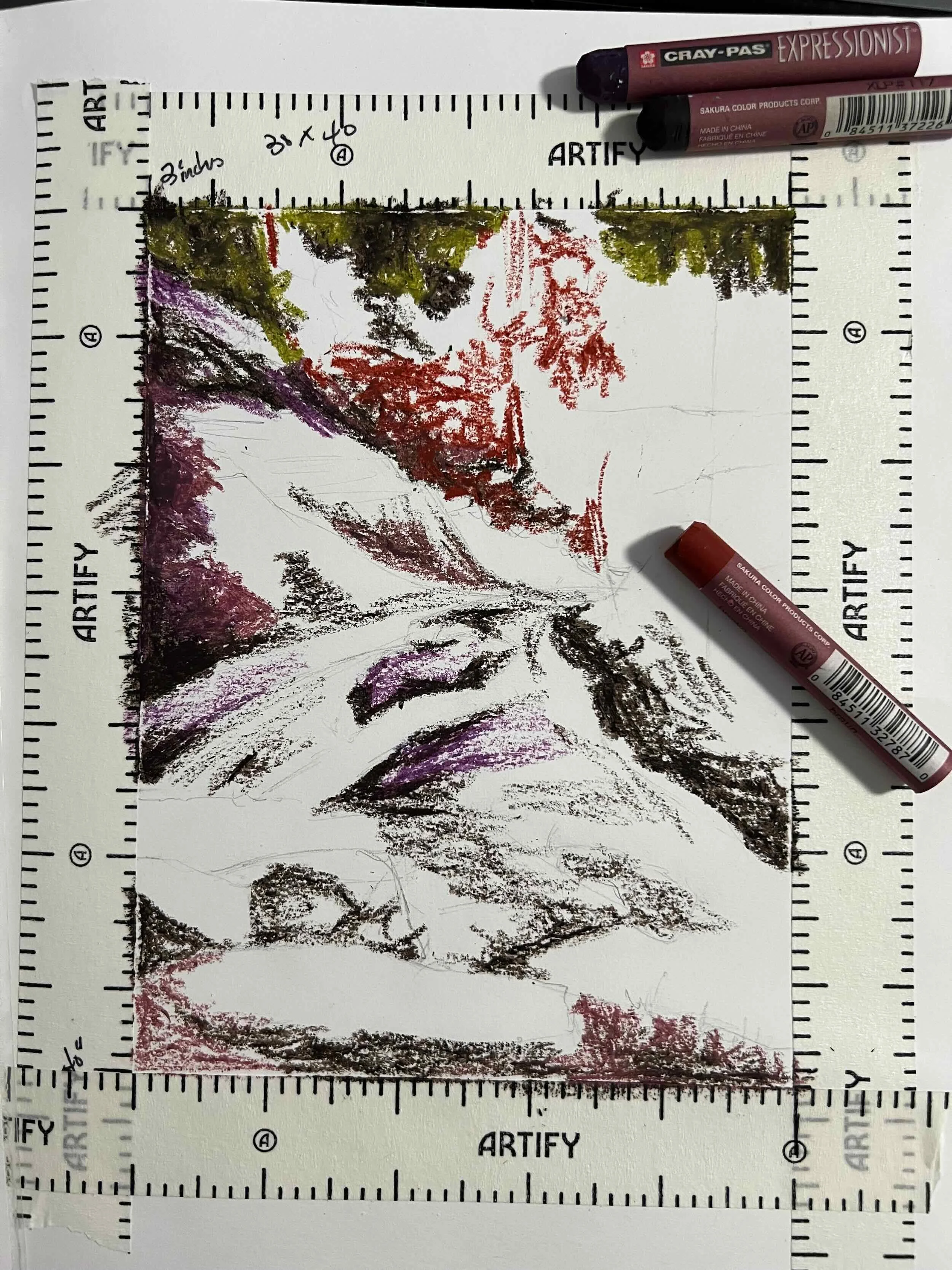
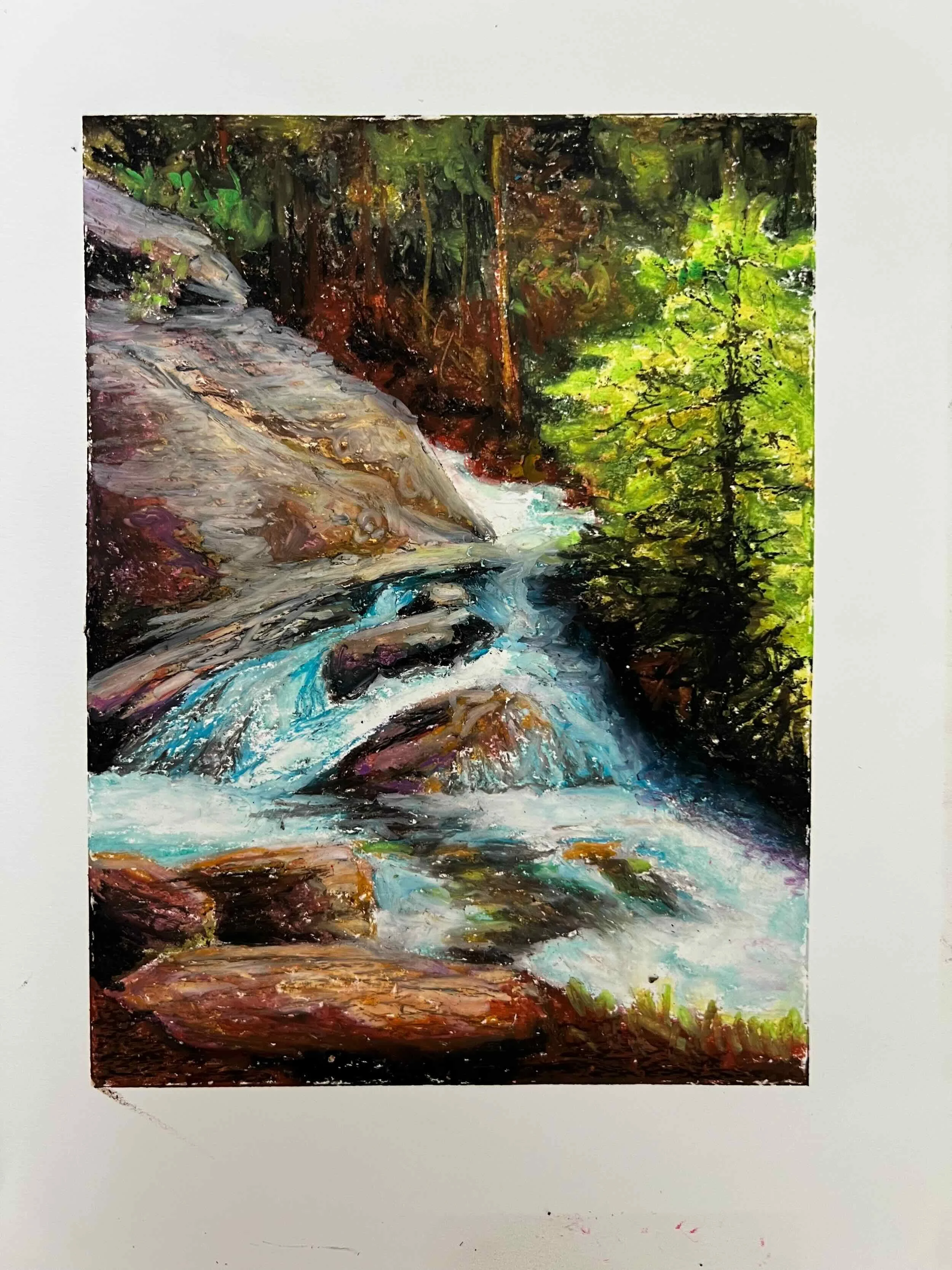
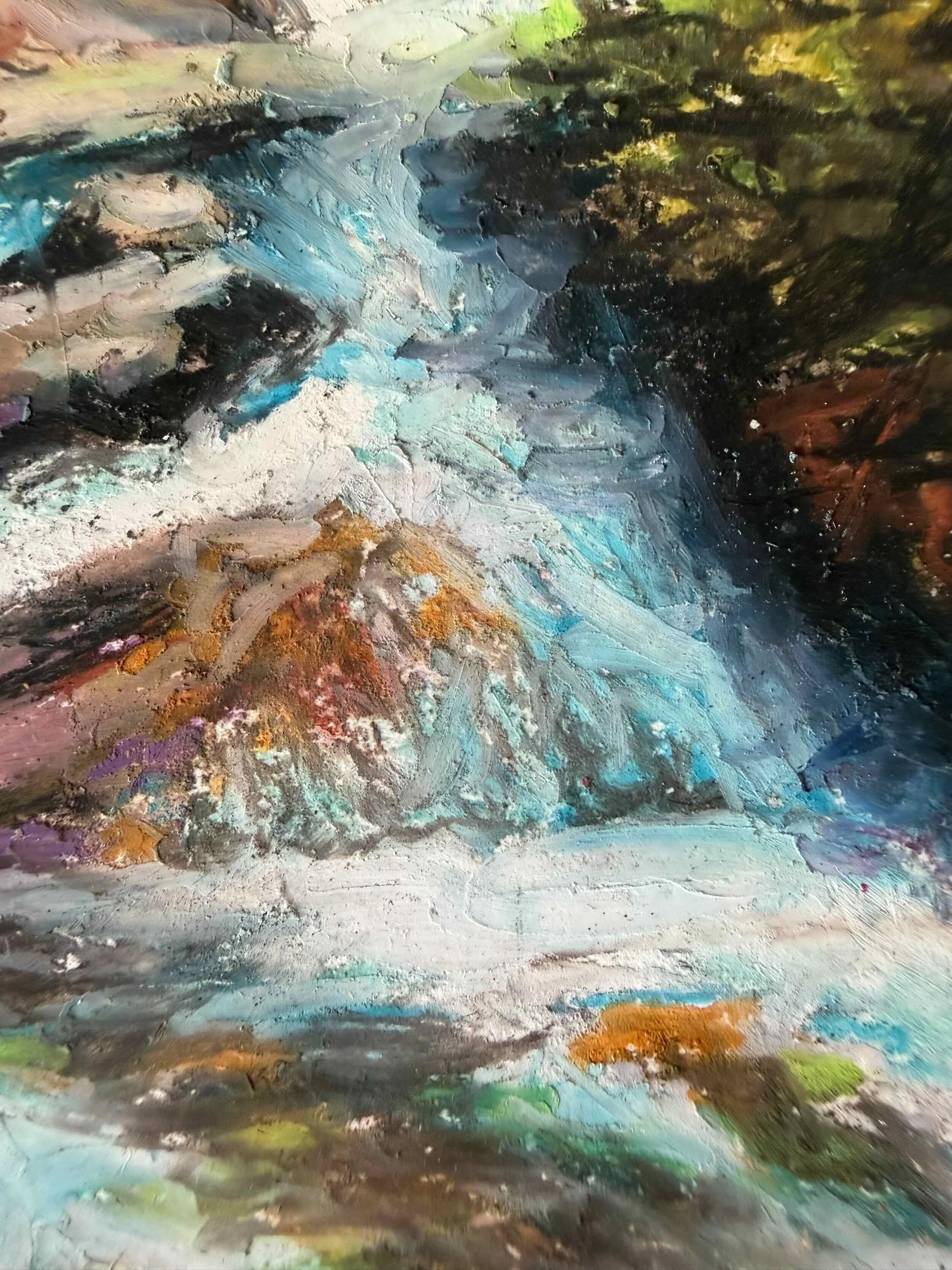
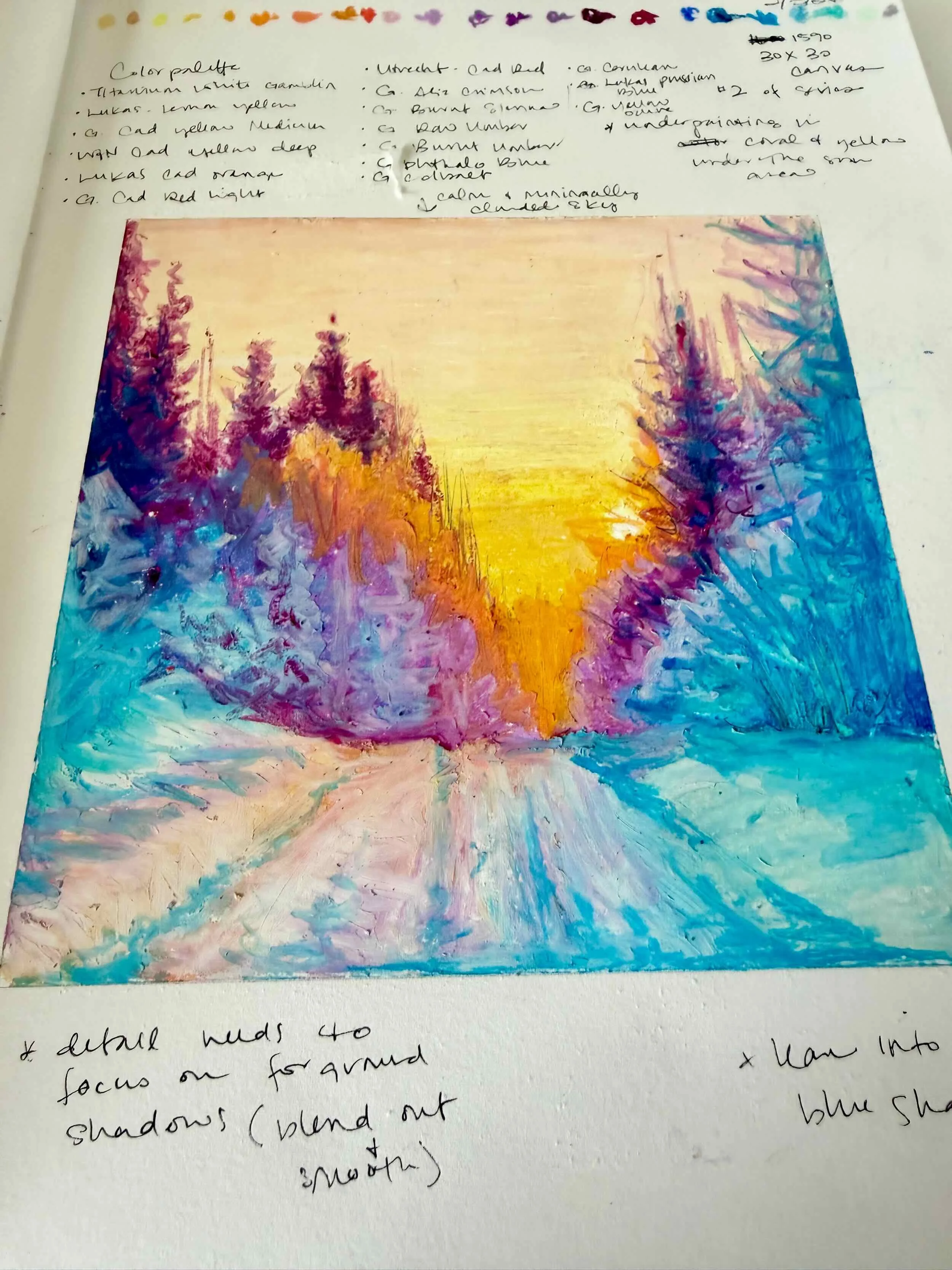
This is where I work through potential challenges. I test compositions. I adjust focal points. I experiment with simplifying areas that feel too busy. I take notes directly on the page about color palettes, layering strategies, or specific techniques I want to try.
The sketch phase is where I solve problems before they become frustrating. It is far easier to adjust a composition in a small study than on a large, finished surface. This stage builds confidence and clarity.
It is also where the idea begins to feel real.
Transferring to the Final Surface
After the sketch feels resolved, I transfer the composition to the intended surface. This might be stretched canvas for oil or high quality watercolor paper prepared for washes and layers.
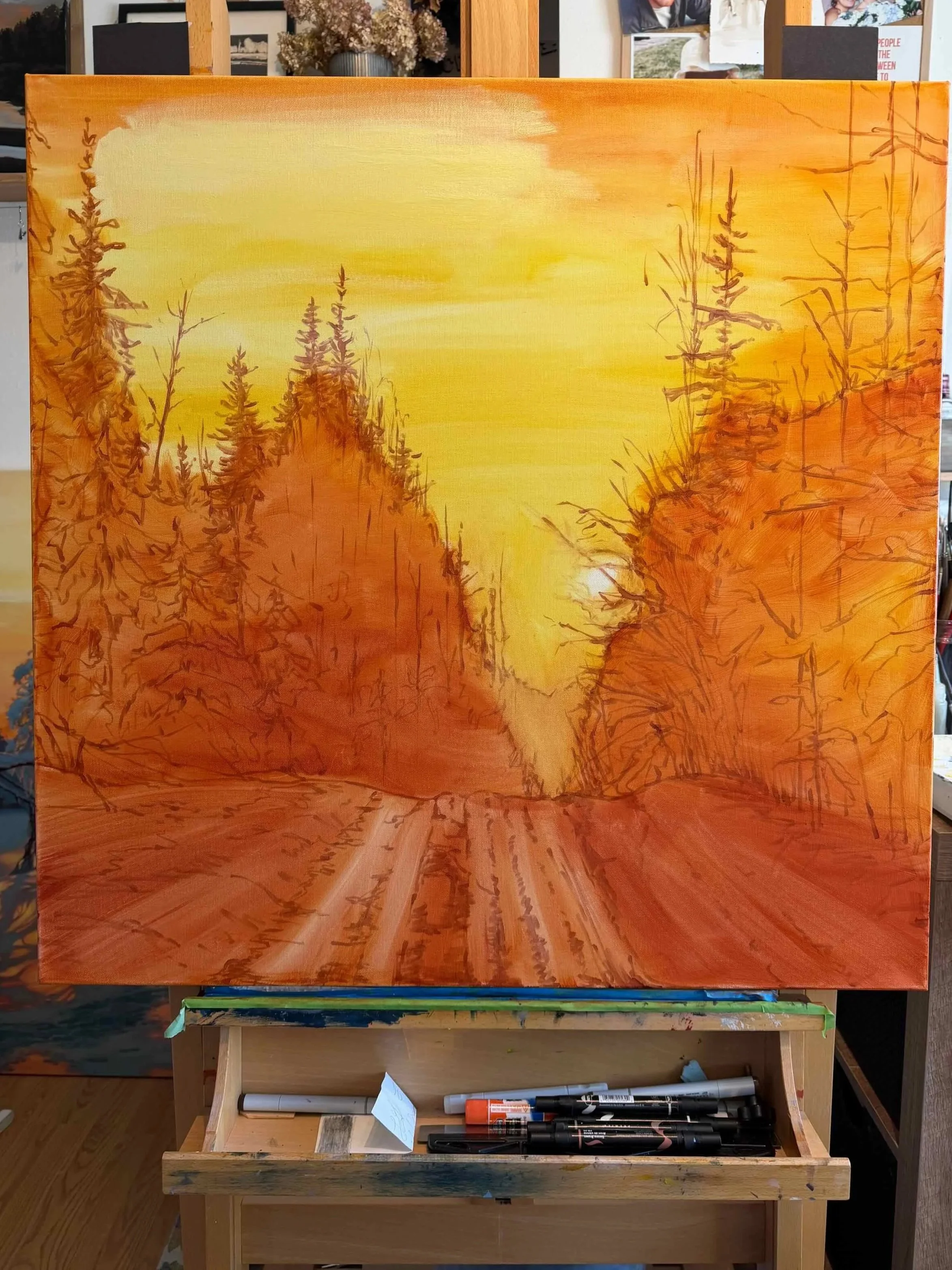
Underpainting of an oil piece by Lindsay Godfrey.
This is when the long process truly begins.
With oil painting, I settle into layering, drying, adjusting, and refining. The drying time between layers demands patience. With watercolor, timing is everything. Each layer must dry fully before the next is added, and the transparency of the medium means that early decisions remain visible.
By the time I reach this stage, however, I am not guessing. I am building on a clear plan. The idea has moved through inspiration, research, intuition, and problem solving.
Planning does not remove creativity. It strengthens it.
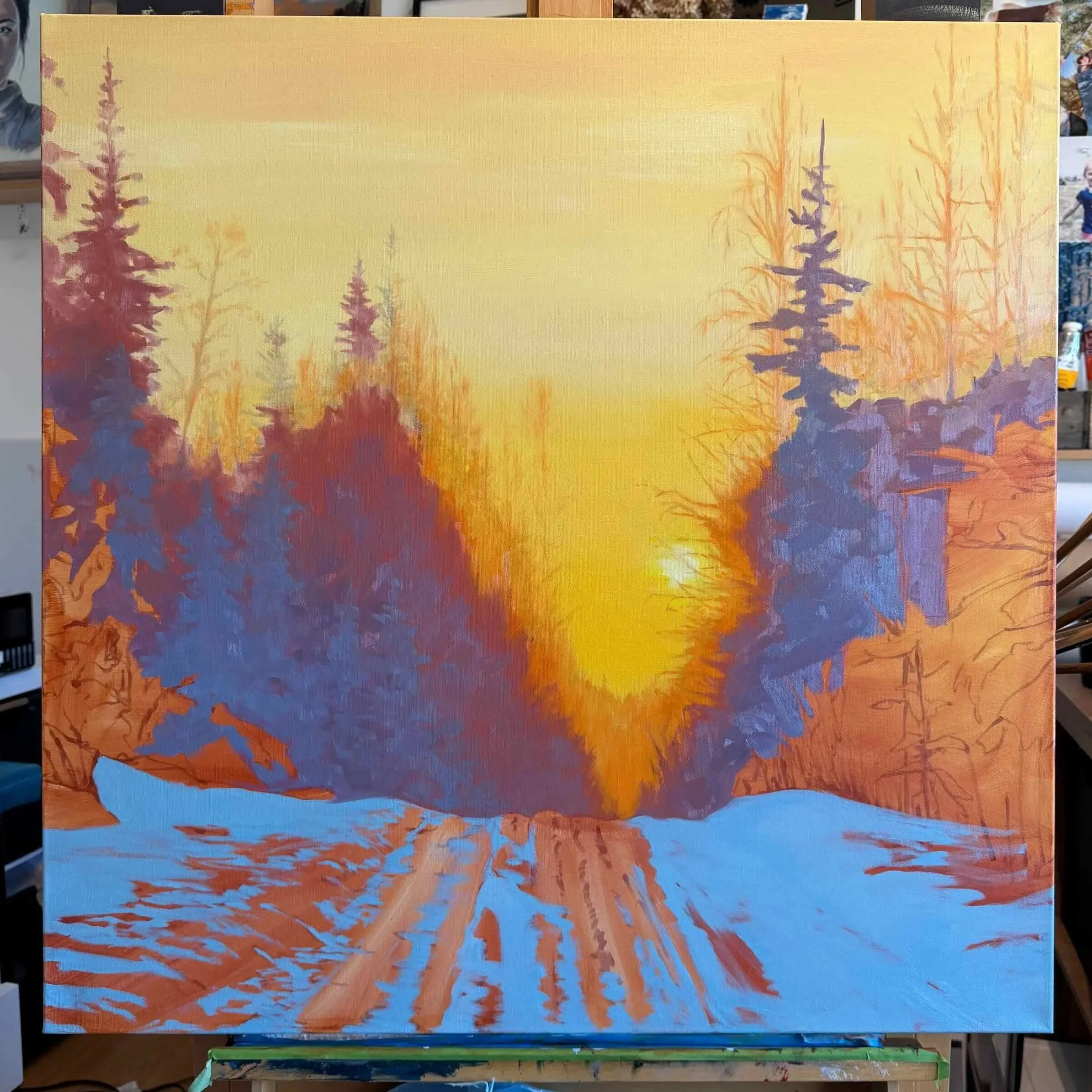
Early stages of development.
When I step into the painting phase, I am free to respond emotionally and intuitively because the structural decisions have already been made. The foundation is steady. The direction is clear.
Every finished piece carries traces of this early work. The spark of the original idea. The collected inspiration. The medium chosen with intention. The notes scribbled in the margins of a sketchbook.
The planning stage is quiet, but it is powerful. It is where possibility becomes purpose. It is where an idea begins its transformation into something tangible.
If you enjoy seeing how an initial spark evolves into a finished painting, I invite you to explore the current work in my studio and join my email list for behind the scenes process, new releases, and upcoming workshops. I would love to have you follow along as new ideas take shape.