Layer by Layer: Building Depth and Light in Watercolor
One of the most captivating qualities of watercolor is its ability to convey light. It relies on transparency and restraint, asking the artist to think ahead and work with intention. Creating depth and luminosity doesn’t come from a single bold stroke, but from a thoughtful, layered approach. When I’m working toward a painting that feels alive with light, I return to a few core practices that guide me from the first wash to the final detail.
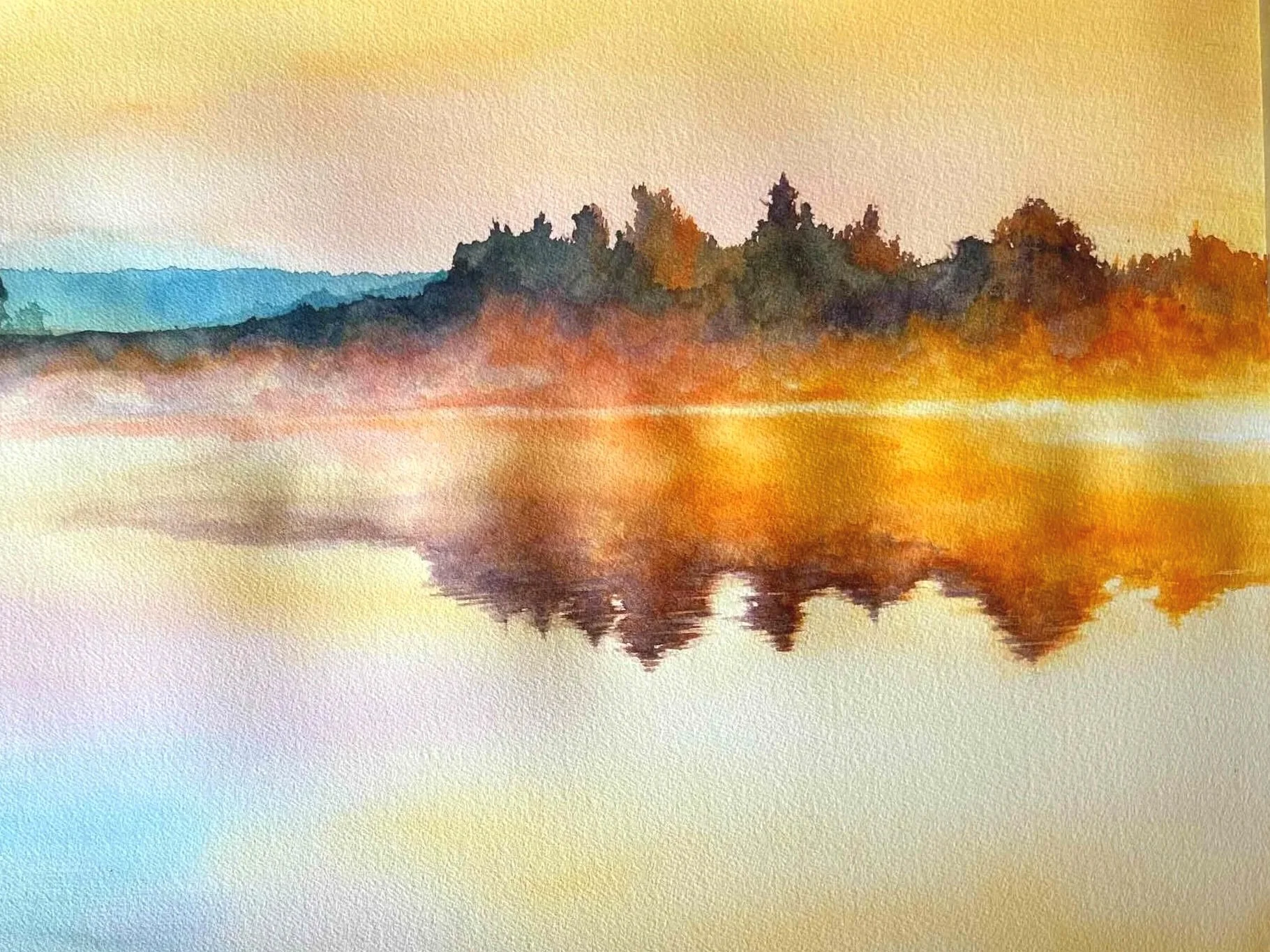
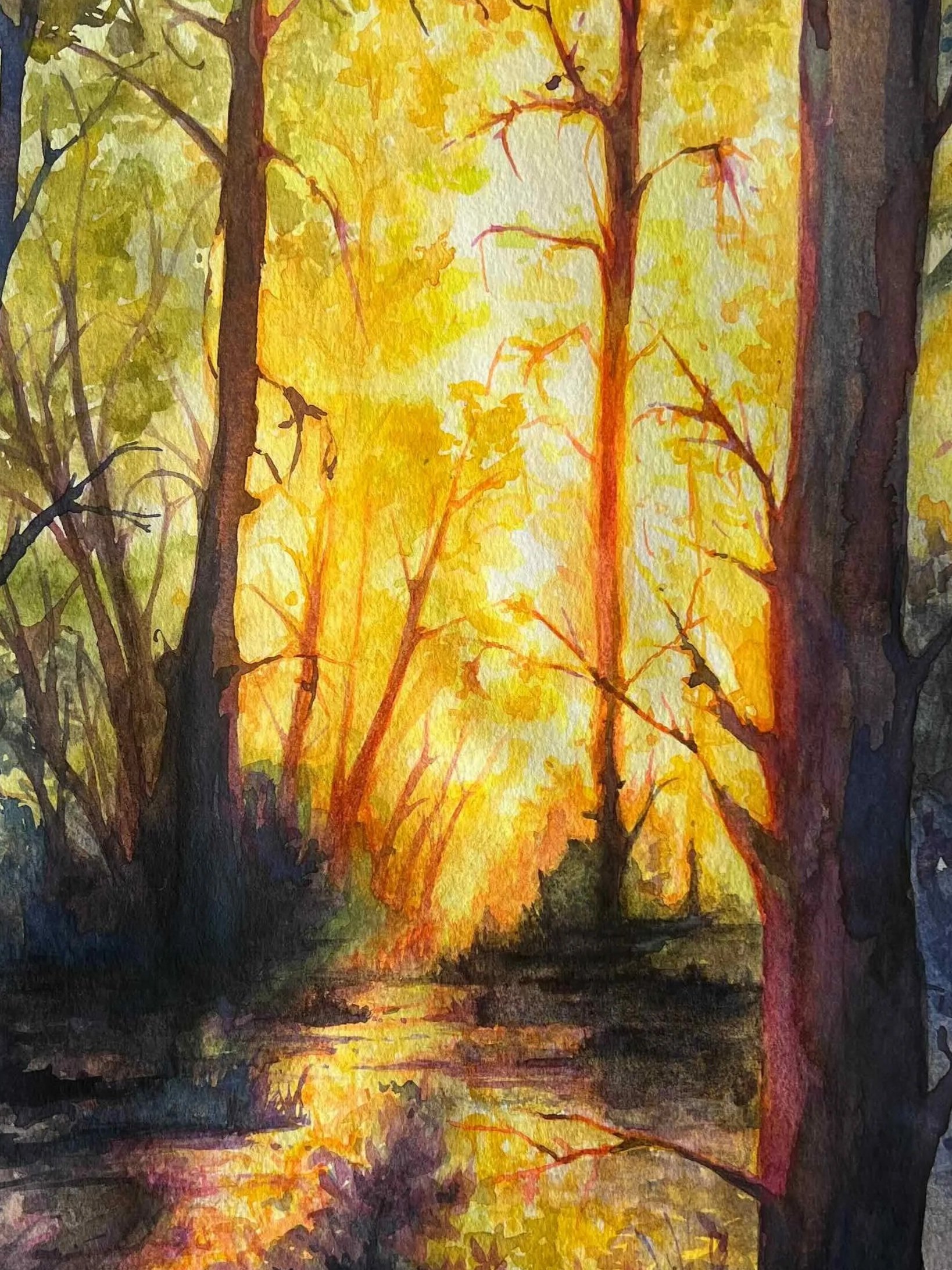
A close up of the painting Gossamer Mist in Gold by L Godfrey.
Studying Light in the Everyday
I find myself noticing light in a quiet, instinctive way. It’s something I’ve paid attention to for as long as I can remember. I love how it stretches across a landscape in the early morning, softens edges in the evening, or catches unexpectedly on a surface and brings it to life. Over time, this awareness has become second nature. I began to recognize patterns in how light moves, how its direction and intensity shift the mood of a scene, and how even subtle changes can completely alter what we see. That habit of observation now shapes every painting I create, guiding not just what I paint, but how I render it.
The intensity and direction of light can completely transform a scene, turning something ordinary into something fascinating. I often look for reference images, whether from my own photos or sourced online, that mirror the feeling I want to achieve in a painting. I’m not just looking at subject matter, I’m studying how light behaves within that scene. Where does it fall? Where does it fade? What is left in shadow?
As I evaluate these references, I ask myself a few key questions:
Does this lighting achieve the emotional connection I want in my painting?
What is it about the direction and intensity that draws me in?
What subtle shifts in value and color do I need to pay attention to?
These questions help me move beyond simply replicating an image and instead interpret it. The goal in essence, is to evoke a feeling or memory link to the image for the viewer, even if they have not experienced the exact landscape before.
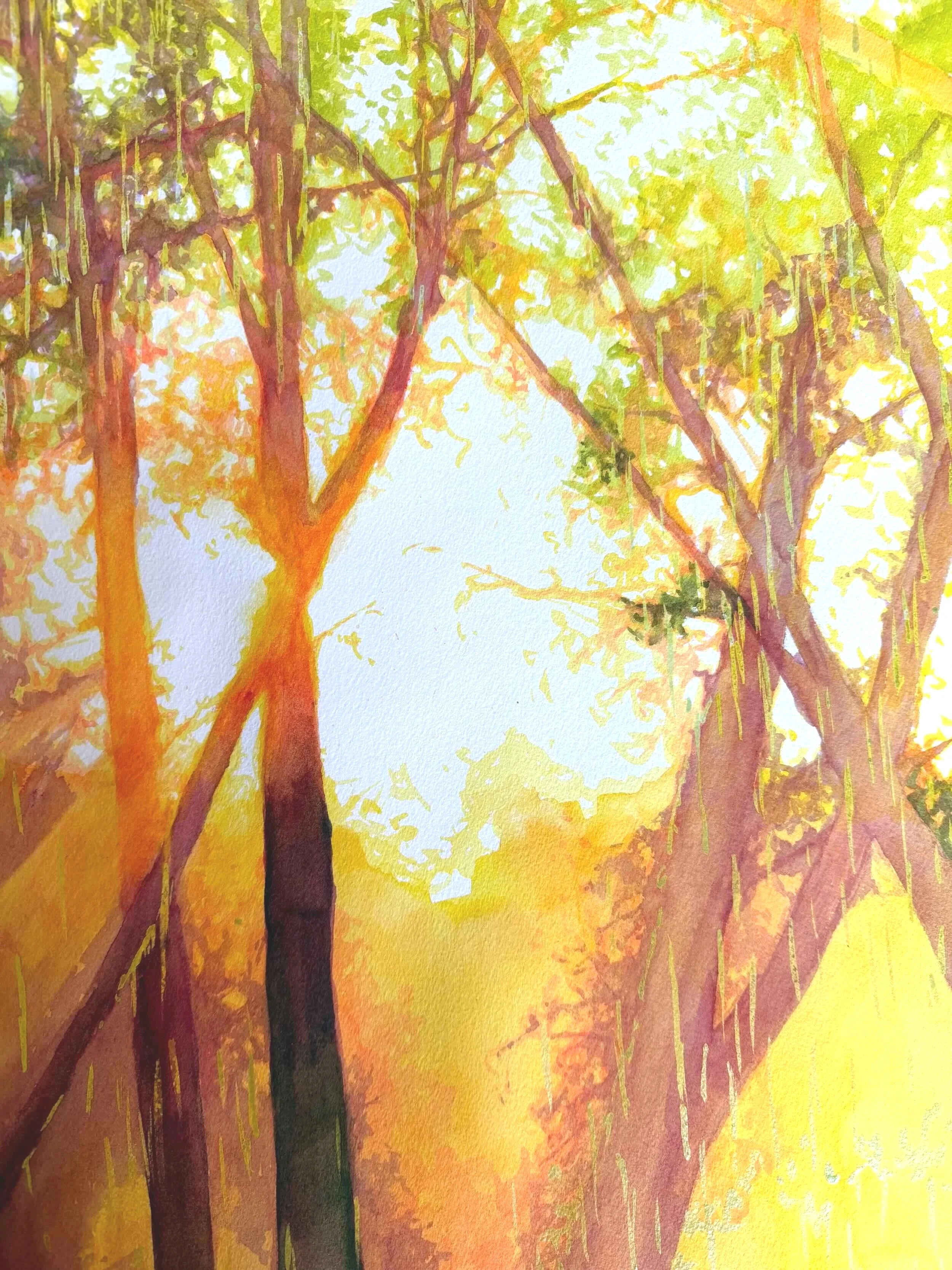
Layering and underpainting of watercolor.
Choosing a Color Palette That Supports Light
Color plays a powerful role in how light is perceived. Over time, I’ve found myself returning to a few colors in many of my painted landscapes with dramatic lighting: Opera Pink, Hansa Yellow, Green Gold, Moonglow, and Indigo. This combination is almost always on my palette, and they allow for a wide range of expressive possibilities, from warm, glowing highlights to deep, moody shadows.
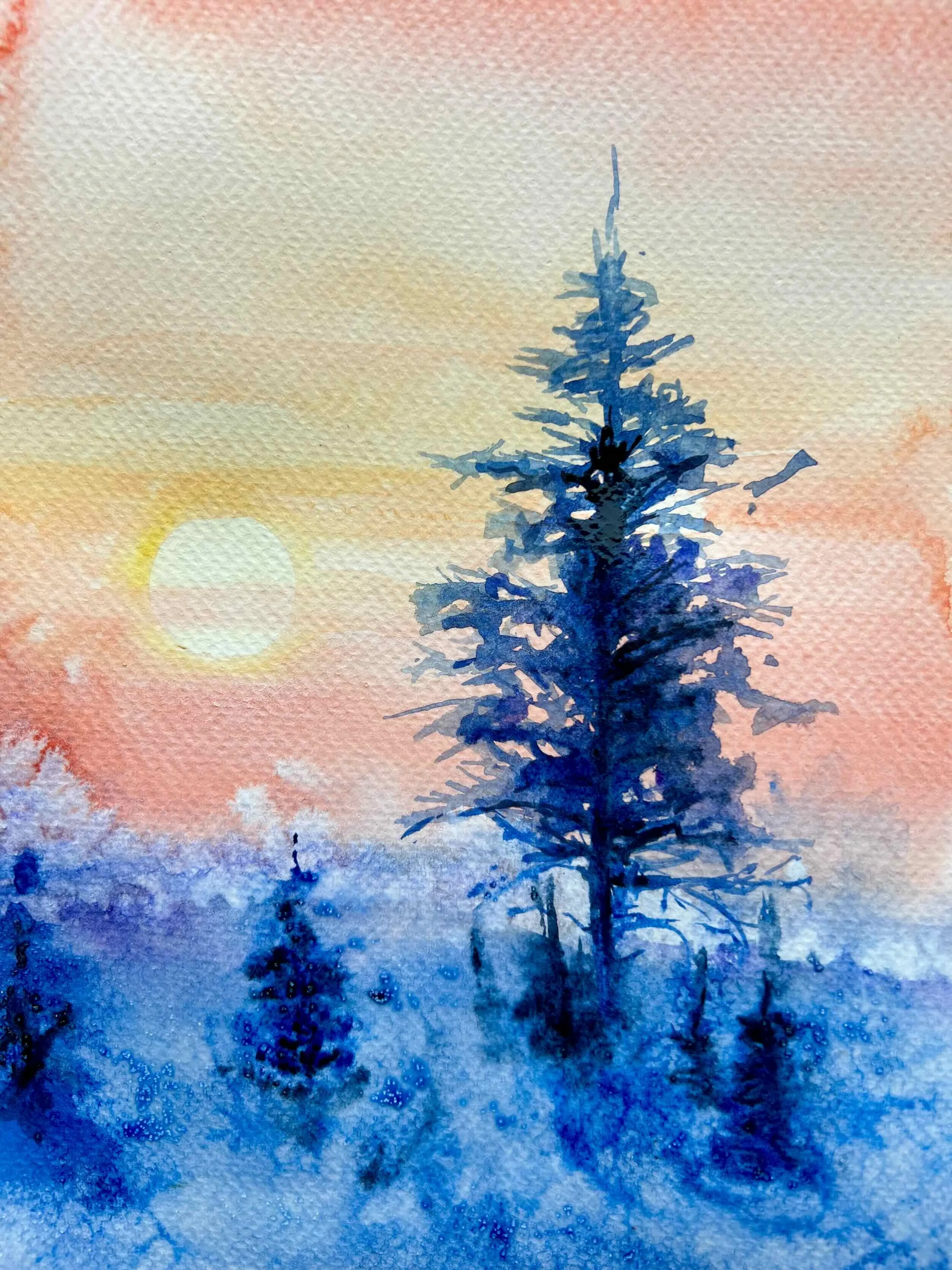
Sunrise and sunset, in particular, offer some of the most compelling opportunities for exploring color and light. During these times, the world shifts dramatically. Colors intensify, shadows lengthen, and even familiar objects take on entirely new appearances.
One such consideration is that white is rarely truly white in these conditions. A building, a flower, or even a cloud will reflect the surrounding light, taking on hues of pink, gold, or violet. If I try to paint these elements as pure white, they often feel phoney compared to the rest of the scene. Instead, I look for the subtle color variations within those “white” areas and allow them to carry the light, rarely maintaining any pure white areas at all. By leaning into these color shifts, I can create a more cohesive and believable painting.
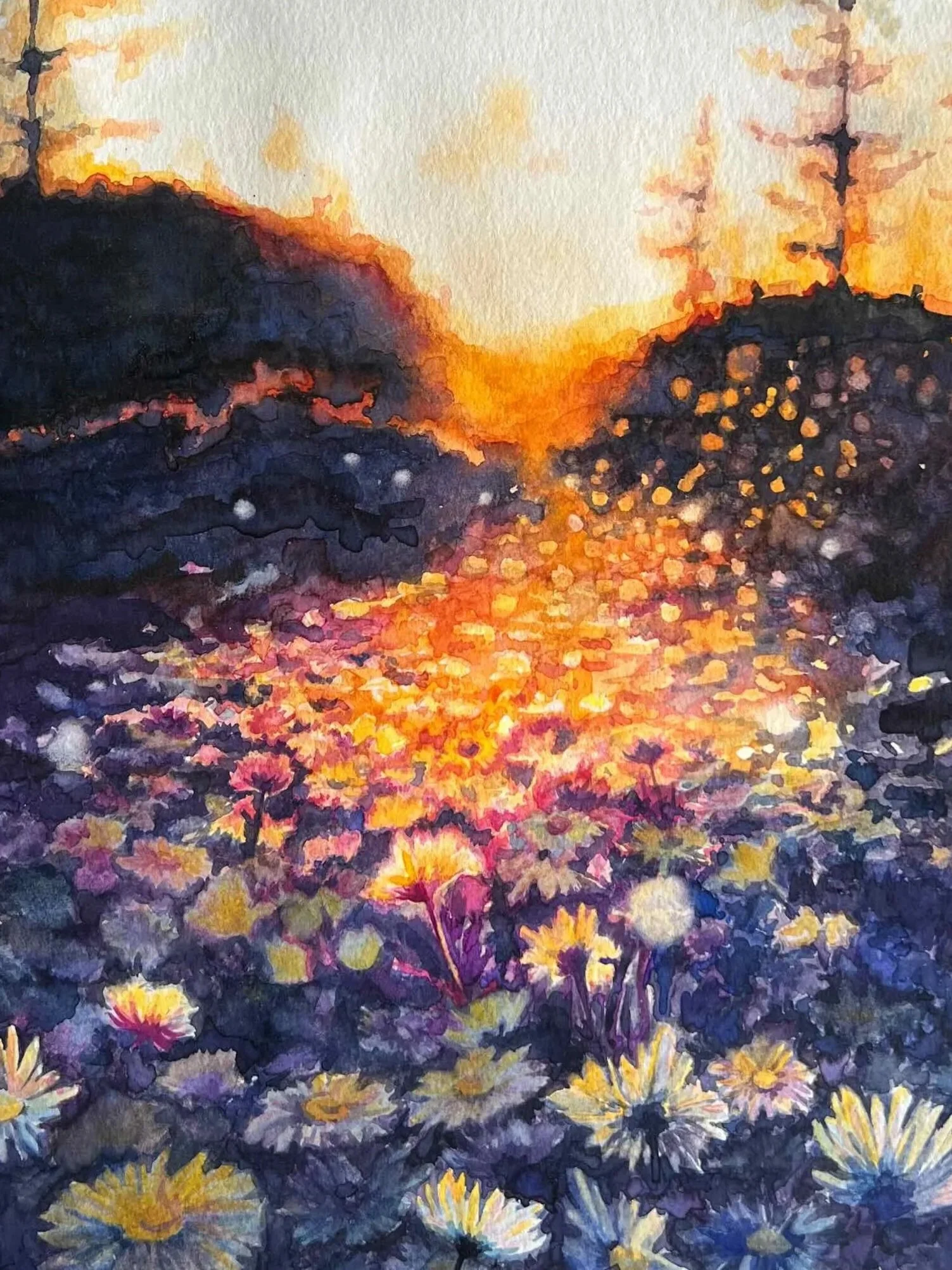
White daisies in dramatic lighting.
Building Depth Through Underpainting and Layering
Once I have a clear sense of light and color, I begin the painting process with an approach that may feel counterintuitive at first. I start with the brightest and boldest areas and gradually work my way toward the darkest values.
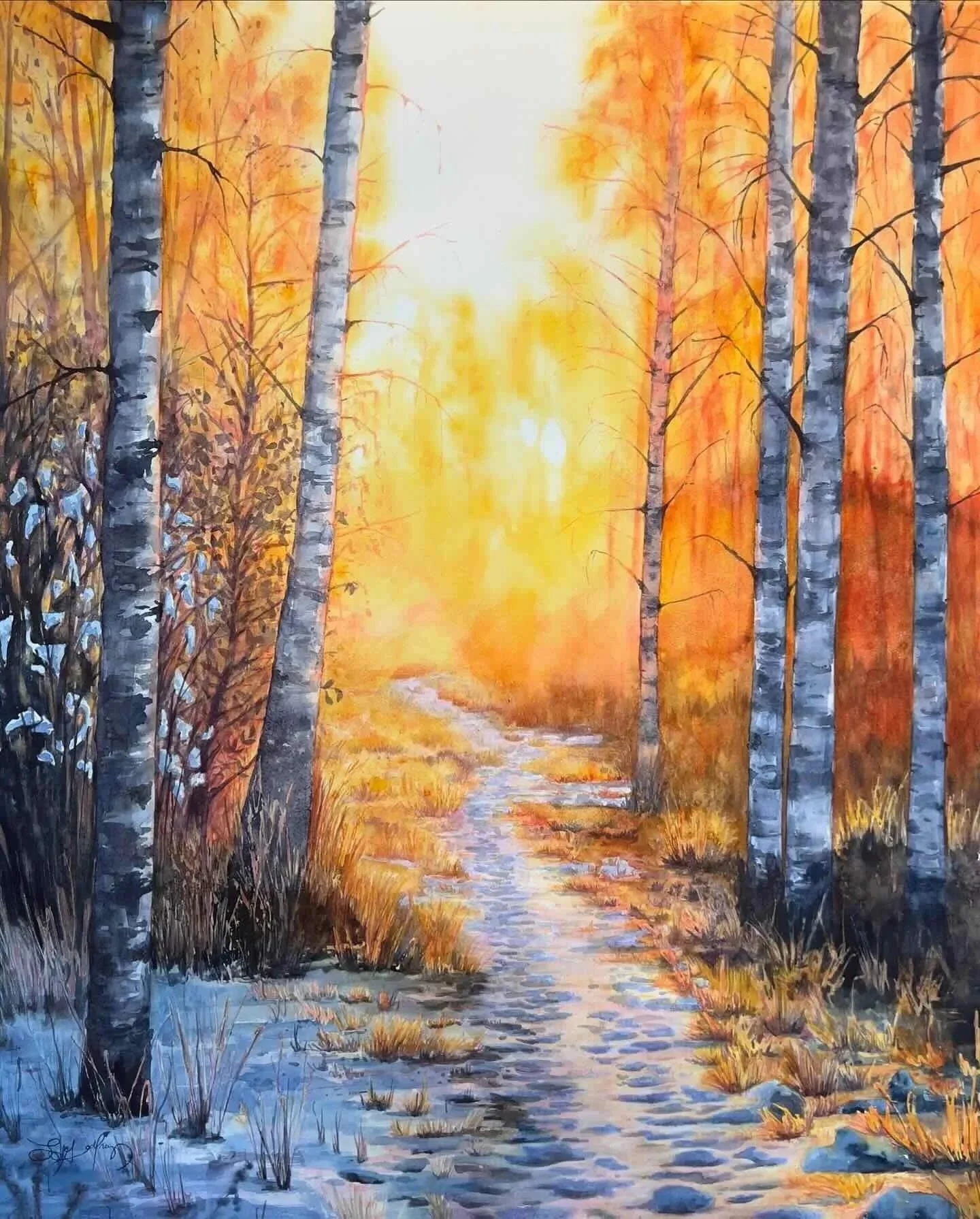
This early stage acts as an underpainting, laying the foundation for everything that follows. By establishing those luminous areas first, I create a sense of glow that remains, even as additional layers are applied. Watercolor’s transparency allows these initial washes to shine through, giving the finished piece a depth that can’t be achieved by adding light later.
Layering in this way also gives me greater control over contrast. Rather than jumping straight to darks, I can slowly build intensity, adjusting as I go. Each layer slightly mutes and diffuses what’s beneath it, softening transitions and creating a more natural sense of atmosphere.
There’s a balance here between patience and confidence. Each layer needs time to dry, and each decision builds on the last. But this gradual process is where watercolor truly comes alive. The painting develops not all at once, but piece by piece, layer by layer.
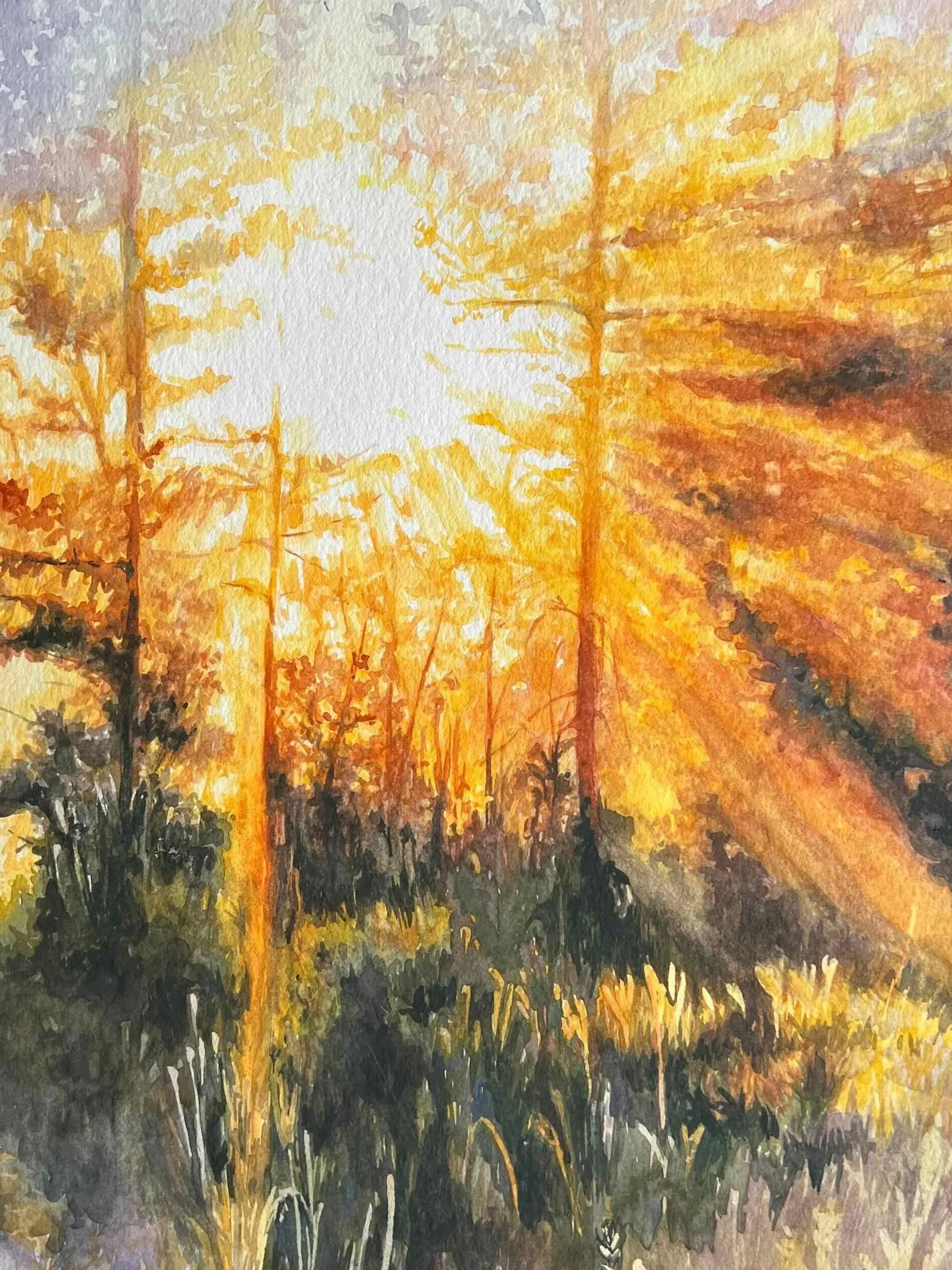
Letting Light Lead the Way
At its core, painting light in watercolor is about awareness and restraint. It asks you to observe closely, choose your colors thoughtfully, and trust the process of layering. There’s a quiet rhythm to it, a back and forth between intention and discovery.
When I begin with light in mind, everything else starts to fall into place. My color choices become clearer, and the composition gains direction. The layers begin to work together, creating depth, atmosphere, and emotion.
If you start to become more aware of light and its natural properties, you might begin to notice, in small and unexpected moments, how it changes through your day. The way it softens a landscape, catches on an edge, or quietly shifts the feeling of a space can offer more than we first realize. Carrying just a bit of that awareness with you may open new possibilities in how you see and, in time, how you paint. I hope this glimpse into my process encourages a deeper awareness.