From Studio to Collector: Preparing an Original Painting for Its Next Home
There is a moment in the studio when I decide a painting is finished. After all the adjustments, reconsiderations, and time spent working through an idea, I reach a point where I know it is ready to stand on its own. It is a satisfying moment, but it is not quite the end of the process.
For me, finishing a painting marks the beginning of a different kind of work. Before an original piece is ready to leave my studio, there are several steps that help me document it, present it, and prepare it for its next home.
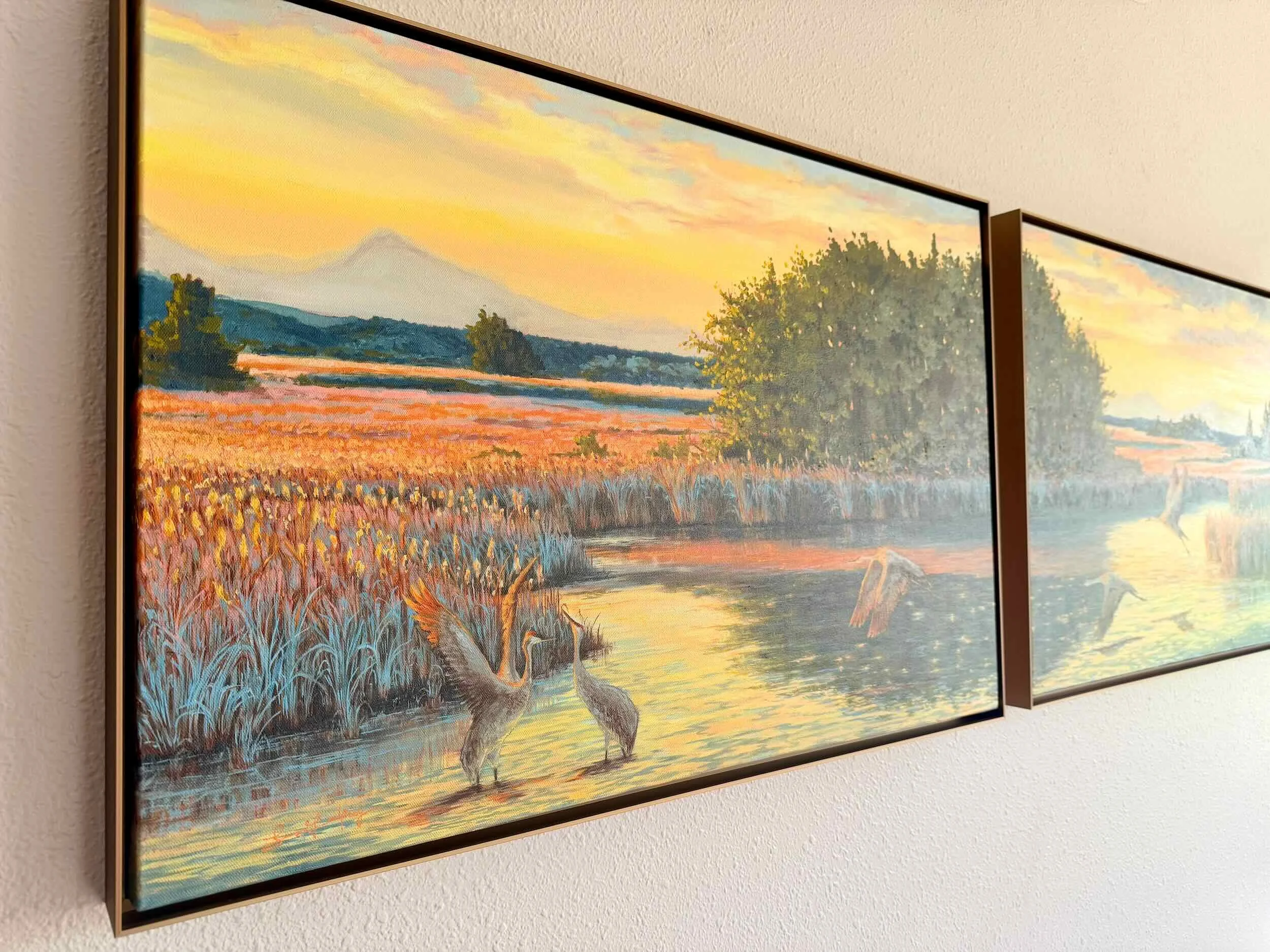
Framed and finished original oil painting by L Godfrey.
Giving the Painting a Name
One of the first things I do is settle on a title. Sometimes a name comes to me early in the painting process, while other times I need to live with the finished piece for a while before the right words emerge.
I want a title to feel connected to the painting without explaining everything about it. It might reflect a particular mood, a place, a moment, or something about the experience that inspired the work. I don't necessarily want to tell the viewer what to see. Instead, I hope the title offers a small point of connection and leaves room for their own interpretation.
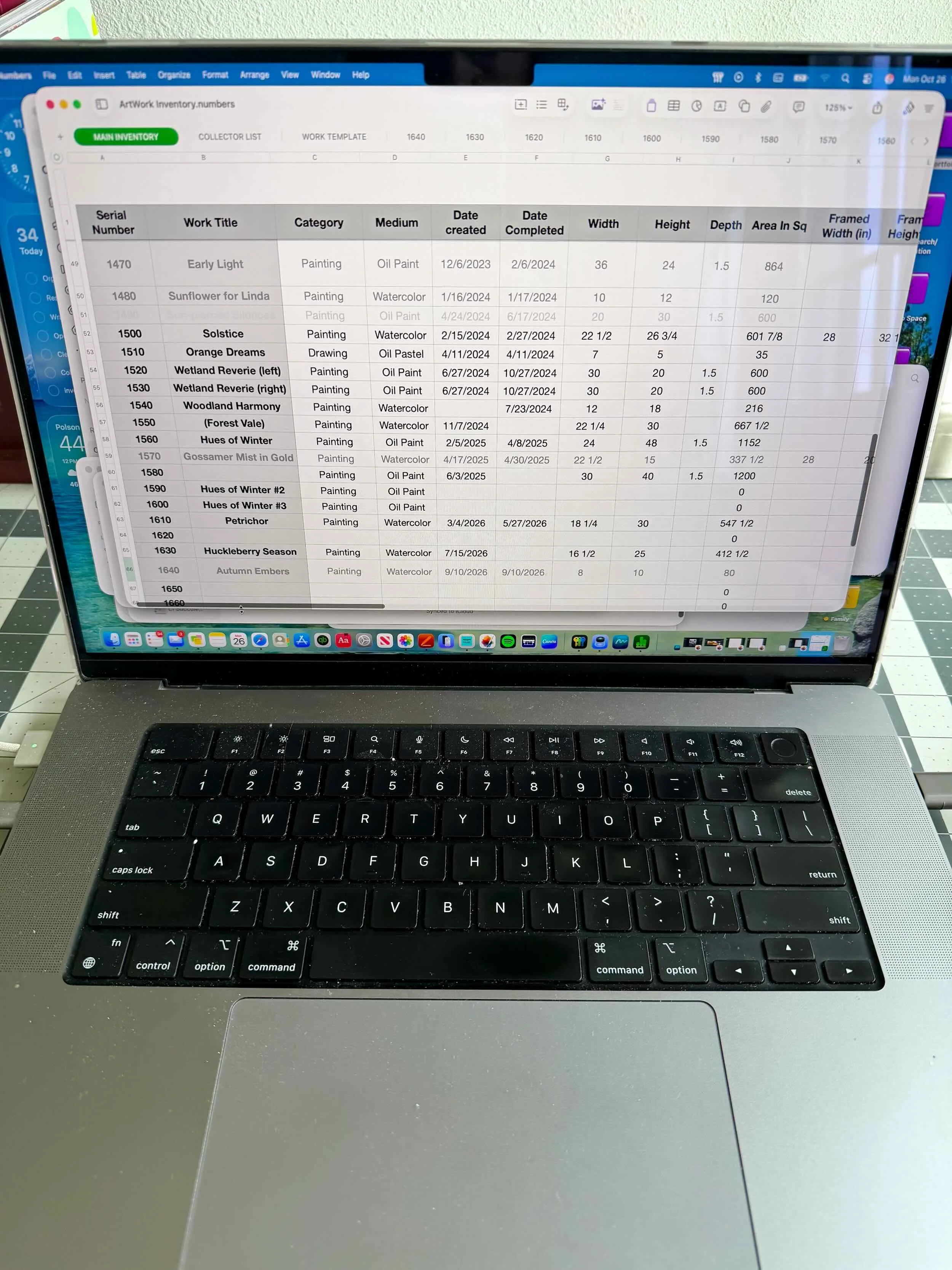
Once the title is settled, I record the pertinent information in my artwork inventory. This includes the details I need to keep track of each original piece, from its title and medium to its dimensions and other identifying information. Maintaining an accurate inventory is an important part of managing my growing collection, even if it is a less visible part of being an artist.
Documenting the Original
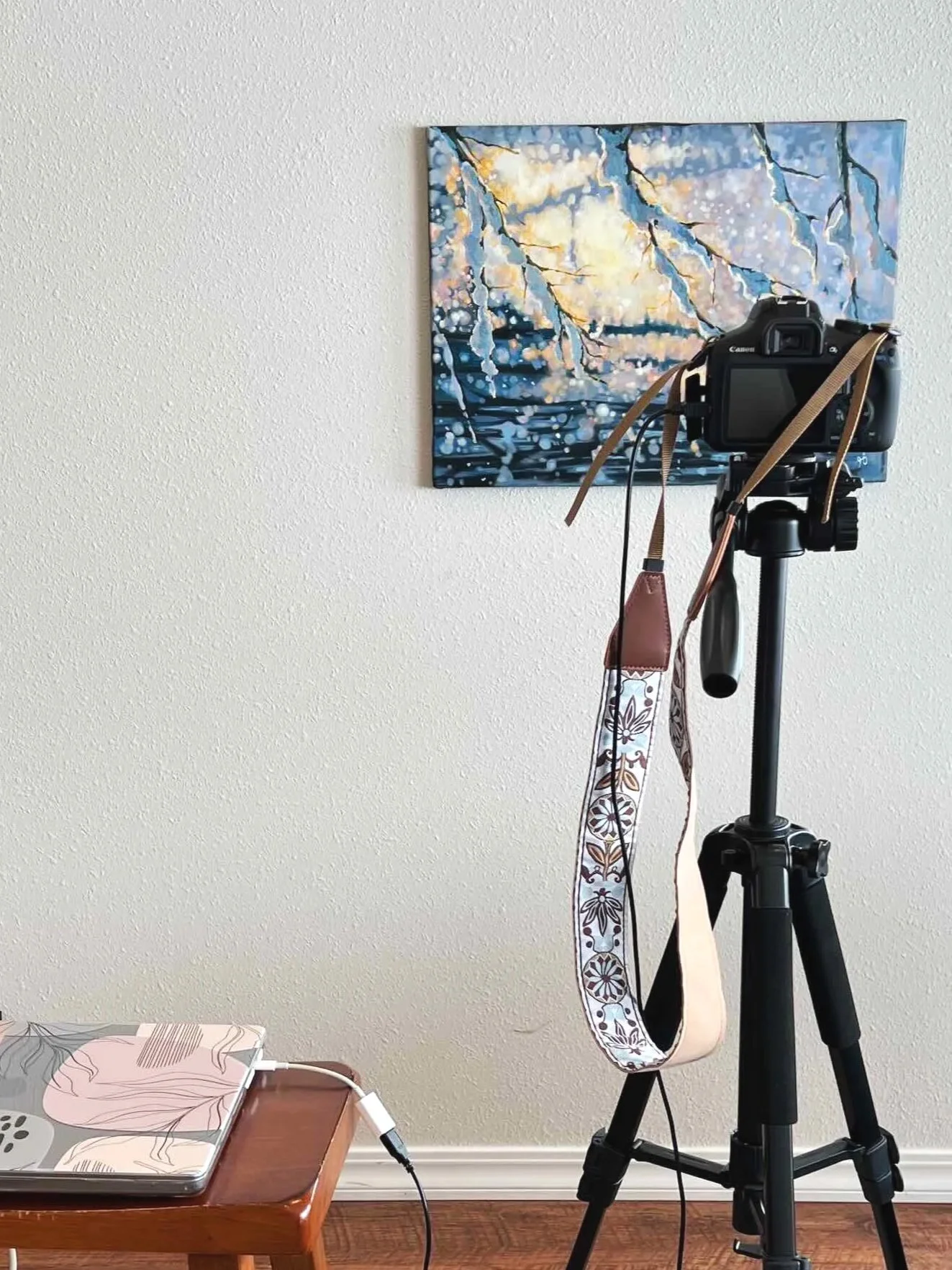
Next comes photography. I photograph each painting in a few different ways so I have images that serve different purposes.
A straightforward photograph shows the artwork as accurately as possible, while additional images can offer a closer look at details, texture, or the way the painting looks in a frame. Depending on the piece, I may also photograph it in a setting that helps someone imagine how it might look displayed in a home.
Photographing artwork is its own challenge. I want the images to represent the original faithfully, including its colors and details, while making the painting look inviting on a computer or phone screen. A photograph can never completely replace seeing an original in person, but good documentation helps bridge that gap for someone discovering my work online.
I also create a certificate of authenticity for each original painting. This document identifies the artwork and provides a record of its authenticity. It is a small but meaningful part of the painting's history, connecting the physical piece to the information I maintain about it.
Deciding What Happens Next
Once the painting is documented, I need to decide how it will be presented and where it will go next.
Some pieces are framed and prepared for display, while others are carefully stored until the right opportunity comes along. The decision can depend on the painting itself, where I intend to offer it, and how it will be presented to potential buyers.
I then prepare the artwork for its online debut by adding its photographs and information to my website and making its availability clear. This is the point when a painting that has existed primarily in my studio becomes something others can discover, consider, and potentially bring into their own lives.
There is something exciting about this transition. Until then, the painting has been part of my private working world. I know the decisions behind it, the changes it went through, and the time spent bringing it to completion. Once it is available to the public, I begin to imagine the different ways someone else might connect with it.
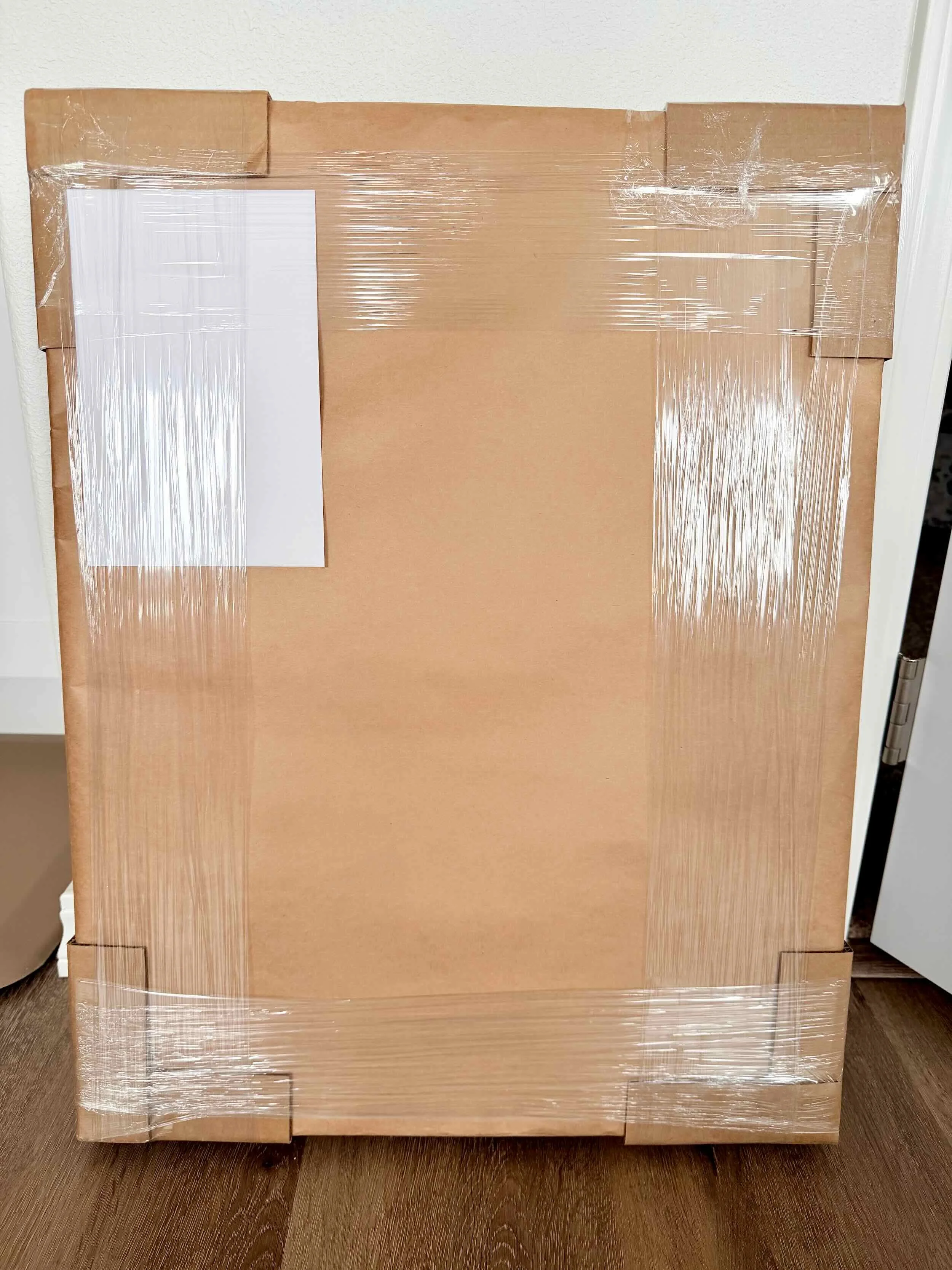
Of course, not every painting follows exactly the same path. Some remain in storage until an opportunity arises to show them in person. Others are prepared for delivery to a gallery, where they can be seen alongside the work of other artists. And when a painting finds a buyer, I carefully wrap it for delivery so it can make the journey safely to its new home.
Letting Go of the Work
As artists, we spend so much time making decisions on behalf of a painting that it can feel a little strange when the work is finally ready to leave us.
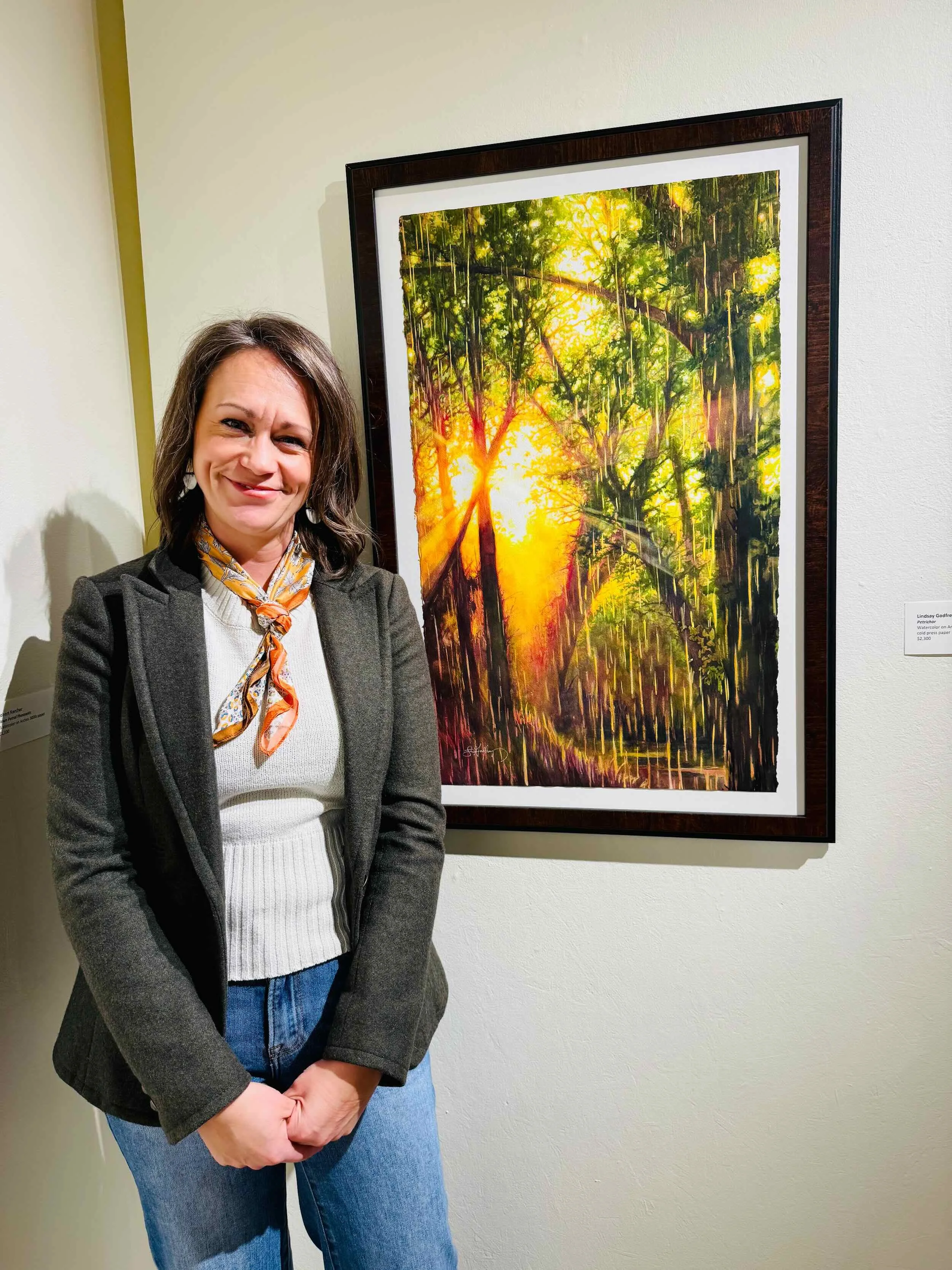
My watercolor painting titled “Petrichor” on display at a gallery show.
I have invested time and attention into each original, and I know the story of how it came to be. But once it is finished and available, someone else gets to bring their own experiences and interpretations to it. They may be drawn to a particular color, a familiar landscape, or simply the way the painting makes them feel.
That is one of the things I appreciate about sharing original artwork. The painting begins as an idea that I want to explore, but it doesn't end with my own experience of it. It has the potential to become part of someone else's home and daily life.
The administrative work, photography, inventory records, and careful preparation may not be the most visible parts of my art practice, but they are essential to helping each painting make that transition. They allow me to care for the work beyond the creative process itself.
And when I finally wrap a painting for delivery or see it ready to hang in a gallery, I can appreciate the full journey. The painting has moved from an idea to a finished original, and now it is ready for whatever comes next.
If you would like to see the original paintings currently available, I invite you to browse my online gallery. Whether watercolor or oil, each piece represents a little part of my time in the studio, and I hope you find one that feels at home with you.