Key Watercolor Tools: My Artistic Arsenal
As many artists will tell you, the tools of the trade are often as important as the skillset you are cultivating. When I find new tools or tricks that help to make my art practice easier or more enjoyable, I get excited to share them with others.
Unfortunately, ordering materials online can be a bit of an emotional roller coaster. Consider the following situation. An ad for the most amazing art tool pops up during my Instagram scroll session. It’s easy, it’s beautiful, it’s being peddled by someone who is so earnest. And…it’s expensive. I try to avoid the obvious pull, but I’m intrigued. “Maybe this is the tool that I've been missing. It might take my art to the next level. Perhaps it would be a mistake not to try it,” I muse. Maybe, but often it’s not.
Art materials can be costly and there are not a lot of opportunities to “try before you buy.” The thrill of the arrival of new supplies can quickly be extinguished by the letdown of a tool that doesn’t live up to its hype. Sometimes I find a winner but more often it leads to disappointment. In fact, the best tools I own were usually given to me or I stumbled upon them while interacting with fellow artists online.
Recently, I have made a conscious effort to consider my watercolor painting arsenal. The following list of items is tools I use regularly, outside of the essential brushes, paper, and paint.
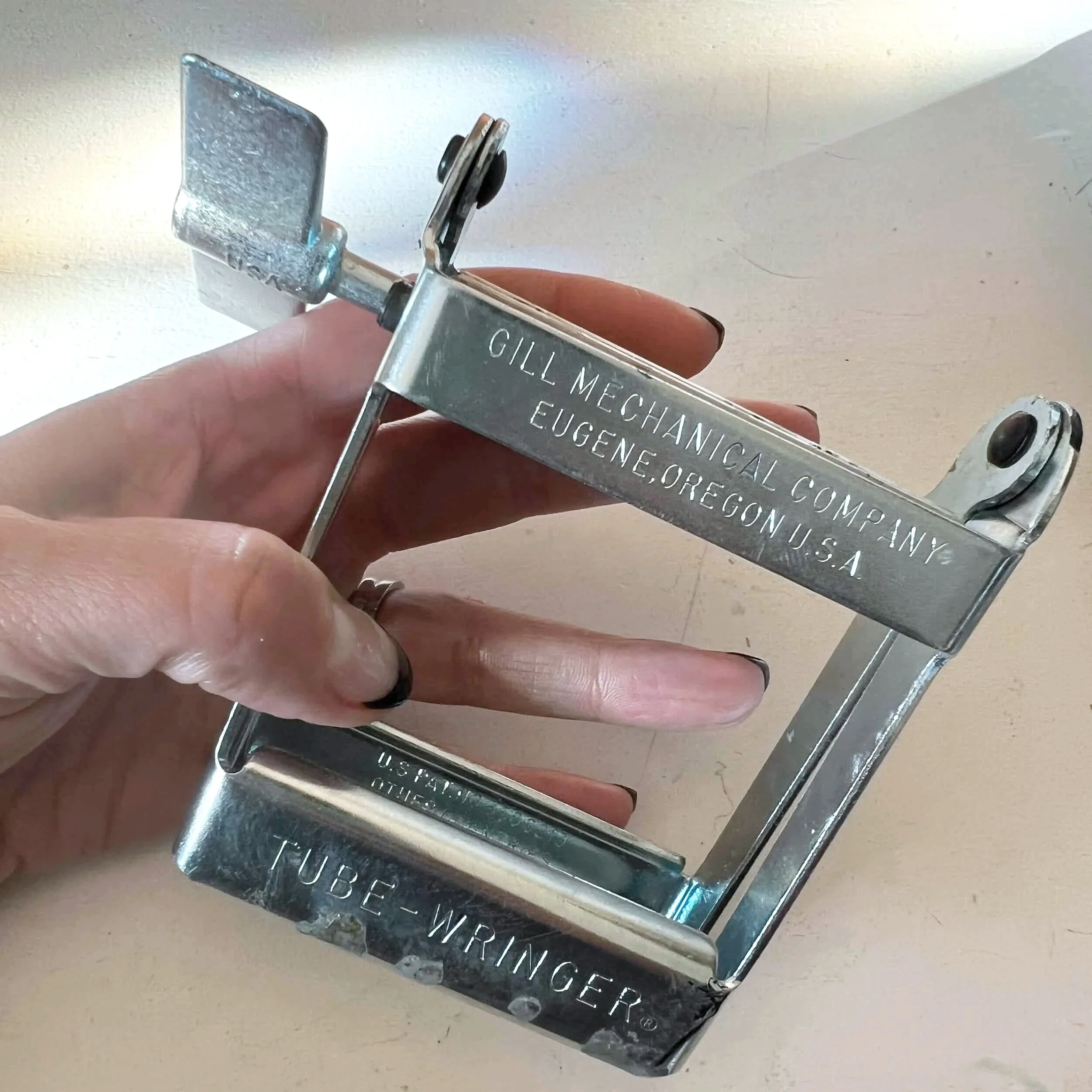
Paint tube wringer… so useful!
Paint tube wringer
I’m going to start with the most practical tool that I own. The name explains the purpose, but I must emphasize how helpful this little tool is.
This simple mechanism is made to squeeze every last drop of paint out of the little metal casing it comes in. I realize paint is packaged in different ways. I prefer my paint in tubes, whether its watercolor, acrylic, gouache or oil paint. I find the tubes give my paint a longer shelf life as well as flexibility when it comes to utilization. Yet, I will admit it also might be the most difficult way to utilize the paint. Enter the tube wringer.
This tool not only helps me to utilize nearly every drop of that medium, but it is so satisfying to squeeze the tube until it's completely depleted. Making the most of my art budget and time.
It also comes in really handy for many other non-art-related home uses, such as toothpaste, tomato paste, ointments, etc. I keep finding more opportunities to use this device.
Artify Less Tack Painters Tape
Due to the absorbent nature of watercolor paper, I often need to tape my work down before wetting the surface. This helps to reduce paper buckling as well as provide a clean border for the piece. One of the more nerve-racking situations comes when removing this border tape. It is so upsetting when the edge of a finished piece becomes a jagged mess requiring immediate triage or, worse, ruining the piece.
I have tried many different brands of tape with varying success, but recently, I came across Artify Less Tack Painters Tape, a game-changer. This tape not only sticks well and creates those beautiful crisp lines, but it is removed so cleanly. I have not had a single painting harmed when using this tape. Not only that, but you can purchase a version printed with ruler lines, which is very helpful in making sure to create an evenly distributed edge.
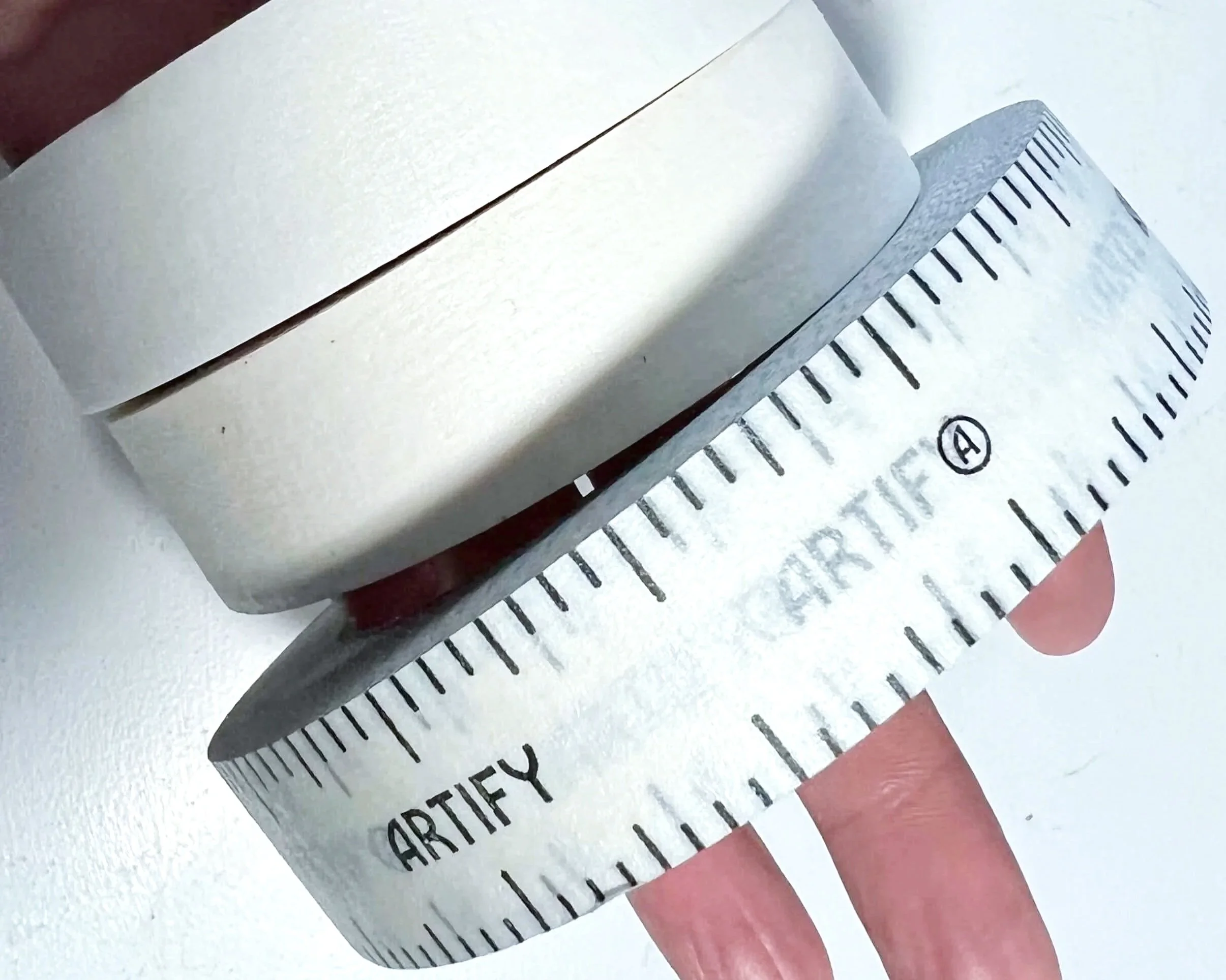
Artify Less Tack Masking Tape
Watercolor Pans with Magnets
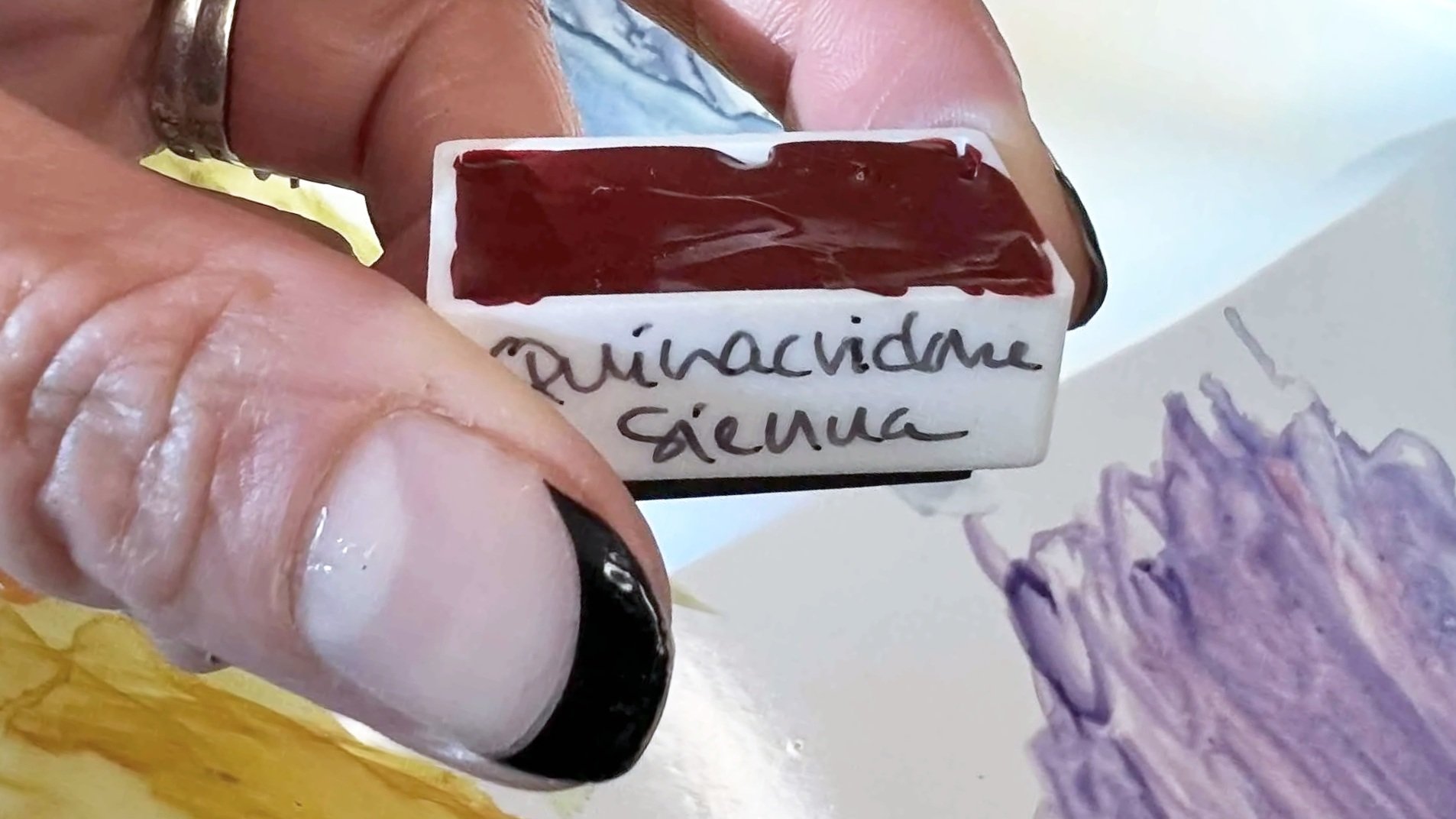
Plastic watercolor half pan with magnet
The combination makes it portable, easy to organize, and label. I know many artists purchase prefilled watercolor pans, and I have done that in the past as well, yet I have found buying empty pans and filling them myself provides the most flexibility. They can be filled and refilled at my discretion.
I realized a few months after filling my own pans that adding magnets to the bottom would open a new way to organize and travel with my watercolors. I use a drafting desk to paint at in my studio, and it has a metal base and drawer. The magnets keep the pans in proper order so they don’t slide around anytime I open and close it with gusto. They also adhere to my travel palette or even the bottom of an Altoids tin (makeshift palette in a pinch) when I have minimal space available, when I’m on the go.
Recently, I found some magnetized pans on Amazon rather than having to order them separately. After trying them, I found the magnets lack strength, so I will stick to my method until I find the right ones.
Enamel Butcher Tray
I have tried a variety of surfaces to paint from, but these enamel butcher trays are my favorite. The tray is metal, making it light and portable. This is important because I often hold my tray while painting and on occasion, drop it (not recommended) with little damage. Also, my magnetized watercolor pans stick to it.
It is triple-coated in white enamel. This provides a smooth surface to mix pigment and prevents color beading. The white coating is essential to mixing authentic colors. While there are other tray colors and marbled options, white is the only color I suggest.
Clean-up is easy. Simply wet it and wipe it out with a paper towel. These trays stack neatly for easy storage and come in a few different sizes. They are the best watercolor palettes I have used.
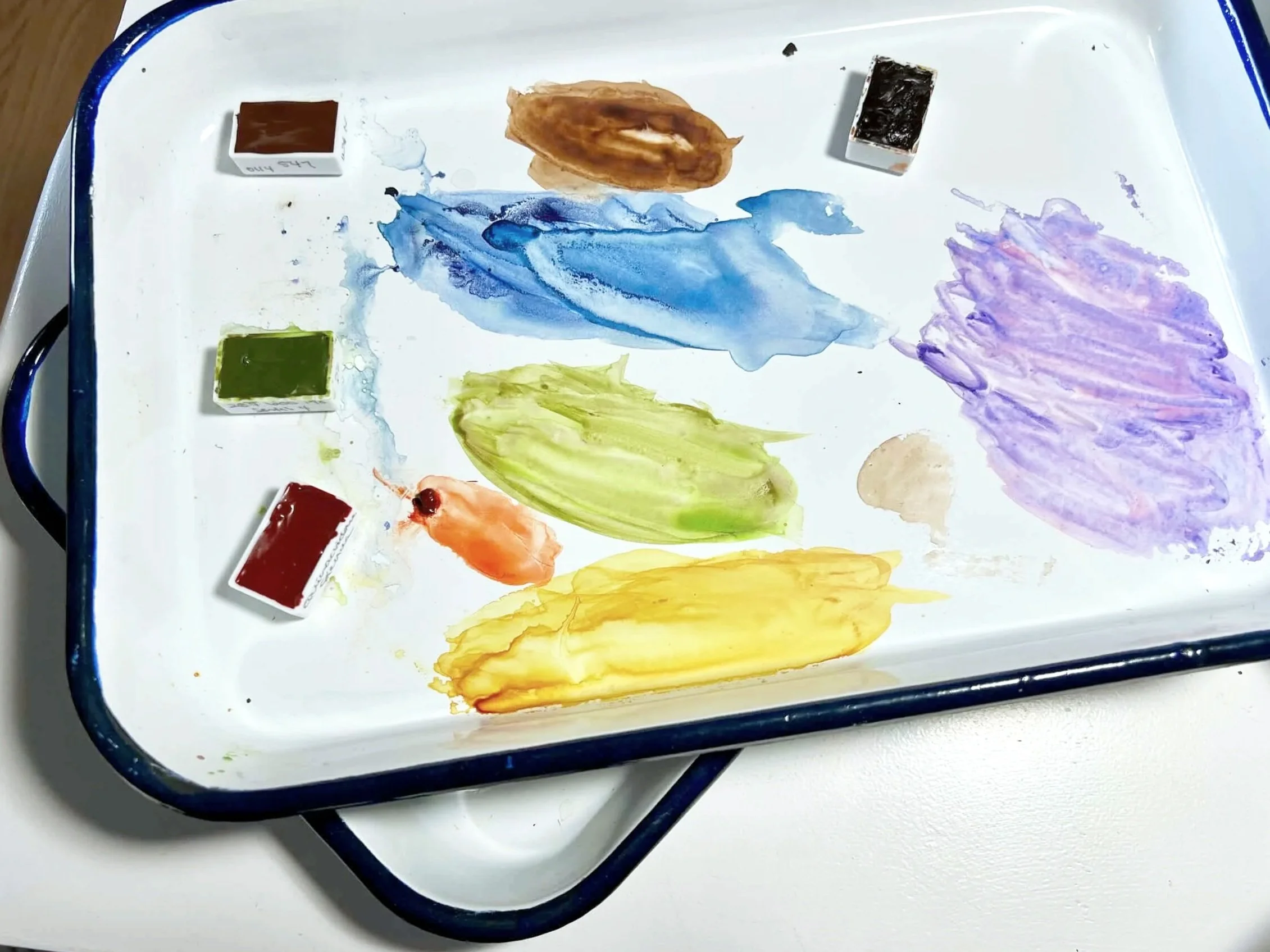
Butcher Trays for a watercolor palette
Watercolor Dot Sample Cards
Some paint brands have dot sample cards available for purchase. I own a set from Daniel Smith and Winsor & Newton. These cards are the most delightful way to experiment with new pigments before investing in them.
The card comes with dried pigment dots that are titled and labeled with a description of the pigment’s light fastness, staining, granulation, transparency, and size availability. I will dive further into this terminology in a future blog post. These labels should be considered when making pigment choices.
While the nuanced description of each color is very informative, I find the purest joy in testing each one on the card for myself. A mystery to be discovered in every dry dot. I revisit the card regularly when hunting for a new pigment, and each dot can be tested a few times before it is depleted. This is a lovely way to spend an afternoon, and I would highly recommend that you try it, but be warned, it is hard to do without splurging on a few of your favorite pigments.
An investment, but worth it!
*Keep in mind the links below are my personal preferences, and I am not being paid for the affiliated links.
Here is a concise list:
Paint Tube Wringer
Artify Less Tack Painters Tape
Watercolor Pans with Magnetic Tape
Enamel Butcher Tray
Watercolor Dot Sample Cards
I hope this list will help you, my fellow watercolor painters, to avoid some of the pitfalls and enjoy many successes in your painting. They have definitely helped in my practice. Let me know what you think and if you have any other tools that I should consider for my arsenal.